

So, you’re trying to pin down the cost of building a mobile app? That’s a bit like asking, "How much does it cost to build a house?" The real answer is always, "Well, it depends." A simple one-bedroom bungalow has a vastly different price tag than a sprawling mansion loaded with smart tech and a home theater. The same logic applies directly to app development.
A basic app might land somewhere between $40,000 and $100,000. If you're dreaming bigger with custom features, intricate designs, and complex backend systems, you could be looking at a range from $100,000 to over $400,000. The final number really boils down to your app's "blueprint"—the specific features, design flair, and technology stack you choose.
How Much Does It Really Cost to Build an App?
Your app's features and overall complexity are the biggest drivers of the budget. A straightforward app for a local coffee shop that just shows their menu and hours is going to be far less expensive than a full-blown e-commerce platform with secure payments, user profiles, and a recommendation engine.
To get a clearer picture of what drives these numbers, it's helpful to explore a detailed mobile app development cost breakdown that digs into every phase of the process.
Understanding the Budget Tiers
To make this less abstract, let's break apps down into three general tiers. This isn't a perfect science, but it gives you a solid starting point for figuring out where your idea might land financially.
- Simple Apps: Think single-purpose tools. These are the workhorses with minimal features, like a basic calculator, a note-taking app, or a simple event schedule. They usually don't need a heavy-duty backend server or connect to other services.
- Moderate Apps: This is where things get more interactive. These apps often include features like social media logins, the ability to process payments, or custom user profiles. A good example would be a customer loyalty app for a retail chain or a booking app for a local gym.
- Complex Apps: We're talking about the big leagues here. These are robust, enterprise-grade solutions that require custom databases, real-time data syncing across devices, top-tier security, and deep integrations with other platforms (APIs). Think of apps like Uber or sophisticated fintech platforms.
Planning your app budget isn't about finding the cheapest path forward. It’s about making smart investments in the features that will actually deliver value to your users and, in turn, a real return for your business.
To help you visualize this, here’s a quick look at how these categories translate into real-world costs and timelines.
App Complexity and Estimated Costs at a Glance
This table offers a quick reference for how an app's complexity can shape its budget and the time it takes to build.
| App Complexity | Example Features | Estimated Cost Range | Typical Timeline |
|---|---|---|---|
| Simple | Single-functionality, static content, no user accounts | $40,000 – $100,000 | 3-6 Months |
| Moderate | User login, payment gateway, social media integration | $100,000 – $200,000 | 6-9 Months |
| Complex | Real-time data sync, AI/ML features, custom backend | $200,000 – $400,000+ | 9-12+ Months |
Getting a handle on these tiers is the first real step toward building a budget that makes sense for your vision. Once you know roughly where you stand, demystifying the financial side of things becomes much more manageable.
The Blueprint Behind App Development Costs
Every great app starts with a solid plan, not a single line of code. Think of it like building a custom home. You’d never pour the foundation without detailed architectural blueprints, right? The same logic applies here. A well-defined blueprint prevents costly rework and makes sure the final product actually matches your vision.
That’s why breaking down the mobile app development costs phase-by-phase is so important. Each stage in the app's life has a specific job and its own costs. By understanding what happens in each phase, you can see exactly where your investment is going and why every step is critical for a successful launch. Let's walk through the key stages of bringing an app to life.
Phase 1: Discovery And Strategy
This is hands-down the most crucial phase, yet it’s the one most often rushed. The Discovery and Strategy phase is where we draw up the architectural plans for your app. It involves deep market research, sizing up the competition, defining your target audience, and outlining the core features that will solve a real problem for your users.
Cutting corners here is a recipe for budget blowouts. It’s far cheaper to adjust a wireframe or tweak a strategy document than it is to rewrite thousands of lines of code later on. This initial planning ensures we’re building the right app from the get-go.
A strong discovery phase is the best cost-saving tool in your arsenal. Investing time here to define your project scope, features, and user flow prevents costly changes and pivots once development is underway.
For instance, we worked with a healthcare startup that needed a new patient portal app. During discovery, we uncovered strict HIPAA compliance requirements that had to be baked into the app’s core architecture. Planning for this upfront added a bit to the initial strategy budget but saved them tens of thousands in potential fines and a complete, soul-crushing rebuild down the line.
Phase 2: UI And UX Design
Once the strategy is locked in, we move to the visual blueprint. This is where User Experience (UX) and User Interface (UI) design take center stage. UX design is the science of making your app logical, intuitive, and a breeze to navigate. UI design is the art of making it look good, with colors, fonts, and icons that feel right for your brand.
This stage isn't just about making things pretty. A clunky, confusing app gets deleted in minutes. A great design, however, keeps users coming back and makes your app feel professional and trustworthy. This is where we turn wireframes into interactive prototypes, letting you click through and get a real feel for the app before any code is written.
This chart shows how an app's complexity—from a simple, single-purpose tool to a complex, database-driven platform—directly impacts its final cost.
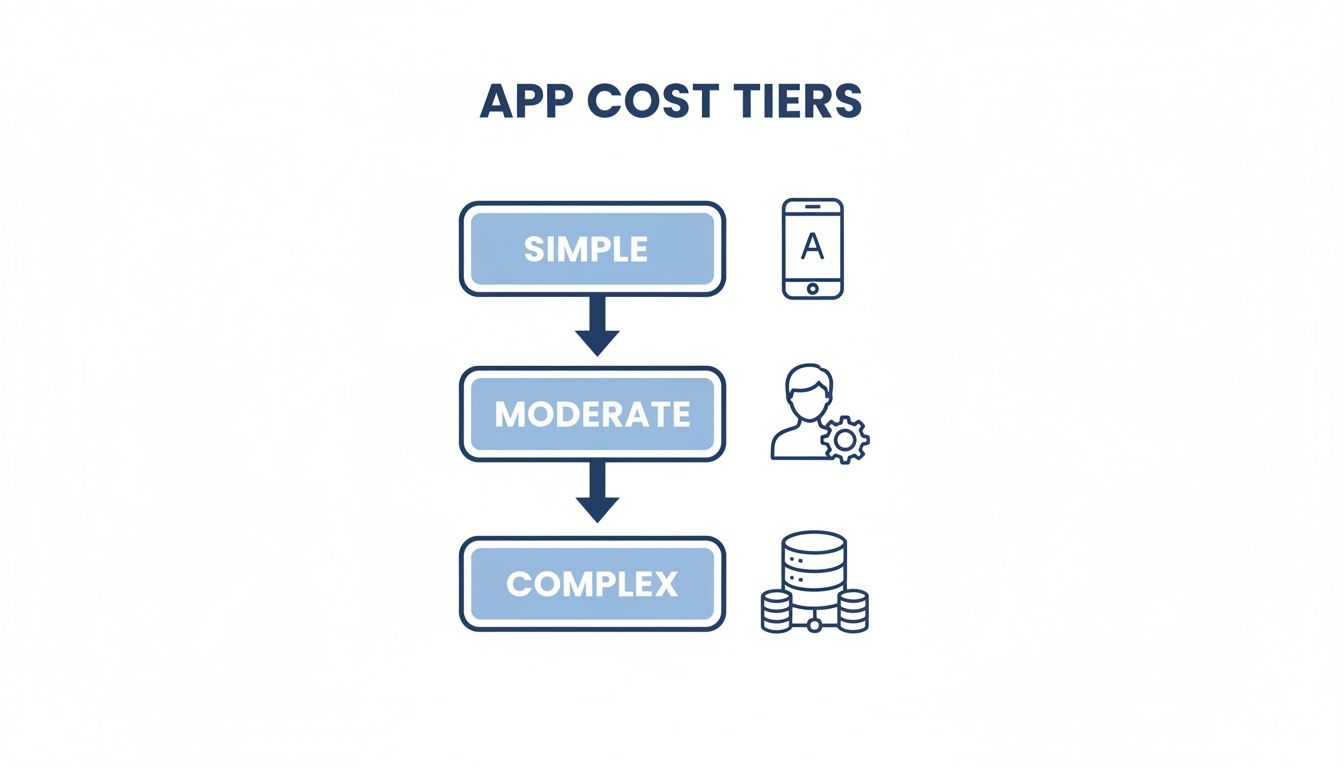
As you can see, jumping from a simple to a complex app is more than just adding features; it demands more intricate design, development, and testing at every single stage.
Phase 3: Development And Coding
Now for the construction phase. This is where our developers take the designs and plans and bring them to life with code. It’s usually the most time-consuming and expensive part of the whole project. The work here is split into two main parts:
- Frontend Development: This is everything the user sees and interacts with—the buttons, screens, and navigation. Think of it as the "curb appeal" and interior design of your house.
- Backend Development: This is the server, database, and application logic humming along behind the scenes. It's the plumbing, electrical, and foundation that actually make the house work.
The complexity of your features has a huge impact on the time and cost here. Displaying simple content is one thing, but building a real-time messaging feature or a secure payment gateway requires significantly more heavy lifting.
Phase 4: Quality Assurance And Testing
Before your app can go live, it has to be put through the wringer. The Quality Assurance (QA) phase is where we actively try to "break" the app to find and squash bugs, fix usability quirks, and iron out performance issues. Our testers check the app on a ton of different devices, screen sizes, and operating system versions to ensure a smooth, consistent experience for everyone.
A detailed phase-by-phase cost breakdown shows that UI/UX design typically claims 10-20% of the budget. The development phase is the biggest piece of the pie, accounting for 40-55% of the total cost. QA and testing are also vital, taking up another 10-15% of the budget, which often includes critical security audits for our clients in healthcare or finance.
Investing in thorough QA protects your launch from a flood of negative reviews and makes sure your app delivers a great first impression. By understanding this structured process, you can plan your budget with confidence and turn your idea into a polished, successful product.
How App Complexity Drives Your Budget
Not all apps are created equal, and their unique features are what really move the needle on your final mobile app development cost. Think of it like this: a simple push lawnmower is a world away from a sophisticated, self-driving garden tractor with GPS. The more a machine can do, the more it costs to engineer and build.
The very same principle applies to app development. To get a clearer picture of your potential budget, we can map your vision to one of three common tiers of complexity. Figuring out where your idea fits is the first real step toward creating a financial plan you can count on.
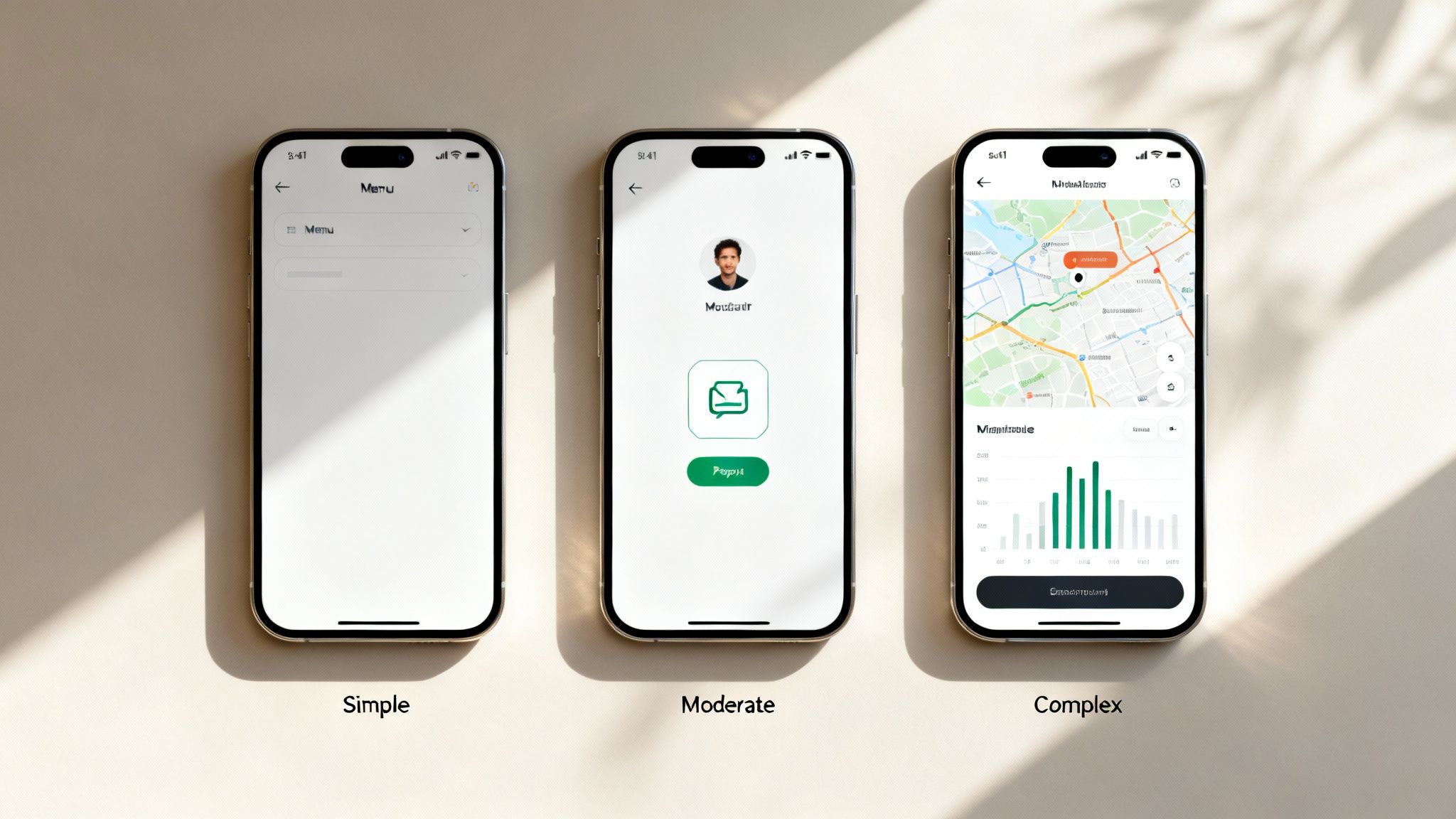
Simple Apps: The Essential Toolkit
A simple app is all about focus. It does one or two things exceptionally well without any extra bells and whistles. These apps usually have just a handful of screens, straightforward navigation, and don't need users to log in or connect to other services.
- Real-World Example: Picture a mobile app for your local coffee shop. Its main job is to show the menu, list business hours, and provide a map to the location. No user accounts, no online ordering—just clean, simple information. This is a perfect, low-cost solution for a business that needs a basic digital presence to help customers.
These apps are the most affordable and quickest to get off the ground, making them an excellent entry point for many small businesses.
Moderate Apps: Interactive And Engaging
This is where things start getting more interactive and powerful. Moderate apps bring in features that need a backend server to manage data, like user accounts, payment processing, or hooking into other software through an API (Application Programming Interface).
- Real-World Example: Think about an app for a local music festival. Users can create an account, browse the artist lineup, build a personal schedule, and buy tickets right inside the app. It has to securely handle payments and store user data, which adds a big layer of complexity compared to the coffee shop menu.
These mid-tier solutions are a fantastic fit for businesses that need to handle transactions, manage user info, or offer personalized experiences. For healthcare providers, this might mean features like appointment scheduling or secure messaging. You can dig deeper into these unique needs in our article on mobile app development for healthcare.
The jump from a simple app to a moderate one is all about moving from just displaying information to managing interactions. Each new interaction—a login, a payment, a custom notification—adds another piece to the development puzzle, affecting both the timeline and the budget.
Complex Apps: Enterprise-Grade Powerhouses
Complex, enterprise-grade apps are the most powerful and customized solutions out there. They often juggle multiple integrations, real-time data synchronization, advanced security, and sophisticated features like artificial intelligence (AI), machine learning (ML), or Internet of Things (IoT) connectivity.
- Real-World Example: Imagine a logistics and shipping company's platform. This kind of app would need to provide real-time package tracking for thousands of users, complex route optimization for drivers powered by AI, inventory management that syncs across warehouses, and secure dashboards for administrators. It’s a massive, multi-faceted system where every single component has to work together perfectly.
These apps demand extensive planning, a rock-solid architecture, and a highly skilled team to build and maintain them. Unsurprisingly, they represent the highest level of investment. The costs are heavily influenced by this complexity, where simple MVP apps might land in the $10,000 to $50,000 range, while complex enterprise solutions can easily soar to $150,000-$500,000+ over 9-18 months.
Knowing which category your app idea belongs to helps set clear expectations from the start. It turns a vague question about cost into a structured conversation about features, goals, and a budget that truly aligns with your vision.
Choosing Your Platform and Technology Stack
One of the biggest decisions you'll make is where your app will live. Should it be exclusively on Apple's App Store, Google Play, or available on both? This choice is a huge factor in your overall mobile app development cost breakdown, influencing everything from the codebase to the project timeline.
Think of it like building a house. You could build a specialized home designed perfectly for a specific climate (like a ski chalet for the mountains). Or, you could build a versatile, all-season home that functions well anywhere. The first approach is native development, and the second is cross-platform development.
Native App Development: The Specialized Approach
Native development means building a separate, custom app for each operating system—one for iOS (Apple) and another for Android (Google). This approach allows the app to take full advantage of the device's hardware and software, often resulting in the best possible performance, speed, and user experience.
But this specialized quality comes at a price. You're essentially funding two separate development projects. This means you need two distinct codebases and, often, two separate development teams with expertise in different programming languages (like Swift for iOS and Kotlin for Android).
- Pros: Highest performance, seamless integration with device features, and the most intuitive user experience.
- Cons: Higher initial cost, longer time to market, and requires separate maintenance for each platform.
Cross-Platform Development: The Versatile Solution
Cross-platform development offers a much more budget-friendly alternative. Using frameworks like React Native or Flutter, developers can write a single codebase that works on both iOS and Android devices. This is like building that one versatile house that serves everyone, rather than two separate, specialized ones.
This approach significantly reduces development time and costs because you aren't duplicating efforts. It's an excellent strategy for startups and businesses aiming to reach the widest possible audience quickly without doubling their initial investment. While there can sometimes be minor performance trade-offs compared to native apps, modern frameworks have closed this gap considerably for most use cases.
For many businesses, a cross-platform strategy is the most practical path forward. It allows for a faster launch, reaches a broader market from day one, and makes ongoing updates much more efficient—all of which are critical for maximizing your return on investment.
The financial difference here is substantial. Platform choice dramatically impacts costs: a single-platform iOS or Android app might range from $30,000-$150,000. Building for both natively can quickly multiply this to $60,000-$300,000+ because you're doubling the work. In contrast, cross-platform frameworks like Flutter or React Native can often save 30-40% of that doubled cost, making them a smart choice for budget-conscious startups. You can discover more insights about app development costs and see how business apps often fall into that moderate $60,000-$150,000 range.
Making The Right Choice For Your Goals
So, which path is right for you? The decision really comes down to balancing your budget, timeline, and performance needs.
If your app requires intensive graphics, complex animations, or deep integration with specific device hardware (like advanced camera functions), then native development might be a necessary investment.
If your goal is to launch an MVP quickly, validate your idea with a broad audience, and manage your budget carefully, then a cross-platform solution is almost always the more strategic choice.
Understanding these options empowers you to have a much more informed conversation with your development partner. This isn't just a technical detail; it's a core business decision that shapes your entire budget and your path to market. We can help you weigh these pros and cons to select the technology stack that perfectly aligns with your vision and financial plan.
Planning for Post-Launch App Success
Getting your app launched is a huge milestone, but it’s really just the starting line, not the finish. A common blind spot in many app development budgets is forgetting what comes next. Planning for post-launch success is what separates the apps that thrive from the ones that fizzle out and become obsolete.
Think of your app as a living product. Just like a new car needs regular oil changes and maintenance to keep running smoothly, your app needs consistent care to grow and stay valuable to your users. This ongoing investment is what we call the total cost of ownership, and it covers everything needed to keep your app functional, secure, and relevant in a market that never stands still.
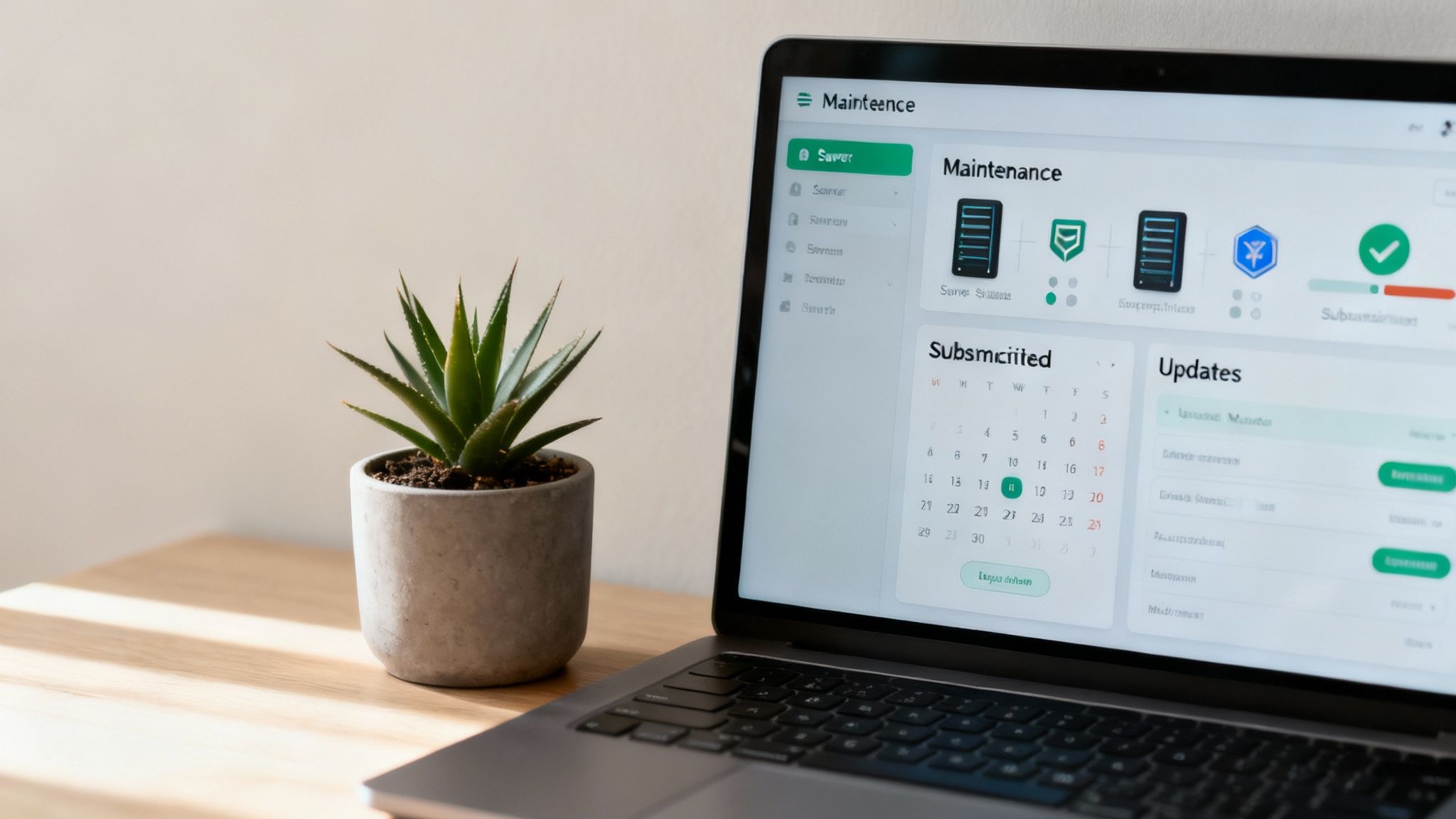
Essential Ongoing App Expenses
Once your app goes live, a few recurring costs kick in. These aren't surprises if you plan for them, but they can absolutely cripple an unprepared budget. These costs are vital for maintaining a smooth user experience and protecting the money you've already invested.
Here are the most common post-launch expenses you need to factor into your long-term plan:
- Server Hosting: All your app's data has to live somewhere. This includes costs for cloud servers, databases, and file storage. As your user base grows, you can expect these costs to scale right along with it.
- Third-Party Service Subscriptions: Most apps lean on external services for critical functions. This could be a payment gateway like Stripe, mapping from Google Maps, or push notification platforms. These usually come with monthly or usage-based fees.
- OS Updates and Compatibility: Apple and Google roll out major updates to iOS and Android every single year. Your app must be updated to stay compatible. If not, it could start crashing or losing functionality on newer devices, which is a fast way to lose users.
- Regular Bug Fixes: No app is perfect. As more people use your product on a huge variety of devices, new bugs will inevitably pop up. A dedicated maintenance plan ensures these issues get squashed quickly before they can frustrate your users.
- Security and Monitoring: Protecting user data isn't optional—it's everything. Ongoing security audits, monitoring for threats, and applying patches are crucial for keeping user trust and complying with privacy laws.
Budgeting for Long-Term Success
So, how much should you actually set aside for all this ongoing care?
A solid rule of thumb is to budget 15-20% of the initial development cost for annual maintenance. For example, if your app cost $100,000 to build, you should plan on an annual maintenance budget somewhere between $15,000 to $20,000.
This maintenance budget isn't just another line item expense; it's an investment in user retention and the long-term health of your product. A well-maintained app keeps users happy, protects your brand's reputation, and ensures your initial investment continues to pay off.
This ongoing support also paves the way for future growth. To truly get a return on your investment, you have to think long-term. This means having effective mobile app monetization strategies that can turn your app into a real revenue-generating asset. Plus, a solid maintenance plan ensures your app is always ready for new features and marketing campaigns that keep it competitive. To learn more, check out our guide on using app marketing to stand out.
At Studio Blue Creative, we believe in transparent partnerships. We help you plan for the entire lifecycle of your app, making sure you have a clear financial roadmap from launch day all the way to long-term success.
Turn Your App Idea Into a Reality
Getting a handle on the costs of building an app is the first real step toward making a smart investment. We’ve walked through how complexity, platform choices, and life after launch all play a role in shaping your final budget. And while the numbers might seem big, the most important thing to remember is that a successful app is absolutely within reach with a clear plan and the right people in your corner.
Your vision doesn't have to stay locked away as just a concept. The path from a great idea to a product people can actually use is a clear, structured process, and you don’t have to figure it out alone.
Let's Start the Conversation
Feeling like you've got a better grasp of things and are ready to move forward? This is where the real fun begins. We’ve found the best projects always start with a simple, no-pressure chat—a chance for you to ask the nitty-gritty questions about your idea and for us to understand what you're hoping to achieve.
Every successful app began with a single conversation. Taking that step to discuss your vision is the most important part of the process, transforming a possibility into a concrete plan.
We're here to help you find your way, whether you're a startup just getting off the ground, a healthcare provider, or a nonprofit with a mission. You can learn more about how we approach projects like mobile app development for nonprofits to see our commitment in action.
Let's talk about what it would take to turn your vision into a real-world, successful mobile app.
Ready to discuss your app idea? Contact us today for a free, friendly consultation, or give us a call to get your questions answered.
Your App Cost Questions, Answered
Even after breaking it all down, a few questions always seem to come up when you're trying to nail down a budget. Let's tackle those head-on so you can move forward with confidence.
Can I Get a Fixed Price for My Entire App Project?
Yes, you absolutely can. A fixed-price model is a fantastic option for projects with a crystal-clear scope, especially something like a Minimum Viable Product (MVP). It gives you total certainty on the final number, which is a huge relief for many businesses.
But for more complex builds where new ideas and features might pop up, a Time & Materials (T&M) model offers much more flexibility. T&M lets us adapt and innovate together as we build. We’ll always walk you through both options to figure out what makes the most sense for your goals and comfort level.
Is It Cheaper to Hire a Freelancer Than an Agency?
On the surface, a freelancer's hourly rate might look lower, but that price tag can be deceiving. Suddenly, you're juggling a designer, a developer, a tester… it can easily turn into a second full-time job, and that's before you account for the hidden risks of miscommunication or someone dropping the ball.
An agency brings a complete, coordinated team to the table from day one.
- Project Managers keep everything moving forward smoothly.
- UI/UX Designers craft an experience that people will love to use.
- Developers build a secure, stable, and scalable app.
- QA Specialists squash bugs before they ever reach your users.
That integrated approach often saves you a ton of money in the long run by preventing costly mistakes and delays. It's not just about building an app; it's about investing in a reliable partnership.
How Can I Reduce My Mobile App Development Cost?
One of the smartest ways to control your budget is by starting with a Minimum Viable Product (MVP). An MVP isn't a half-baked app; it's a laser-focused version that includes only the essential features needed to solve one core problem for your audience. This lets you launch faster, get real-world feedback, and learn what users actually want—all on a smaller initial investment.
Building an MVP is a strategic move. It’s about validating your big idea and learning from real users before you commit to a larger budget. You end up building a better product because it's shaped by the people who will use it every day.
Another great cost-saving strategy is to choose a cross-platform framework. Building one app that runs beautifully on both iOS and Android can save a significant amount of time and money compared to building two separate native apps from scratch. We specialize in helping clients map out these kinds of smart, phased roadmaps that perfectly align with their business goals.
At Studio Blue Creative, our job is to turn your questions into a clear plan. We know that a transparent mobile app development cost breakdown is the first step in a great partnership. Let's talk about how we can bring your vision to life within a budget that works for you.
Ready to start the conversation? Contact us today for a complimentary consultation.