
For small business owners, "digital transformation" isn't some abstract, expensive tech trend. It's about making smart, practical changes using accessible tools to solve real problems and unlock growth.
Think of it this way: you're using technology to fix the everyday headaches that slow you down. It could be as simple as setting up automated appointment reminders to reduce no-shows, or finally launching that online store you've been dreaming about. The goal is to build a business that runs more smoothly, serves customers better, and ultimately, becomes more profitable.
Why This Digital Shift Matters for Your Business
That phrase—"digital transformation"—can sound like something only giant corporations need to worry about. But for a small business, the impact is often more direct and powerful.
It’s about looking at the manual, time-consuming parts of your day and asking, "Is there a better, digital way to do this?" This isn't just a trend; it's becoming essential for staying competitive and meeting customer expectations.
Imagine a local catering company that traditionally took all orders by phone. They switched to a simple online ordering system. Suddenly, they're taking orders 24/7, even while they sleep. Order accuracy improves dramatically, and their team can focus on preparing exceptional food instead of being tied to the phone. That's the power of digital transformation in action.
The Real-World Impact on Growth and Efficiency
Integrating digital tools into your daily operations has a tangible effect on your bottom line. It’s about building a more resilient, efficient business that delights the modern customer. The best part? The benefits often appear quickly.
- Smoother Operations: When you automate repetitive tasks like sending invoices or scheduling social media posts, you reclaim precious hours. A local HVAC company we know started using automated invoice reminders and saw their average payment time drop by nearly a week, dramatically improving cash flow.
- A Better Customer Experience: Today's customers value convenience. Offering online booking, using a simple CRM to remember a client's past orders, or sending a helpful email newsletter creates a seamless, professional experience that builds loyalty and encourages repeat business.
- Smarter, Data-Backed Decisions: Once you start tracking sales through an e-commerce platform or monitoring website traffic, you're gathering powerful insights. This data shows you which products are most popular or which marketing channels bring in the best customers, allowing you to stop guessing and make informed choices.
The core idea is simple: use technology to solve specific problems. Whether it's cutting down on paperwork, reaching new customers online, or getting a clear picture of your sales, every small digital step builds a stronger, more sustainable business.
Your Surprising Advantage: Being Small
Here’s something that might surprise you: small businesses are often in a better position to make these changes than massive corporations. You're nimble. You can make decisions and implement new tools quickly, without getting bogged down in layers of corporate bureaucracy.
And the data proves it. An estimated 90% of organizations worldwide are now making some kind of digital change, a huge leap from just 50% in 2018. CEOs are seeing performance boosts of over 10%, with 56% directly tying digital improvements to more revenue.
Here’s the real kicker: small firms with fewer than 100 employees succeed 2.7 times more often than giant enterprises. You can dig into more digital transformation statistics to see just how powerful this trend is.
At its heart, this is a journey of achievable upgrades that deliver measurable results. It's about building a more profitable business by focusing on practical solutions.
If you're ready to get your online presence firing on all cylinders, you'll find great next steps in our guide on digital marketing tips for small business. The process starts by pinpointing your biggest operational headaches and finding the right tools to solve them.
Building Your Practical Digital Roadmap
Jumping into a digital shift without a clear plan is like trying to build a house without a blueprint. You’ll waste time, money, and energy on tools that don’t truly move your business forward. A practical digital roadmap ensures every change you make is intentional and aligned with your growth goals.
This plan isn't about the tech itself; it's your guide. It keeps you and your team focused on what truly matters, starting with an honest look at where the friction is in your business right now.
Pinpointing Your Operational Bottlenecks
Before you can build a better way of working, you have to get honest about what’s currently broken. Where does work get stuck? What simple tasks take far too long?
Think about a local law firm that spends hours each week manually creating client intake forms, sending reminders, and then re-typing that same information into their case management system. Or a boutique retail shop owner who constantly struggles with inventory, running out of popular items while others gather dust. These aren't just minor annoyances; they are significant roadblocks holding back growth.
To find your own, start by asking some direct questions:
- What repetitive task does everyone on the team dread? This is often the perfect candidate for automation.
- Where do our customers get frustrated? Is it trying to book an appointment, get a quick quote, or find basic information on your website?
- What simple mistakes happen over and over? Manual data entry is a classic source of errors that digital tools can eliminate.
Setting Clear and Measurable Goals
Once you’ve identified the problems, you need to define what success looks like in concrete terms. Vague goals like "be more efficient" or "get more customers" are not actionable because you can't measure them. Your roadmap needs specific, numbers-based targets.
Instead of "improve efficiency," a better goal is to reduce administrative time spent on invoicing by five hours per week by implementing an automated billing system. Don't just aim to "get more customers"; set a target to increase online sales by 15% in the next quarter by launching a user-friendly e-commerce site.
A goal isn’t real until you can measure it. Attaching a number and a timeline transforms a vague wish into a clear target, providing the focus every small business owner needs.
This simple process is a powerful way to make sure your efforts translate into tangible growth.
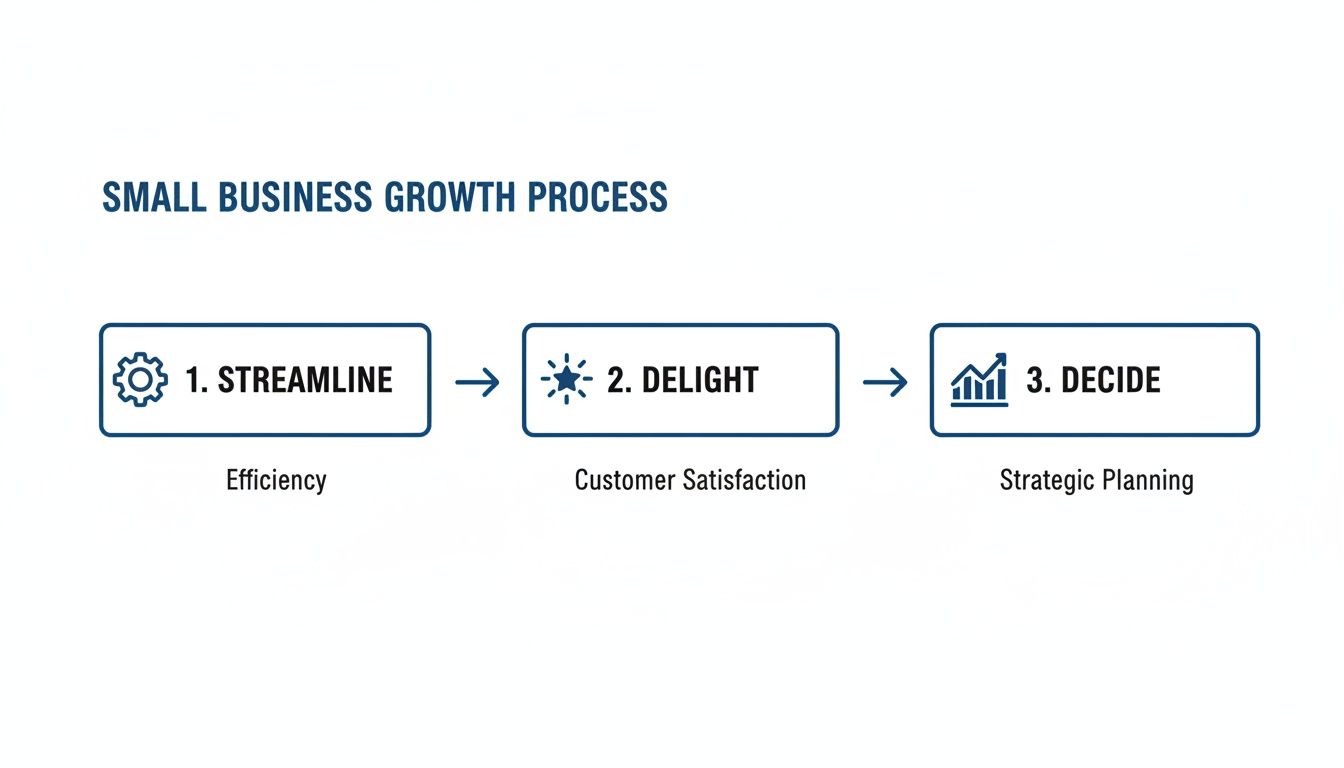
When you streamline how you work, you free up time to delight your customers, which in turn gives you the data you need to make smarter decisions. It’s a positive cycle that fuels itself.
Prioritizing for Immediate Impact
Here’s the reality: you can't do everything at once. Trying to will only lead to burnout and a collection of half-finished projects. The secret is to identify the "quick wins"—projects that deliver the biggest impact for the least amount of time and money.
A quick win provides immediate, visible value. It builds momentum and gets your team excited about the positive changes. It proves that this digital shift actually works.
Consider a small physical therapy clinic. Their biggest headache is the endless phone tag required to schedule new patient evaluations.
- The huge, complex project: Building a custom, all-in-one patient portal with billing, records access, and secure messaging. This is a massive, costly undertaking.
- The quick-win project: Implementing a simple, affordable online scheduling tool that integrates directly with their existing calendar.
The scheduling tool solves their most pressing problem right now. It frees up the front desk staff and offers a modern convenience that patients appreciate. That immediate success makes it much easier to justify a larger project down the road. Your roadmap should be a living document, starting with these foundational wins and growing with your business.
Choosing the Right Technology Without the Headache
Navigating the world of technology can feel overwhelming. With an endless variety of software, platforms, and apps, it's easy to get stuck in "analysis paralysis." But remember, the goal isn’t to find a mythical “perfect” tool. It’s to find the right tool that solves your specific problems today and can grow with you tomorrow.
The key is to cut through the noise. A successful digital transformation for a small business comes down to making confident, practical decisions—not chasing every new app that appears in your social media feed. The right tech should make your life easier, not add another layer of complexity.

Starting with Your Foundational Tools
For most small businesses, the digital journey begins with two core platforms: your website and your e-commerce solution. Think of these as your digital storefront and primary sales tool. Getting them right is non-negotiable.
When it comes to your website, platforms like WordPress are popular for a reason. They offer a fantastic blend of user-friendliness and powerful customization. You can start with a simple, professional template and then add new functionality—like a booking calendar or a client portal—as your business grows.
If you're selling products, solutions like Shopify or WooCommerce (a plugin for WordPress) provide a solid, scalable foundation. They handle everything from inventory management to secure payment processing, letting you focus on creating and selling great products.
When Off-the-Shelf Software Isn't Enough
Every growing business eventually hits a point where pre-built software no longer fits. You find yourself creating clunky workarounds and wasting time trying to force a tool to do something it wasn't designed for. This is the moment a custom-built solution can become a genuine game-changer.
We see this happen all the time with our clients:
- A local service business: They were drowning in paperwork, trying to manage job schedules, client details, and invoicing with a messy combination of spreadsheets and notebooks. We helped them build a simple, custom mobile app that allowed their field technicians to update job statuses and create invoices on-site, saving the office staff dozens of hours each week.
- A specialized consulting firm: They needed a secure way for clients to upload sensitive documents and track project milestones. Standard file-sharing services didn't offer the security or branding they required. A custom client portal solved both problems, elevating their professional image and streamlining their workflow.
The decision to go custom isn't about adding complexity; it's about gaining a competitive edge. When a unique process is central to how you serve your clients, investing in a tool built specifically for that process delivers an unmatched return on investment.
To streamline your operations and get valuable time back in your day, exploring the best small business automation tools can be a huge help. These resources can uncover opportunities you might not have even considered.
Making a Future-Proof Decision
Choosing the right technology is about balancing today’s needs with tomorrow’s ambitions. The goal is to build an integrated digital ecosystem where your tools communicate with each other, eliminating manual data entry and creating a single source of truth for your business.
The evidence is clear: nearly 9 in 10 small business leaders in the U.S. say that investing in digital tools has made them more confident and productive. For small businesses, embracing technologies like cloud platforms and automation isn't just a "nice-to-have" anymore; it's about building a foundation for future growth.
As you build out your tech stack, it's vital to think about how new systems will connect with your existing ones. A good partner can help you select technologies that not only solve today's problems but also work together harmoniously down the road. That’s how you turn technology from a headache into your greatest asset.
Getting Your Team Onboard with New Tech
You can invest in the most amazing technology on the market, but if your team doesn't use it, that investment is wasted. The human side of digital transformation isn't just a piece of the puzzle—it's the most critical factor for success.
The secret is to get your employees excited and confident about new tools, not resistant or overwhelmed. This turns a good idea into a real-world operational advantage. It requires moving beyond just announcing a change and, instead, building genuine buy-in by clearly communicating the "why." Don't just show them a new CRM; explain how it will eliminate the tedious data entry they dislike, freeing them up to spend more time building real relationships with customers.

From Resistance to Empowerment
Let's be honest: resistance to change is natural. People get comfortable with their workflows, even inefficient ones. Your job is to show them a better way and make the transition as smooth as possible.
This is where practical, hands-on training becomes non-negotiable. It has to be relevant to their daily jobs, not a generic software tutorial.
Small businesses are in a period of cautious optimism, with growth as the top focus. In fact, 49% list their ability to grow as their top concern, and that uncertainty can make anyone hesitant to adopt new ways of working. But businesses that lean into technology are the ones that pull ahead. You can explore more of this data in the latest small business outlook report.
When employees see how a new tool directly solves a daily frustration, they stop seeing it as a burden and start seeing it as a solution. That’s the turning point where real adoption begins.
Practical Strategies for a Smooth Rollout
A successful launch is the result of a thoughtful, people-first approach that builds confidence and positive momentum from day one.
Here are a few powerful strategies that work wonders:
- Appoint a Tech Champion: Identify someone on your team who is naturally curious about technology and enjoys helping others. Make them the go-to person for their colleagues' questions. Peer support is often more effective and less intimidating than going to a manager.
- Start with a Pilot Group: Instead of rolling out a new system to everyone at once, test it with a small, trusted group first. This allows you to work out any kinks, gather honest feedback, and refine your training process in a low-stakes environment.
- Create an Open Feedback Loop: Make it incredibly easy for your team to share what’s working and what isn’t. This could be a dedicated Slack channel, a simple suggestion box, or quick weekly check-ins. When you actively listen and respond to feedback, you not only improve the process but also make your team feel valued and heard.
Ultimately, the goal is to create a culture where technology is seen as an enabler, not an obstacle. When you invest as much in your people as you do in your platforms, you empower your team to use new tools to their full potential, driving the real growth you’re after.
How to Measure Your Digital Success
Investing in new technology is a great step, but how do you know if it’s actually paying off? A true digital transformation for a small business isn't just about launching a new website; it's about seeing a tangible return on that investment. You need data to guide your decisions and prove the value of your efforts.
This means looking beyond surface-level "vanity metrics" like social media likes or website page views. While nice to see, they don't tell you much about the health of your business. To truly understand the impact, you need to focus on the key performance indicators (KPIs) that connect directly to your bottom line.
Moving Beyond Surface-Level Numbers
The goal is to link your digital initiatives to real business results. Did that new online booking system actually reduce no-show appointments? Did your e-commerce platform not only increase sales but also raise the average order value? These are the questions that good data can answer.
Start by tying your measurements back to the goals you set in your digital roadmap. If your objective was to reduce administrative workload, a key metric would be the number of staff hours saved per week. If you were aiming for better customer loyalty, you would track your repeat purchase rate.
Key Performance Indicators That Matter
You don't need a complex analytics department to do this. You just need to focus on the right things. Here are a few powerful KPIs that provide real insight:
- Customer Acquisition Cost (CAC): How much do you have to spend on marketing and sales to gain one new customer? Your digital efforts should help lower this number over time by improving targeting and efficiency.
- Conversion Rate: This is the percentage of website visitors who take a desired action, like filling out a contact form or making a purchase. A rising conversion rate is a clear sign that your website and marketing are working effectively. We explore this in our guide on how to increase website conversions.
- Operational Efficiency Gains: This is about measuring specific improvements. For example, did a new project management tool reduce project completion time by 10%? Has automating your invoicing process cut down on late payments by 25%?
Your data should tell a story. It should paint a clear "before and after" picture, showing exactly how a digital change led to a positive business outcome. This is how you build momentum and justify future investments.
And if you're building any custom software, it's vital to track effective Software Development KPIs. This ensures your tech investment is directly supporting your business goals.
Setting Up Simple Analytics
You don't need to be a data scientist to get started. Free tools like Google Analytics provide a wealth of information about your website traffic and user behavior. Most modern e-commerce and CRM platforms also have built-in dashboards that make it easy to track sales trends and customer interactions.
The secret is consistency. Set aside time each month to review your core KPIs. Look for trends, celebrate your wins, and identify areas that need a different approach. This regular check-in turns guesswork into a clear, strategic path forward, proving the value of what you’ve done and illuminating the way for what’s next.
Your Partner in Digital Growth
Taking the first step toward digital transformation can feel daunting, but it's really a series of manageable steps focused on achieving real results. The good news is you don’t have to figure it all out on your own.
For over a decade, our veteran-owned team at Studio Blue Creative has been working alongside small businesses, healthcare providers, and nonprofits, guiding them through this exact journey. We’ve seen what works and what doesn't. Whether you need to rescue a website project that has gone off track or build a custom application from the ground up, we have the hands-on experience to get it done right.
Our mission is simple: we translate your business goals into practical, scalable digital solutions. We handle the technical heavy lifting so you can stay focused on what you do best—running your business and serving your customers.
We believe the best results come from a true partnership. It all starts with a friendly, no-pressure conversation to understand your vision and the challenges you're facing. From there, we can explore how to turn your ideas into a digital reality that drives growth.
Ready to see what's possible? Let’s talk about your goals. Contact us today to schedule a free consultation, and let's start building your future, together.
Common Questions About Going Digital
Embarking on a digital journey for your small business is a significant step, and it's natural to have questions. Here are straightforward answers to some of the most common ones we hear, designed to give you clarity and confidence.
How Much Should a Small Business Budget for Digital Transformation?
There's no single magic number. Your budget should align directly with your goals. The best approach is to start small and focused. Pinpoint a major headache in your business—like a clunky manual process that wastes hours—and fund a "quick win" project to solve it.
This could be a few thousand dollars for a professional, SEO-optimized website that starts generating leads, or a larger investment in custom software to automate a core part of your operations. The key is to begin with projects that deliver a clear, measurable return. Your early successes can then help fund the next phase of your growth.
Do I Need to Be a Tech Expert to Manage This?
Absolutely not. Your expertise is in running your business, and that’s where your focus should remain. Your role in this process is to understand your operational challenges and be clear about the outcomes you want technology to help you achieve.
A great digital partner—like us—exists to translate those business needs into the right technical solutions. We handle the details of web design, e-commerce platforms, and custom development. We provide clear guidance and manage the project, allowing you to stay focused on what you do best.
How Long Does It Take to See Real Results?
You can often see a return much faster than you might think. While a full transformation is a long-term journey, individual projects can deliver value almost immediately.
For example, a well-executed local SEO campaign can start bringing new leads to your business within weeks. By automating a tedious administrative task like invoicing or appointment scheduling, you’ll see an immediate payoff in the hours your team gets back every single week.
We always advise our clients to pursue a mix of projects. Some should deliver immediate, tangible wins to build momentum, while others are strategic investments that build long-term value.
This balanced approach ensures you feel the positive impact of your investment right from the start. It proves the concept, builds excitement for what comes next, and paves the way for bigger, more transformative changes down the road.
At Studio Blue Creative, we turn business goals into practical, scalable digital solutions. If you're ready to have a friendly, no-pressure chat about your vision, we're here to help. Contact us today to explore what's possible.
Find out if ChatGPT recommends your business.
Right now, your customers are asking AI for recommendations. The AI is naming somebody. Is that name yours? Run our free AEO Scorecard — we test 3 of your real queries against ChatGPT and Claude and email you a personalized report.