
Quick answer: Hiring a web designer in Huntsville, AL as a small business owner means finding someone who understands local search, mobile performance, and conversion — not just aesthetics. Expect to invest $2,500–$10,000+ for a professional custom site. Prioritize designers who offer SEO integration, fast load times, and ongoing support. Whether you're in Huntsville or nearby markets like Nashville or Jackson, TN, the right digital partner turns your website into a 24/7 sales tool. This guide covers everything you need to know before signing a contract.
1. Why Huntsville, AL Small Businesses Need a Professional Web Presence Now

Huntsville’s small business community is competing in an increasingly crowded digital landscape. Whether you run a law firm in Madison, a restaurant near Bridge Street, or a home services company in Meridianville, your website is often the single most important marketing asset you own. Understanding why a professional web presence matters — and what it takes to build one — is the first step toward sustainable growth.
The Huntsville Digital Economy Is Growing Fast
Huntsville, Alabama has transformed over the past decade from a mid-sized Southern city into one of the fastest-growing tech and aerospace hubs in the United States. With the U.S. Space & Rocket Center, Redstone Arsenal, and a booming corridor of defense contractors and tech startups, the city’s consumer base is increasingly digital-first. According to the U.S. Census Bureau, Huntsville’s metro population surpassed 500,000 in 2023 — and those residents are searching for local businesses online before they ever walk through a door.
For small businesses — from HVAC contractors to boutique retailers — a professionally built website is no longer optional. It’s the first handshake with a potential customer.
What 'Good Enough' Really Costs You
Studies by Stanford Web Credibility Research show that 75% of users judge a company’s credibility based on its website design. A slow, outdated, or mobile-unfriendly site doesn’t just look bad — it actively drives customers to competitors. Google’s Core Web Vitals update means that page speed and user experience now directly affect your search ranking. A site that loads in 5 seconds loses roughly 90% of mobile visitors compared to one that loads in 1 second, according to Google’s own research.
The cost of a poor website isn’t just aesthetic — it’s measurable lost revenue every single day.
2. What a Web Designer in Huntsville, AL Actually Does
The term ‘web designer’ gets used loosely, and that ambiguity costs small businesses time and money. Before you hire anyone, you need a clear picture of what a professional web design engagement covers — from the first discovery call to post-launch support. Here’s what to expect from a qualified vendor serving the Huntsville, AL market.
Design vs. Development: Know the Difference
Web design refers to the visual and UX layer — layout, color palettes, typography, imagery, and the overall user journey. Web development is the technical build — writing code, connecting databases, building forms, and making everything function. Many small business owners hire a ‘web designer’ expecting both, so it’s critical to clarify upfront what a vendor actually delivers.
A full-service agency handles design, development, copywriting, and SEO under one roof. A freelance designer may hand off a beautiful mockup that still needs a developer to build. Always ask: Who writes the code?
Core Deliverables You Should Expect
A professional web design engagement for a Huntsville small business should include at minimum:
- Custom or semi-custom design (not a generic template drop)
- Mobile-responsive layout tested on iOS and Android
- On-page SEO setup: meta titles, descriptions, heading hierarchy, image alt text
- Contact forms and click-to-call functionality
- Google Analytics 4 and Search Console integration
- SSL certificate and basic security hardening
- Page speed optimization targeting a Lighthouse score above 80
Anything less than this list is a partial product, not a complete website.
Ongoing Maintenance and Support
Websites are not ‘set it and forget it’ assets. WordPress plugins require updates, hosting environments change, and Google’s algorithm evolves constantly. Ask every prospective designer about their post-launch support plan. Monthly maintenance retainers typically run $75–$250/month for small business sites and cover plugin updates, uptime monitoring, backups, and minor content edits. Without this, a site can degrade in performance and security within 6–12 months of launch.
3. How Much Does a Web Designer Cost in Huntsville, AL?

Cost is the first question every small business owner asks — and it’s the right question. But ‘how much does a website cost?’ has a frustratingly wide answer range. Here’s a transparent breakdown of what you’ll actually pay for a professional web design in the Huntsville, AL market, and what drives prices up or down.
Freelancer vs. Agency vs. DIY Builder
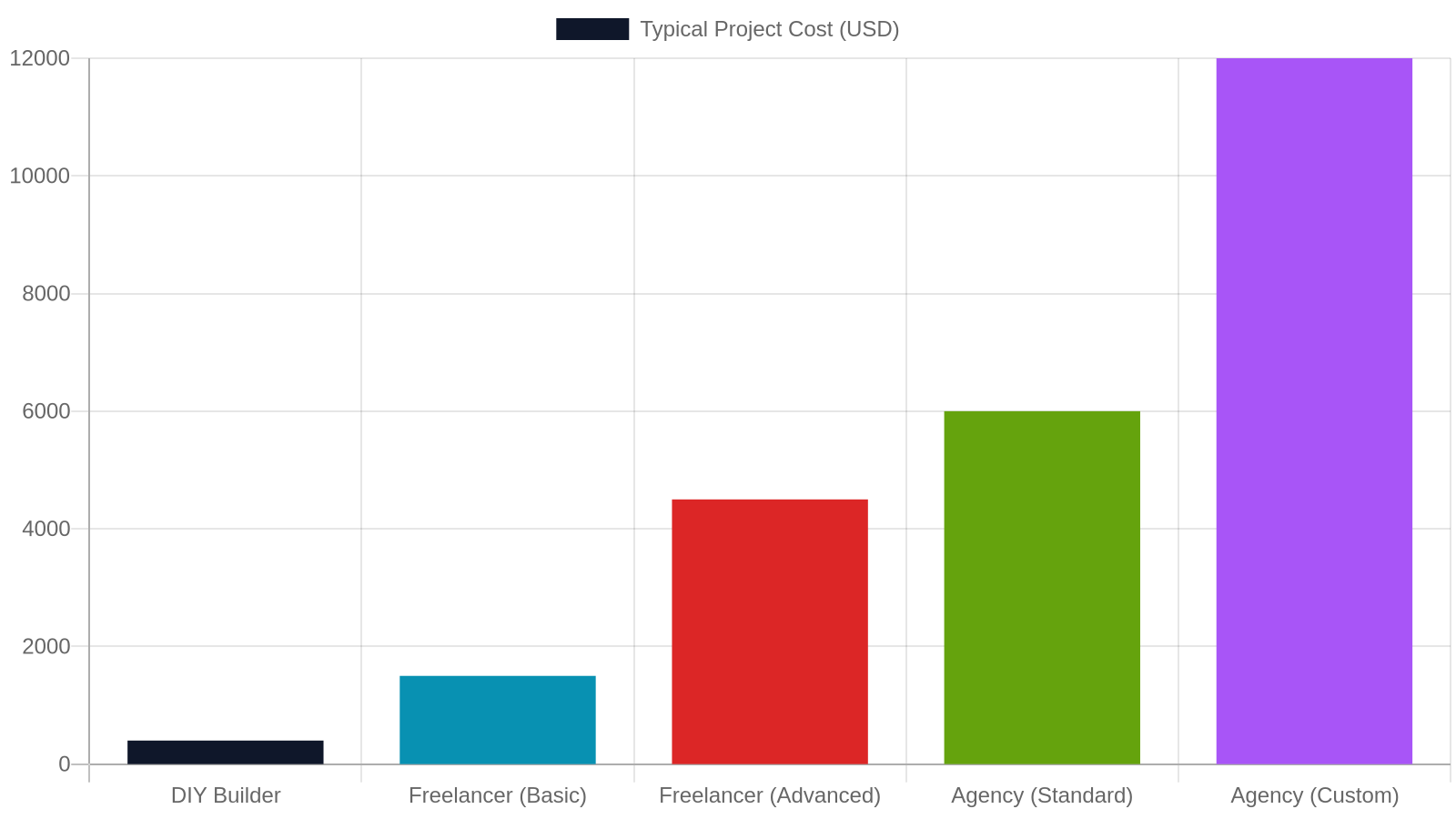
Pricing in the Huntsville market generally breaks down into three tiers:
- DIY builders (Wix, Squarespace, Shopify): $16–$49/month. You get a template, but no custom development, no SEO strategy, and no professional guidance. Good for a side hustle; risky for a real business.
- Freelance designer: $1,200–$5,000 for a 5–10 page site. Quality varies widely. Vet portfolios carefully and ask about SEO and post-launch support.
- Full-service digital agency: $3,500–$15,000+ depending on scope. Includes strategy, design, development, copywriting, and SEO setup. Best ROI for businesses serious about growth.
Most established Huntsville small businesses investing in digital growth land in the $4,000–$8,000 range for an initial custom build.
Hidden Costs to Budget For
Beyond the design fee, budget for these recurring and one-time costs:
- Domain registration: $15–$20/year
- Managed WordPress hosting: $25–$75/month (WP Engine, Kinsta, or SiteGround Business)
- Premium plugins: $200–$600/year (SEO tools, forms, security, backups)
- Professional photography: $300–$1,200 (stock photos undermine local credibility)
- Ongoing SEO retainer: $500–$2,000/month if you want to rank competitively
A realistic all-in budget for year one — design plus infrastructure plus SEO — is $7,000–$20,000 for a growth-oriented small business.
4. The 7 Features Every Huntsville Small Business Website Must Have

Not all websites are created equal. A site that looks great in a portfolio screenshot can still fail your business if it’s missing the structural and technical features that drive traffic and convert visitors. Here are the seven non-negotiable features a Huntsville, AL small business website must include in 2024 and beyond.
Mobile-First Design and Core Web Vitals
Over 63% of Google searches in the U.S. now happen on mobile devices. Google indexes the mobile version of your site first. This means your designer must build mobile-first — not just ‘make it responsive’ as an afterthought. Core Web Vitals (Largest Contentful Paint under 2.5s, Cumulative Layout Shift under 0.1, Interaction to Next Paint under 200ms) are now confirmed ranking signals. Ask your designer for Lighthouse scores before and after launch.
Local SEO Structure Built Into the Design
A beautiful site that nobody finds is a liability. Local SEO must be baked into the architecture from day one:
- LocalBusiness schema markup on the homepage and contact page
- NAP consistency (Name, Address, Phone) in the footer on every page
- Location-specific landing pages if you serve multiple cities
- Google Maps embed on the contact page
- Title tags and meta descriptions that include your city and service
Without these elements, even a well-designed site will struggle to appear in ‘near me’ searches — the highest-intent queries your customers make.
Clear Calls to Action and Lead Capture
Every page of your site should answer one question: What do you want the visitor to do next? For most Huntsville small businesses, that’s either call, fill out a form, or book an appointment. Your designer should place a primary CTA above the fold on every page, use contrasting button colors, and ensure forms are short (name, phone, email, message — nothing more). Sites with a single, clear CTA convert up to 371% better than sites with multiple competing CTAs, according to WordStream research.
5. Local SEO vs. Traditional SEO: What Huntsville Businesses Need to Know

Many Huntsville small business owners conflate ‘SEO’ with ‘ranking on Google’ — but local SEO is a distinct discipline with its own signals, strategies, and tools. Understanding the difference between local and traditional SEO helps you ask better questions when hiring a web designer, and ensures your site is built to capture the customers who are literally around the corner.
How Google Decides Who Shows Up in Local Results
Google’s local algorithm weighs three primary factors: relevance (does your business match the search?), distance (how close are you to the searcher?), and prominence (how well-known and trusted is your business online?). Your website contributes to all three — but only if it’s built with local SEO in mind. Schema markup tells Google exactly what your business does and where. Review signals from Google Business Profile feed into prominence. Location pages target specific neighborhoods like Hampton Cove, Madison, or Meridianville.
Answer Engine Optimization (AEO) for Local Businesses
A newer and increasingly critical layer is Answer Engine Optimization (AEO) — structuring your content so AI-powered search tools like Google’s AI Overviews, ChatGPT, and Perplexity cite your business as an authoritative answer. For a Huntsville plumber, HVAC company, or law firm, being cited in an AI answer is the equivalent of a featured snippet — except it appears in conversational AI responses that millions of users now rely on daily.
AEO requires FAQ schema, structured content with direct answers, and authoritative citations. It’s the next frontier of local digital marketing, and most small business websites in Huntsville are not yet optimized for it. Learn how AEO services work and why forward-thinking businesses are investing in it now.
Google Business Profile: Your Website's Best Friend
Your Google Business Profile (GBP) and your website work together as a system. A fully optimized GBP — with accurate hours, photos, service descriptions, and a steady stream of reviews — amplifies your website’s local ranking power. Businesses with complete GBP profiles are 70% more likely to attract location visits, according to Google. Your web designer should help you connect the two: embedding your GBP map, linking your website URL, and ensuring NAP data is identical across both platforms.
6. How to Evaluate a Web Designer's Portfolio and Credentials
Choosing the wrong web designer is an expensive mistake that can set a small business back 12–18 months. The good news: a thorough vetting process filters out the bad actors quickly. Here’s exactly how to evaluate a designer’s portfolio, credentials, and contract before you hand over a deposit.
What to Look for in a Portfolio
A portfolio is more than pretty screenshots. When reviewing a designer’s past work, ask these questions:
- Do the sites load fast? (Run them through PageSpeed Insights yourself.)
- Are they mobile-friendly on your phone right now?
- Do they rank for anything? (Search the client’s business name + city and see if the site appears.)
- Is the design style versatile, or does every site look identical?
- Are there real businesses with real reviews behind these projects?
A designer who can’t show you live, ranking sites is selling potential, not proven results. You can browse Studio Blue Creative’s portfolio to see examples of real work for real Tennessee and Alabama businesses.
Questions to Ask Before You Sign
Before committing to any web design contract, get clear answers to these questions:
- Who owns the website and domain after launch? (You should — always.)
- What platform will the site be built on? (WordPress is preferred for flexibility and SEO.)
- What does the revision process look like?
- What happens if I want to move to a different host or designer later?
- Do you include on-page SEO setup, or is that extra?
- What is your typical timeline from kickoff to launch?
A reputable designer answers these questions confidently and in writing. Vague answers are a red flag.
Red Flags That Signal a Bad Hire
Watch out for these warning signs when vetting web designers in the Huntsville area:
- No contract or vague scope of work — sets up disputes later
- Promises of ‘#1 on Google’ in 30 days — this is impossible and likely black-hat
- They retain ownership of your domain or hosting — a common lock-in tactic
- No post-launch support plan — you’ll be on your own the moment something breaks
- Template sites sold as ‘custom’ — check if the design matches other sites in their portfolio exactly
7. WordPress vs. Other Platforms: The Right Choice for Huntsville Businesses
The platform your website is built on affects everything: your SEO ceiling, your ability to add features, your long-term costs, and your freedom to switch vendors. This is one of the most important decisions in any web design project — and many small businesses don’t ask about it until it’s too late to change course.
Why WordPress Dominates Small Business Web Design
WordPress powers 43% of all websites on the internet as of 2024 — and for good reason. It offers unmatched flexibility, a massive ecosystem of plugins, and full ownership of your content. For small businesses, WordPress is the gold standard because:
- You own your site completely and can move hosts freely
- Thousands of SEO, e-commerce, and form plugins exist
- Developers are abundant and affordable
- It integrates natively with Google Analytics, Search Console, and most CRMs
Custom WordPress plugin development — like booking systems, lead routing, or membership portals — can be built specifically for your business workflow without expensive SaaS subscriptions.
When Shopify, Wix, or Squarespace Make Sense
Not every business needs WordPress. Here’s when alternatives make sense:
- Shopify: Best for pure e-commerce businesses with large product catalogs (50+ SKUs). Excellent payment infrastructure, but limited SEO flexibility.
- Squarespace: Good for portfolio-style businesses — photographers, artists, consultants — where design matters more than SEO depth.
- Wix: Acceptable for very simple, low-traffic sites. Poor SEO ceiling and limited scalability.
For most Huntsville small businesses — service companies, professional practices, local retailers — WordPress on managed hosting is the right long-term investment.
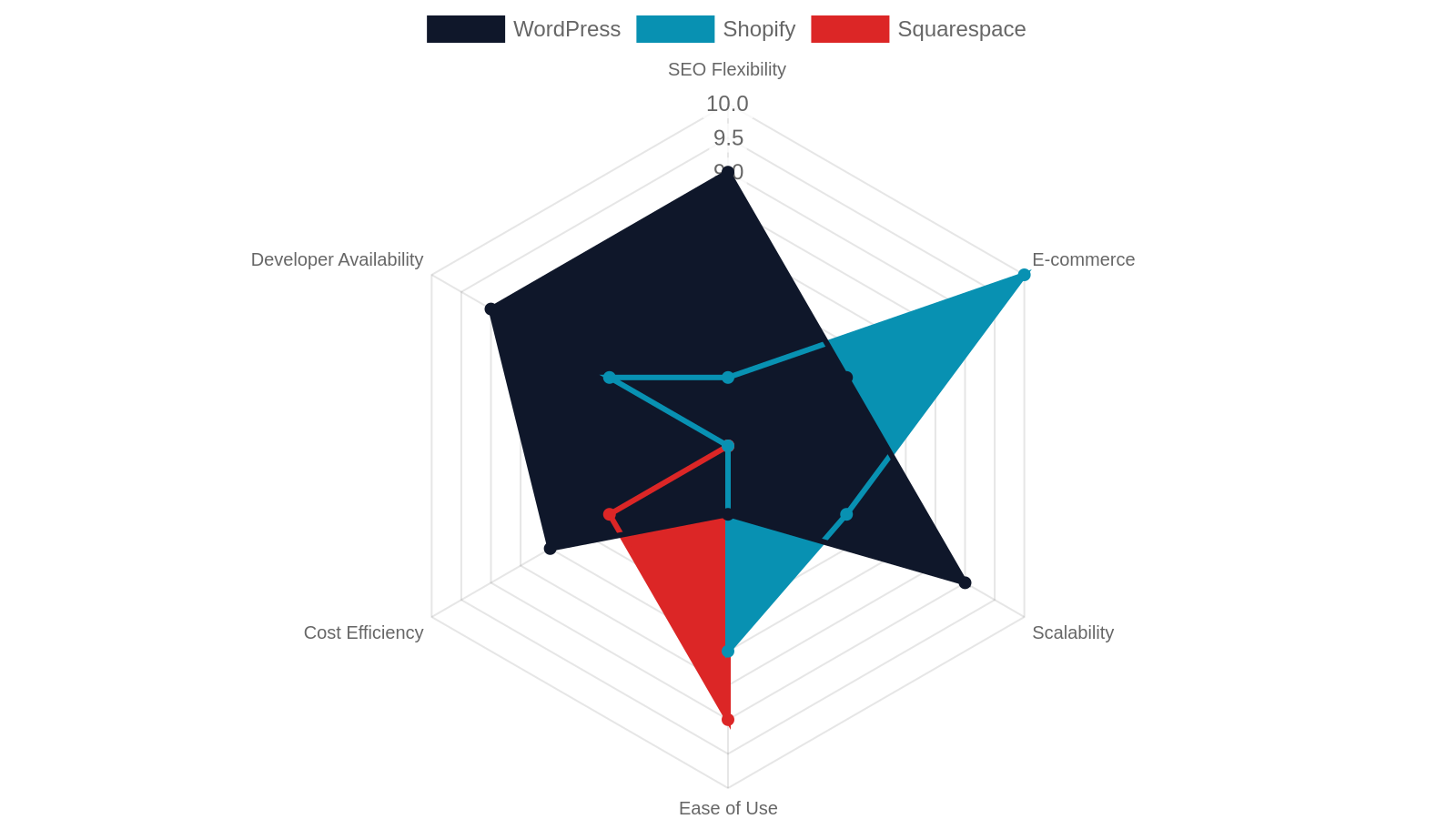
Web Design Options Compared: 5-Point Scorecard for Huntsville Small Businesses
Use this table to quickly compare your main web design options across the factors that matter most to a small business owner.
8. The Role of AI and Automation in Modern Small Business Websites

The websites that outperform competitors in 2024 and beyond aren’t just well-designed — they’re intelligent. AI-powered features are no longer reserved for enterprise companies with six-figure tech budgets. Small businesses in Huntsville, AL can now deploy sophisticated automation and AI tools at accessible price points, turning their website into an active business development system rather than a passive digital brochure.
AI Chatbots: 24/7 Lead Capture Without Extra Staff
AI-powered chatbots have moved far beyond the clunky FAQ bots of 2018. Modern AI chatbot systems can qualify leads, answer service questions, book appointments, and route inquiries to the right team member — all without human intervention. For a Huntsville HVAC company or law firm that gets after-hours inquiries, a chatbot can mean the difference between a captured lead and a lost customer. Implementation costs have dropped significantly: a well-configured AI chatbot can be live on your WordPress site for $150–$400/month depending on volume.
Workflow Automation That Saves Real Hours
Beyond chatbots, AI workflow automation connects your website to your CRM, email marketing, invoicing, and scheduling tools. A new form submission can automatically trigger a welcome email, create a CRM contact, assign a sales rep, and schedule a follow-up — all in seconds. Businesses that implement automation report saving 6–10 hours per week on manual administrative tasks. For a small team, that’s the equivalent of hiring a part-time employee without the payroll cost.
Generative Engine Optimization (GEO): The New Frontier
Generative Engine Optimization (GEO) is the practice of structuring your website content so that AI tools like ChatGPT, Google Gemini, and Perplexity cite your business in their generated responses. As more consumers use conversational AI to find local services, being cited as an authoritative source becomes a competitive advantage. GEO requires specific content architecture, entity definitions, and citation-friendly data — all of which should be built into your site from the ground up. Explore GEO services designed specifically for small businesses in competitive local markets.
9. Serving Huntsville and Beyond: Regional Web Design Considerations

Huntsville’s geographic position — at the northern edge of Alabama, close to the Tennessee state line — means many local businesses have customers in multiple markets. A web design strategy that accounts for regional reach, multi-city SEO, and cross-state audience differences will dramatically outperform a single-city approach. Here’s how to think about regional web presence as a Huntsville-based small business.
Targeting Multiple Cities Without Diluting Your SEO
Many Huntsville small businesses serve customers across a wide region — Madison, Decatur, Athens, Scottsboro, and even into Middle Tennessee. Targeting multiple cities in your web design requires a deliberate strategy: individual location landing pages (not duplicate content), city-specific schema markup, and locally relevant content on each page. A page titled ‘HVAC Repair in Madison, AL’ that contains genuine local information — neighborhood references, local landmarks, city-specific service details — will outrank a generic page stuffed with city names.
Cross-State Businesses: Tennessee and Alabama Markets
Some businesses operate across state lines — serving both Huntsville, AL and markets like Nashville, Franklin, or Jackson, TN. This creates unique SEO challenges: state-specific licensing references, different consumer search behaviors, and the need for separate regional content strategies. A digital agency with experience in both the Tennessee and Alabama markets understands these nuances. Studio Blue Creative serves businesses across the Nashville Metro and West Tennessee, and works with clients who need visibility in both the Tennessee and North Alabama corridors.
10. Timeline and Process: What to Expect From Kickoff to Launch
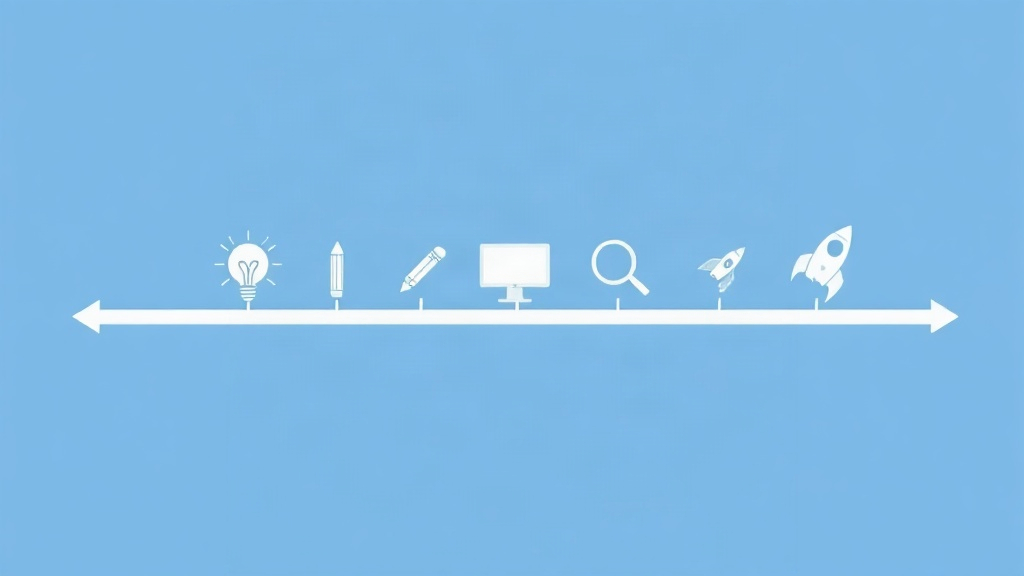
One of the most common frustrations small business owners have with web design projects is unclear timelines and undefined processes. Knowing what to expect — and what’s expected of you — prevents delays, miscommunications, and the dreaded ‘the site has been ‘almost done’ for three months’ situation. Here’s a transparent look at how a professional web design project should run from start to finish.
A Realistic Web Design Timeline
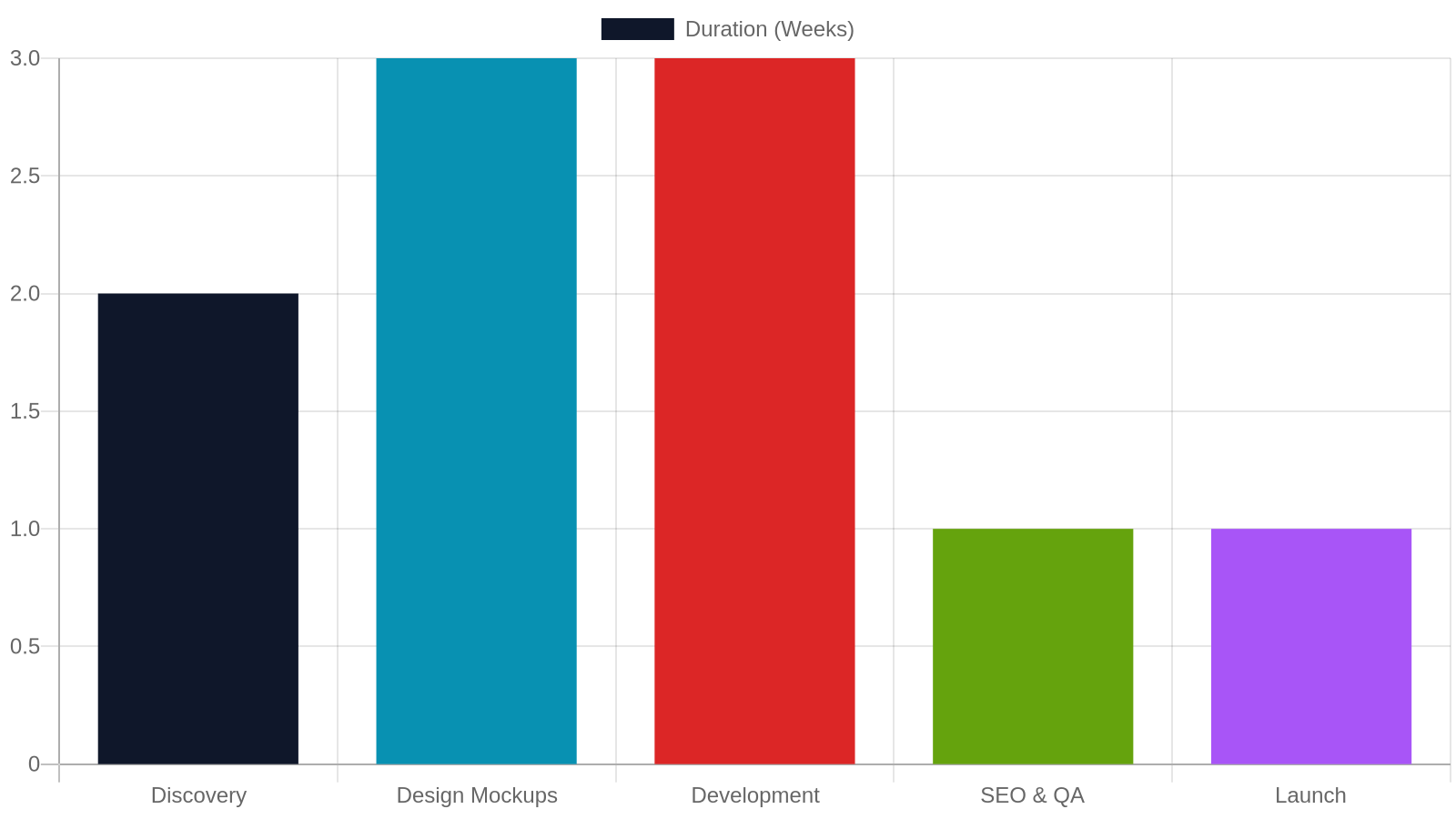
Small business web design projects typically follow this timeline:
- Week 1–2: Discovery, strategy session, sitemap approval, and content gathering
- Week 3–5: Design mockups (homepage + interior pages) and client review rounds
- Week 6–8: Development build on a staging environment
- Week 9: Content population, SEO setup, and QA testing
- Week 10: Client review, final revisions, and launch
A 10-week timeline is realistic for a 5–10 page custom site. Rush projects can compress to 4–6 weeks at a premium. Beware designers who promise a finished site in 1–2 weeks — that usually means a template with your logo dropped in.
Your Role as the Client
The biggest cause of project delays is the client — not the designer. Be prepared to provide:
- Your logo files (vector format preferred)
- Professional photography or approval to source stock images
- Copywritten content for each page (or a budget for copywriting services)
- List of services, service areas, and pricing (if public-facing)
- Access to your domain registrar and existing hosting
- Timely feedback during review rounds (within 3–5 business days)
Clients who come prepared and respond quickly consistently get better results and faster launches.
Post-Launch: The First 90 Days
The 90 days after launch are critical. Your designer should submit your sitemap to Google Search Console, monitor for crawl errors, and verify that all tracking is firing correctly. You should begin collecting Google reviews immediately — fresh reviews signal to Google that your business is active and trustworthy. If you’re investing in SEO, expect to see initial ranking movement within 60–90 days for low-competition local keywords, and 6–12 months for competitive terms.
Ready to Build a Website That Actually Grows Your Business?

You’ve read the guide. You know what a professional website costs, what it should include, how to vet a designer, and what the process looks like. Now the question is: who do you trust to build it? For small businesses in Huntsville, AL and across the Tennessee-Alabama corridor, the right digital partner makes the difference between a website that sits idle and one that generates leads every single day.
Why Work With a Tennessee-Based Agency for Your Huntsville Project
Studio Blue Creative is a Tennessee-based digital agency serving Nashville Metro, Jackson, and the broader Mid-South region — including businesses in North Alabama markets like Huntsville. We understand the competitive landscape across state lines, the nuances of local SEO in both Tennessee and Alabama, and the specific needs of small and mid-sized businesses that want real results, not just a pretty website.
Our services span the full digital stack: custom WordPress development, AEO and GEO content strategy, AI chatbots and workflow automation, Google Business Profile setup, and ongoing SEO. Whether you’re starting from scratch or rebuilding a site that isn’t performing, we offer a free website health check to identify exactly where your current site is losing you business.
Get a Free Estimate Today
Every project at Studio Blue Creative starts with a free, no-obligation estimate. We’ll review your current digital presence, discuss your goals, and give you a clear picture of what a professional web design engagement would look like for your specific business — including timeline, deliverables, and investment range.
Call us directly at 731-402-0402 or explore our full service offerings to see everything we bring to the table. We work with businesses across Nashville, Franklin, Brentwood, Murfreesboro, Jackson, and the Huntsville, AL corridor — and we’re ready to help your business show up, stand out, and convert.
Frequently Asked Questions
How much does a web designer cost for a small business in Huntsville, AL?
Most Huntsville small businesses pay between $3,500 and $10,000 for a professionally designed custom website. Freelancers start around $1,200–$3,000, while full-service agencies typically range from $5,000–$15,000 depending on scope, features, and SEO integration.
How long does it take to build a small business website?
A standard 5–10 page custom WordPress site takes approximately 8–10 weeks from kickoff to launch. This includes discovery, design mockups, development, SEO setup, and quality assurance testing. Rush timelines of 4–6 weeks are possible at a premium.
What platform should a Huntsville small business use for their website?
WordPress is the recommended platform for most small businesses because it offers the best combination of SEO flexibility, scalability, plugin ecosystem, and full ownership. Shopify is better for large e-commerce catalogs; Squarespace suits portfolio-style businesses.
Does my website design affect my Google ranking?
Yes, significantly. Google's Core Web Vitals — which measure page speed, visual stability, and responsiveness — are confirmed ranking signals. A slow or mobile-unfriendly site will rank lower than a fast, well-structured competitor, even if your content is superior.
Can a web designer in Tennessee help a business in Huntsville, AL?
Absolutely. Digital services are location-agnostic, and agencies with experience in both the Tennessee and North Alabama markets understand the regional SEO landscape, cross-state consumer behavior, and the competitive dynamics of markets like Huntsville, Nashville, and Jackson.
What is AEO and why does it matter for my Huntsville business website?
Answer Engine Optimization (AEO) is the practice of structuring your website content so AI-powered tools like Google's AI Overviews, ChatGPT, and Perplexity cite your business as an authoritative answer. As more consumers use AI search, AEO helps your business appear in those responses — capturing high-intent leads who may never click a traditional search result.
Find out if ChatGPT recommends your business.
Right now, your customers are asking AI for recommendations. The AI is naming somebody. Is that name yours? Run our free AEO Scorecard — we test 3 of your real queries against ChatGPT and Claude and email you a personalized report.
Ready for a real website?
Get a tailored 3-tier proposal in under a minute — including our Launch Deal ($699), a custom build, or our SEO Growth Package. No call required.