

Quick answer: Before hiring a web agency in Tennessee — whether in Nashville, Franklin, Brentwood, or Jackson — review their portfolio for seven key signals: industry-relevant case studies, measurable results, mobile responsiveness, SEO and AEO readiness, custom versus template work, local market knowledge, and transparent process documentation. A strong portfolio is not just a gallery of pretty screenshots; it is a track record of business outcomes. Agencies that show real before-and-after data, cite specific performance gains, and demonstrate familiarity with Tennessee's competitive local markets are the ones worth your budget.
Why a Portfolio Review Is the Most Important Step Before Signing a Contract

Choosing a web agency is one of the highest-stakes vendor decisions a small or mid-sized business makes. A poorly built website can cost you leads for years; a well-built one compounds in value month after month. The portfolio review is your single best tool for predicting which outcome you will get — and yet most business owners spend less than ten minutes on it.
This guide walks you through the seven portfolio signals that matter most, with specific guidance for businesses in the Nashville Metro and West Tennessee markets where local context is a genuine competitive advantage.
A Portfolio Is a Proof-of-Work Document, Not a Brochure
Any agency can write compelling copy about their capabilities. A portfolio, however, cannot lie in the same way — it is a verifiable record of what the team has actually shipped. When evaluating a Tennessee web agency, treat the portfolio the way a hiring manager treats a résumé: look for specifics, question gaps, and verify claims wherever possible.
According to a 2023 Clutch survey of B2B buyers, 84% of small business owners said a portfolio was the single most influential factor in their agency selection decision — outranking price, referrals, and even sales calls. That number should tell you everything about where to spend your due-diligence time.
What a Weak Portfolio Looks Like (and Why It's a Red Flag)
Weak portfolios share common traits: generic screenshots with no context, client names withheld entirely, no mention of results, and work that all looks the same regardless of industry. If every site in an agency’s portfolio uses the same layout, color palette, and content structure, that is a strong signal the team relies on a single template rather than building custom solutions.
- No measurable outcomes — traffic lifted by X%, leads increased by Y%
- No industry variety — all restaurants, or all e-commerce, with no demonstrated range
- No process narrative — just images, no explanation of the challenge or solution
- Outdated work — case studies from 2018 or earlier suggest the team has not evolved
1. Industry-Relevant Case Studies That Match Your Business Type

The first filter to apply when reviewing any Tennessee web agency’s portfolio is simple: have they worked with businesses like yours? This is not about gatekeeping creativity — agencies that cross industries often bring fresh ideas. But relevant experience dramatically reduces the learning curve and the risk of costly misunderstandings about your audience, your compliance needs, or your competitive landscape.
Why Industry Match Matters More Than Agency Size
A 50-person agency that has never worked with a home-services company in Murfreesboro is less valuable to a Murfreesboro HVAC contractor than a boutique studio that has built three lead-generation sites for trades businesses in Middle Tennessee. Industry familiarity means the agency already understands your buyer’s journey, your compliance constraints, and the keywords your competitors are targeting.
Look for at least two to three case studies in your vertical or in an adjacent one. If the agency has worked with professional services firms, healthcare providers, restaurants, or e-commerce brands in Tennessee, they will have a head start on your project — and that head start translates directly into lower revision cycles and faster time-to-launch.
How to Read a Case Study Like a Pro
A well-written case study follows a simple arc: problem → approach → outcome. When you read an agency’s case studies, ask yourself whether each one answers these three questions clearly:
- What was the client’s specific business problem? (Not ‘they needed a new website’ — but ‘they were losing 60% of mobile visitors at checkout’)
- What specific decisions did the agency make? (Technology choices, UX strategy, content architecture)
- What changed after launch? (Conversion rate, organic traffic, Google Business Profile views, revenue)
If a case study reads like a press release — all superlatives and no data — treat it as a yellow flag. If it reads like a project debrief with honest context, that is a team that takes accountability seriously.
2. Measurable Results, Not Just Pretty Screenshots

Screenshots of beautiful websites are table stakes. What separates a high-performing Tennessee web agency from a design shop is the ability to connect their creative output to business outcomes your accountant would recognize. Before you schedule a discovery call, look specifically for quantified results in the portfolio — and know which numbers to trust.
The Metrics That Actually Matter for Small Businesses
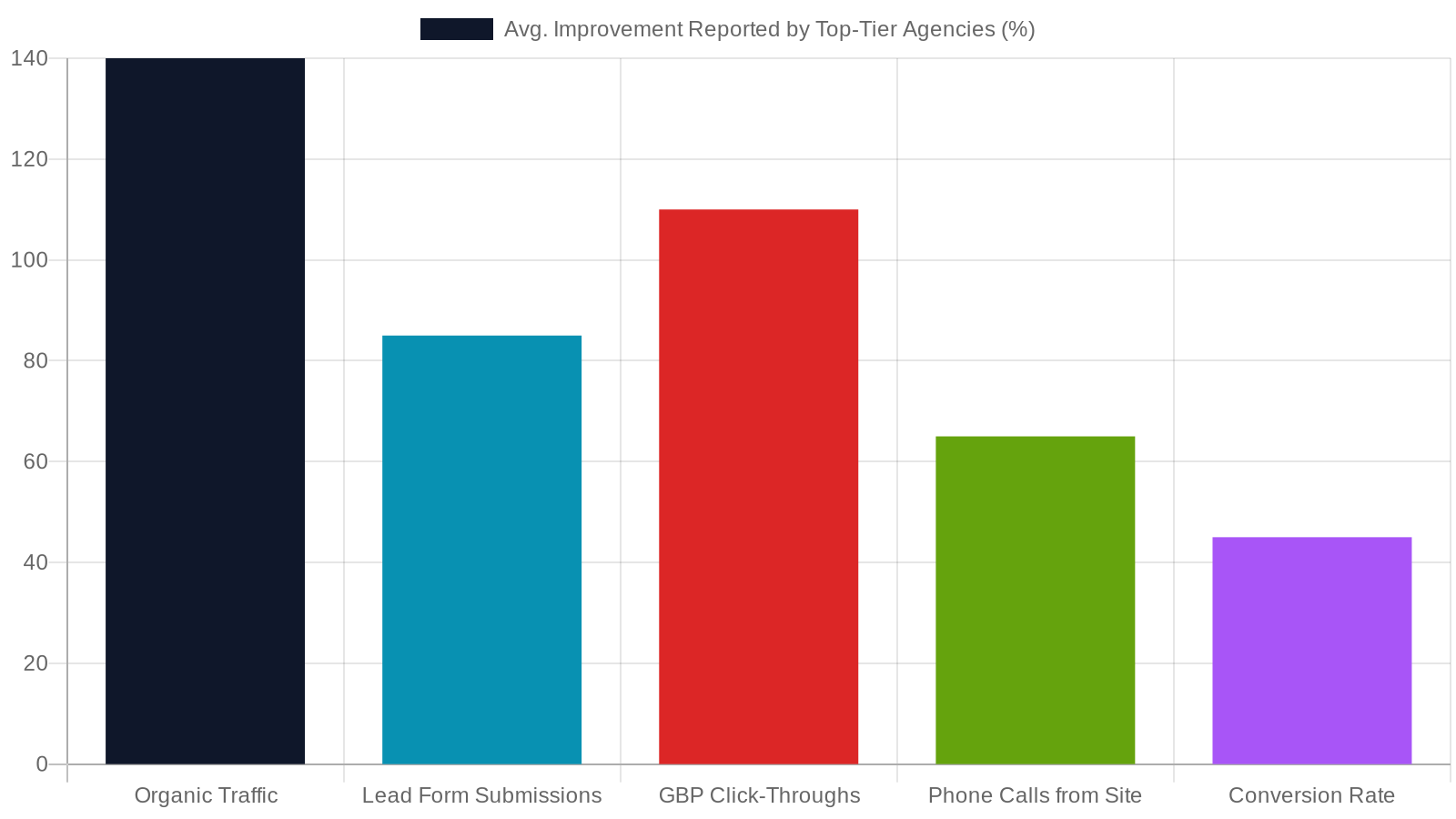
Vanity metrics — bounce rate, page views, social shares — are easy to cherry-pick. The metrics that matter for a small business in Franklin or Jackson are the ones tied to revenue: organic search traffic growth, lead form submissions, phone call volume from the website, and Google Business Profile click-through rates.
When reviewing a portfolio, look for agencies that cite specific percentage improvements with a time frame. For example: ‘Organic sessions increased 140% in six months after a content and schema overhaul’ is a meaningful claim. ‘We improved their online presence’ is not. The difference tells you whether the agency tracks outcomes or just deliverables.
How to Verify the Numbers You See
You do not have to take portfolio claims on faith. Here are three quick verification tactics:
- Ask for a reference call with the featured client — any agency confident in their results will facilitate this.
- Run the live site through free tools like Google PageSpeed Insights, Semrush’s free audit, or Ahrefs’ free backlink checker to see whether the site’s current performance matches the claims.
- Check the Wayback Machine (web.archive.org) to compare the before-and-after states of the site and judge the transformation for yourself.
Agencies that have nothing to hide will welcome this scrutiny. Those that resist or deflect are telling you something important.
3. Mobile-First Design and Core Web Vitals Performance

In the Nashville Metro and across West Tennessee, your customers are searching for you on their phones — in the car, at lunch, between meetings. A portfolio that does not demonstrate mobile-first design and strong Core Web Vitals scores is a portfolio built for a search landscape that no longer exists. Here is exactly what to test.
Why Mobile Performance Is Non-Negotiable in 2025
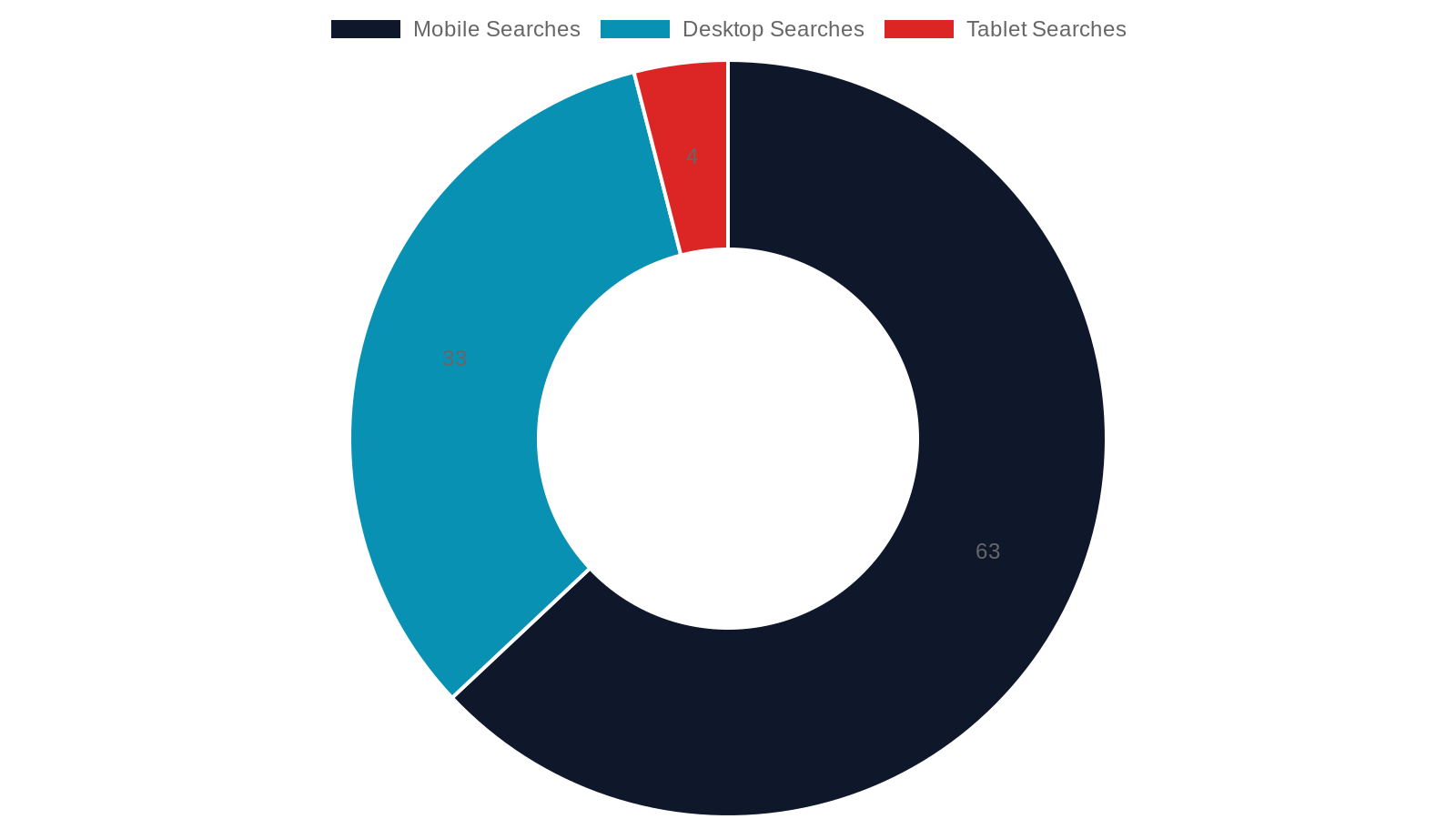
As of 2024, 63% of all Google searches in the United States originate from a mobile device, and Google’s ranking algorithm uses mobile-first indexing — meaning it evaluates the mobile version of your site first. An agency that builds beautiful desktop sites but neglects mobile UX is building you a liability, not an asset.
When you review portfolio sites, open every one on your phone. Check load speed, tap-target sizes, font legibility, and whether forms actually work on a small screen. If the agency’s own website is slow or awkward on mobile, that is the clearest possible signal about the quality of their client work.
Core Web Vitals: The Three Numbers to Check
Google’s Core Web Vitals are three measurable signals of real-world user experience:
- LCP (Largest Contentful Paint): Should be under 2.5 seconds. Measures how fast the main content loads.
- INP (Interaction to Next Paint): Should be under 200 milliseconds. Measures responsiveness to user input.
- CLS (Cumulative Layout Shift): Should be under 0.1. Measures visual stability — does the page jump around as it loads?
Run any portfolio site through Google PageSpeed Insights and look for green scores on all three. A strong Tennessee web agency will be proud to show you these numbers — and may even include them in the case study itself.
4. SEO, AEO, and GEO Readiness Built Into the Work
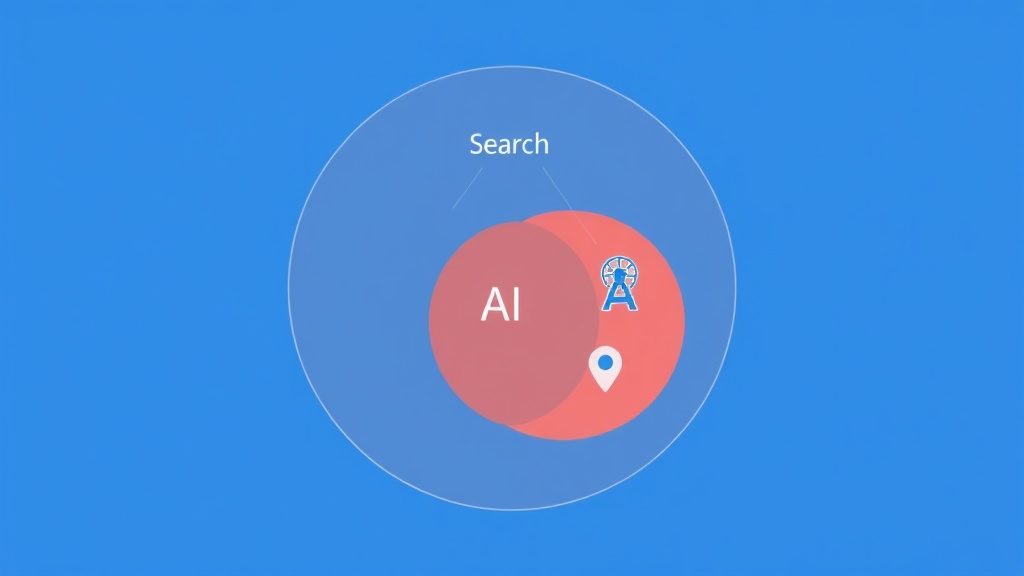
A website that looks great but cannot be found is a very expensive business card. The best Tennessee web agencies build search visibility into the architecture of every project — not as an afterthought, but as a foundational design constraint. Here is how to tell whether a portfolio demonstrates genuine SEO, AEO, and GEO competency.
Traditional SEO: What the Portfolio Should Show
A portfolio site that ranks well in organic search is evidence that the agency understands on-page SEO: keyword-aligned page titles, descriptive meta descriptions, logical heading hierarchies (H1 → H2 → H3), fast load times, and clean internal linking. You can verify this without any paid tools — just right-click any portfolio site, choose ‘View Page Source,’ and look at the title tag and meta description. If they are generic or missing, the agency does not prioritize SEO fundamentals.
Ask the agency directly: ‘Do you build schema markup into every site?’ Structured data (JSON-LD schema) is now a baseline requirement for appearing in Google’s rich results and AI Overviews — not an optional add-on.
AEO and GEO: The New Frontier Tennessee Agencies Must Navigate
Answer Engine Optimization (AEO) and Generative Engine Optimization (GEO) are the disciplines that determine whether your business appears when someone asks ChatGPT, Perplexity, Google’s AI Overview, or Apple Intelligence a question relevant to your services. These are not future concerns — they are present-day traffic sources that most small businesses in Nashville and Jackson are completely ignoring.
Look for agencies that mention AEO, GEO, structured data, or AI visibility in their portfolio narratives. Agencies that are already building for answer engines are the ones whose clients will maintain visibility as search behavior continues to shift. Studio Blue Creative, for example, offers dedicated AEO services and GEO services specifically designed for Tennessee small businesses navigating this transition.
5. Custom Development vs. Template Work — and Why It Matters

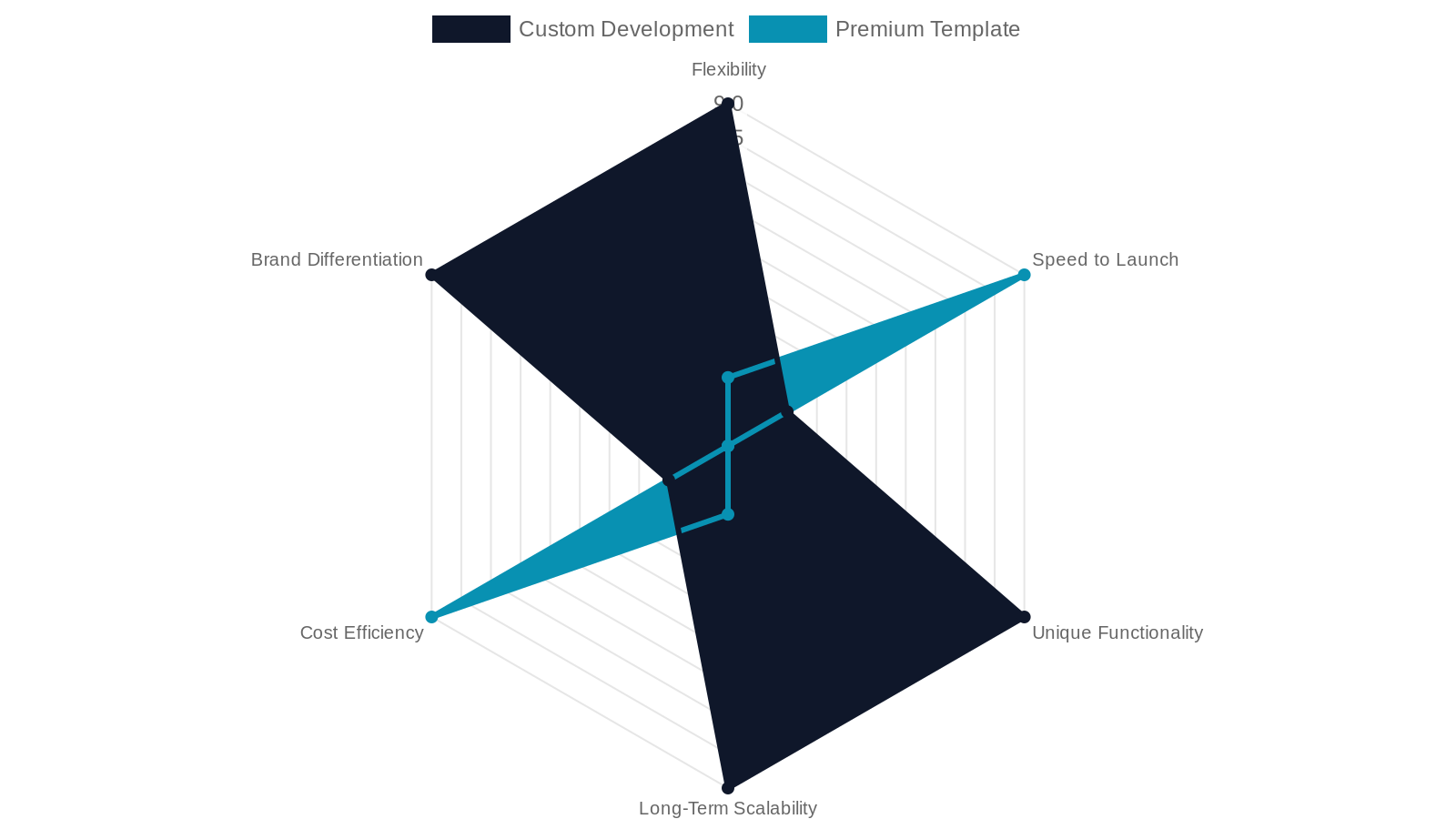
Not all websites are built the same way, and the difference between a template deployment and a custom build can mean the difference between a site that grows with your business and one that hits a ceiling in eighteen months. When reviewing a Tennessee web agency’s portfolio, you need to understand how the work was built, not just what it looks like.
How to Spot a Template Site in a Portfolio
Template-based sites are not inherently bad — for a simple brochure site with a modest budget, a well-configured WordPress theme can be perfectly adequate. The problem arises when an agency charges custom-development prices for template work, or when a template’s structural limitations prevent your site from doing what your business actually needs.
Signs a portfolio site is template-based: identical section layouts across multiple client sites, the same font pairings appearing repeatedly, footer structures that match popular themes like Divi or Elementor, and page-load times that suggest a bloated page builder. None of these are disqualifying — but they should prompt a direct conversation about what you are actually paying for.
When Custom Development Is Worth the Premium
Custom development — whether that means a bespoke WordPress theme, a custom plugin, or a headless CMS architecture — becomes worth the premium when your business has unique functional requirements: booking systems, custom quoting tools, membership portals, API integrations, or proprietary data displays. If the agency’s portfolio includes examples of these kinds of builds, they have the technical depth to handle complexity.
Ask to see the GitHub repository or get a technical brief on one of their more complex projects. A development team that is proud of their code will share it. One that cannot explain their technical decisions in plain language is one you should approach with caution.
6. Local Market Knowledge Specific to Tennessee

A web agency based in California or New York can build a technically excellent website. But a Tennessee-based agency with genuine local market knowledge brings something that cannot be replicated remotely: an understanding of how people in Nashville, Franklin, Murfreesboro, Jackson, and surrounding communities actually search, compare, and decide. Here is how to verify that local knowledge in a portfolio review.
Why Nashville Metro and West Tennessee Are Different Markets
Tennessee is not a monolithic market. The Nashville Metro — encompassing Nashville, Franklin, Brentwood, Murfreesboro, Hendersonville, and Mount Juliet — is one of the fastest-growing metros in the United States, with intense local search competition across nearly every service category. West Tennessee, anchored by Jackson, has a different competitive density, different consumer behavior patterns, and different keyword landscapes.
An agency that has worked in both markets understands that a content strategy that wins in Brentwood may need significant adjustment to win in Jackson. Local knowledge means knowing which neighborhoods to geo-target, which review platforms matter most to your audience, and how to structure Google Business Profile content for Tennessee-specific search intent.
Portfolio Signals of Genuine Local Expertise
Look for these specific signals in a portfolio that claims Tennessee market expertise:
- Client testimonials that name specific Tennessee cities — not just ‘a Nashville client’ but named businesses with verifiable locations
- Case studies that reference local search terms — ‘ranked #1 for HVAC repair Franklin TN’ rather than generic keyword claims
- Google Business Profile optimization work — agencies that understand GBP are agencies that understand local search
- LocalBusiness schema implementation — structured data that tells Google exactly where a business operates and what it offers
An agency rooted in Tennessee will also understand the seasonal patterns that affect local search volume — tourism spikes, academic calendars, and regional events that create predictable demand shifts your content strategy should account for.
7-Point Portfolio Evaluation Scorecard for Tennessee Web Agencies
Use this table to score each agency you are evaluating on a 1–5 scale. Weight the criteria by importance to your project, then multiply score × weight for a weighted total.
7. Transparent Process Documentation and Client Communication
A beautiful portfolio with no process narrative is like a restaurant menu with no prices — it tells you what is possible but nothing about the experience of getting there. The seventh and often most overlooked portfolio signal is evidence that the agency has a repeatable, documented process that protects clients from scope creep, missed deadlines, and communication breakdowns.
What Good Process Documentation Looks Like in a Portfolio
The best agency portfolios do not just show the finished product — they walk you through the journey. This might take the form of a discovery-to-launch timeline, a description of the stakeholder interview process, wireframe or prototype images, or an explanation of how the agency handled a mid-project pivot. This level of transparency signals a team that is organized, communicative, and accountable.
Process documentation also tells you what it will be like to work with this agency day-to-day. If they cannot explain their own workflow clearly in a portfolio case study, imagine how they will communicate during a complex build with shifting requirements and tight deadlines.
Questions to Ask About Process Before You Sign
Use the portfolio review as a springboard for these process-focused questions in your discovery call:
- ‘How do you handle scope changes after the project has started?’
- ‘What project management tools do you use, and will I have access to them?’
- ‘How frequently will we have scheduled check-ins?’
- ‘What does your handoff process look like — will I be able to edit the site myself after launch?’
- ‘Do you offer ongoing support retainers, and what do they include?’
An agency that answers these questions with specifics — not generalities — is an agency that has been through enough projects to have developed real systems. That experience is what protects your budget and your timeline.
How to Compare Multiple Tennessee Web Agencies Side by Side
Once you have applied the seven-point framework to each agency’s portfolio, the next step is structured comparison. Gut feelings have their place, but when you are committing $5,000 to $50,000 to a web project, a systematic side-by-side evaluation protects you from expensive regret. Here is how to do it efficiently.
Building Your Own Scorecard
After reviewing three to five agency portfolios, it is easy for the details to blur together. Build a simple scorecard using the seven criteria from this guide: industry relevance, measurable results, mobile performance, SEO/AEO/GEO readiness, custom vs. template capability, local market knowledge, and process transparency. Rate each agency on a 1-5 scale for each criterion, then weight the criteria by how important they are to your specific project.
For example, a Nashville restaurant group launching a new location might weight local market knowledge and Google Business Profile expertise most heavily. A Murfreesboro SaaS startup might weight custom development capability and AEO readiness above everything else. The scorecard forces you to be explicit about your priorities before price enters the conversation.
Red Flags That Should End the Conversation
Some portfolio signals are not yellow flags — they are stop signs:
- No live portfolio sites — if every link goes to a PDF or a screenshot, ask why the live sites are not available
- Plagiarized or stock-photo-heavy case studies — reverse image search any ‘client photos’ you see
- No verifiable client references — a legitimate agency will always have at least two clients willing to take a reference call
- Pressure to sign before the portfolio review is complete — this is a classic high-pressure sales tactic, not a sign of a confident team
- Pricing that seems too low to be sustainable — a custom WordPress site with SEO integration in the Nashville market should realistically cost $3,500–$15,000+ depending on scope; anything dramatically below that warrants scrutiny
Ready to See a Portfolio Built for Tennessee Businesses?

You have now read every signal that separates a high-performing Tennessee web agency portfolio from a collection of pretty screenshots. The framework works — but only if you apply it. Use the comparison table below as a quick reference, then take the most important next step: look at real work, talk to real clients, and get a real number on your project before you commit.
What Sets Studio Blue Creative Apart in the Nashville and Jackson Markets
Studio Blue Creative is a Tennessee-based digital agency serving the Nashville Metro — including Franklin, Brentwood, Murfreesboro, Hendersonville, and Mount Juliet — as well as Jackson and surrounding West Tennessee communities. Unlike generalist agencies that treat SEO and AEO as optional line items, Studio Blue Creative builds search visibility into every project from day one: structured data, mobile-first architecture, Core Web Vitals optimization, and AI-answer-engine readiness are standard, not upgrades.
The agency’s service stack covers the full digital footprint a modern Tennessee small business needs: custom WordPress development, AI chatbot and automation systems, Google Business Profile setup, AEO content strategy, GEO local landing pages, and ongoing performance monitoring. Every engagement starts with a free estimate — no obligation, no pressure, just a clear picture of what your project will require and what it will cost.
Your Next Step: Review the Portfolio and Request a Free Estimate
The best way to evaluate any agency is to look at their actual work. Browse the Studio Blue Creative portfolio to see real projects built for Tennessee businesses — with context, results, and the technical detail you now know to look for. If you see work that resonates with your goals, the next step is simple: call 731-402-0402 for a free, no-pressure estimate tailored to your business, your market, and your budget.
Whether you are launching a new site in Nashville, rebuilding an underperforming one in Jackson, or trying to get your business found in Google’s AI Overviews and answer engines, Studio Blue Creative has the local knowledge and technical depth to move the needle. Reach out today — free estimates are always available, and the conversation costs you nothing.
Frequently Asked Questions
How much does a custom website cost from a Nashville web agency?
A custom WordPress website from a reputable Nashville web agency typically ranges from $3,500 for a simple brochure site to $15,000 or more for a feature-rich build with SEO, AEO, and custom functionality. Template-based builds can cost less but may limit scalability. Always get a detailed scope document before comparing quotes.
What is the difference between AEO and SEO for a Tennessee small business?
Traditional SEO optimizes your website to rank in Google's blue-link results. AEO (Answer Engine Optimization) goes further — it structures your content so that AI tools like ChatGPT, Google's AI Overview, and Perplexity cite your business when answering relevant questions. For Tennessee small businesses, both matter: SEO drives organic traffic today, while AEO builds visibility in the AI-powered search landscape that is rapidly replacing traditional results.
How do I verify that an agency's portfolio results are real?
Ask for a reference call with a featured client, run any live portfolio site through Google PageSpeed Insights and a free SEO audit tool, and use the Wayback Machine to compare the site before and after the agency's work. Legitimate agencies welcome this scrutiny and will facilitate client introductions without hesitation.
Should I hire a local Tennessee web agency or a national one?
For most small and mid-sized businesses in Nashville, Jackson, or surrounding Tennessee communities, a local agency offers meaningful advantages: familiarity with regional search behavior, knowledge of local competitors, and the ability to meet in person for discovery sessions. National agencies may offer broader resources, but the local context advantage is hard to replicate remotely, especially for GEO and local SEO work.
What is GEO and why does it matter for my business in Tennessee?
GEO stands for Generative Engine Optimization — the practice of structuring your web content and local business data so that AI-powered tools like Google's AI Overview, Bing Copilot, and ChatGPT surface your business in generated answers. For Tennessee businesses competing in markets like Nashville or Jackson, GEO is increasingly important as more customers use AI assistants to find local services instead of scrolling through traditional search results.
How long does it take to build a website with a Tennessee web agency?
A simple brochure site typically takes 4–8 weeks from kickoff to launch. A custom build with e-commerce, booking systems, or complex integrations can take 10–20 weeks. Agencies with documented processes and clear milestone schedules tend to hit these timelines more reliably — ask any agency you are considering for a sample project timeline before signing.
Find out if ChatGPT recommends your business.
Right now, your customers are asking AI for recommendations. The AI is naming somebody. Is that name yours? Run our free AEO Scorecard — we test 3 of your real queries against ChatGPT and Claude and email you a personalized report.
Ready for a real website?
Get a tailored 3-tier proposal in under a minute — including our Launch Deal ($699), a custom build, or our SEO Growth Package. No call required.