

Quick answer: A lead generation website for a small business typically costs between $500 and $15,000 to build, depending on whether you use a DIY builder, a freelancer, or a professional agency. Ongoing monthly costs — hosting, maintenance, SEO, and paid ads — add another $100 to $3,000 per month. The right investment depends on your industry, competition level, and how many leads you need to grow. Nashville and West Tennessee businesses competing in crowded markets generally see the strongest ROI from custom-built, SEO-optimized sites in the $3,000–$8,000 range.
What Is a Lead Generation Website (and Why Does It Cost More Than a Brochure Site)?
Before pricing anything, it helps to understand exactly what a lead generation website is — and why it commands a higher budget than a simple five-page business site. The short answer: a lead gen site is a sales tool, not just a digital business card, and building an effective sales tool requires more strategy, more technology, and more ongoing attention.
Brochure Site vs. Lead Gen Site: The Core Difference
A brochure website tells visitors who you are. A lead generation website converts visitors into paying customers. That distinction drives every dollar of the price difference. A lead gen site requires strategic copywriting, conversion-optimized landing pages, contact forms tied to a CRM, call-tracking numbers, and often live chat or chatbot integrations — none of which a basic brochure site needs.
- Brochure site goal: inform and build credibility
- Lead gen site goal: capture name, phone, email, and intent — then trigger a follow-up sequence
According to HubSpot’s 2024 State of Marketing report, businesses with 10–15 landing pages generate 55% more leads than those with fewer than 10. That structural complexity is a big reason lead gen sites cost more to design and maintain.
The Key Components That Drive Up Cost
Every element below adds both build time and ongoing maintenance cost. Understanding them helps you budget accurately:
- Conversion-focused landing pages — typically $300–$1,500 each from a professional designer
- CRM integration (HubSpot, Salesforce, GoHighLevel) — $500–$2,000 setup
- Call tracking (CallRail, WhatConverts) — $30–$100/month
- Live chat or AI chatbot — $50–$500/month depending on platform
- A/B testing tools — $0–$300/month
- Analytics and heat mapping (GA4, Hotjar) — $0–$99/month
None of these are optional luxuries — they are the infrastructure that separates a website that generates leads from one that simply exists.
The 4 Main Build Options and Their Real Price Ranges

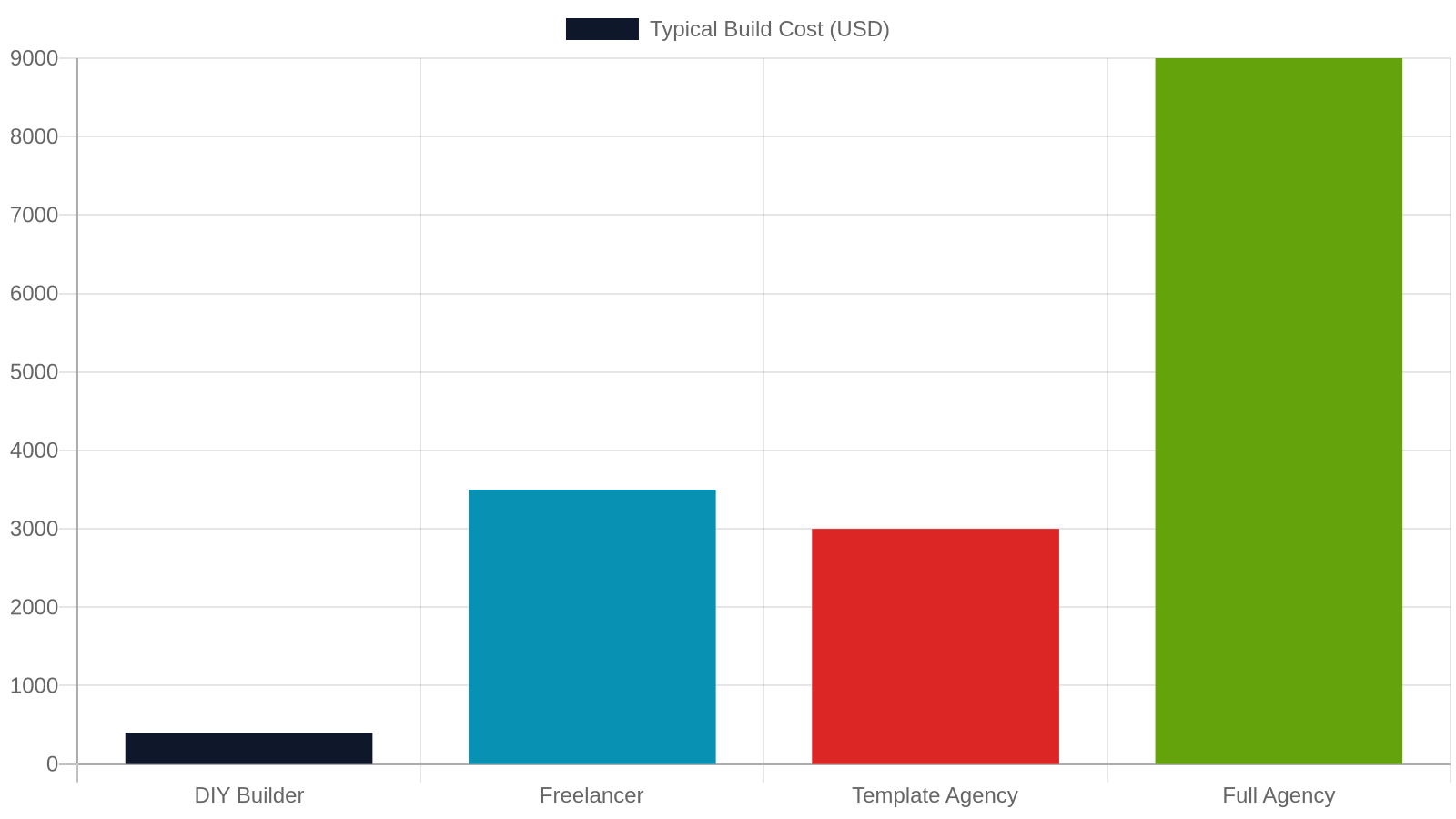
The single biggest factor in what you’ll pay is who builds your site. There are four realistic options for a small business, each with a distinct cost profile, timeline, and quality ceiling. The table in a later section compares them side-by-side, but here’s the narrative breakdown.
Option 1 — DIY Website Builders (Wix, Squarespace, GoDaddy)
DIY builders are the cheapest entry point. Expect to pay $16–$49/month for a business-tier plan, which works out to $192–$588/year. Most include a drag-and-drop editor, basic contact forms, and SSL. What they lack: deep SEO customization, custom CRM integrations, and the conversion architecture that serious lead gen requires. For a solo service provider testing the waters, a DIY builder can work short-term. For any business expecting more than 20 leads per month, the limitations quickly become costly in missed opportunities.
Option 2 — Freelance Designers and Developers
A freelance WordPress developer in Tennessee typically charges $1,500–$6,000 for a lead gen site, depending on the number of pages and integrations. Platforms like Upwork show U.S.-based freelancers averaging $75–$150/hour. A 20-hour project at $100/hour = $2,000. The risk: freelancers often lack the strategic marketing expertise to optimize for conversions, not just aesthetics. Always ask for conversion rate data from past projects, not just portfolio screenshots.
Option 3 — Digital Marketing Agencies
A regional agency serving Nashville or West Tennessee typically prices lead gen websites at $3,500–$15,000 for design and development, plus monthly retainers of $500–$3,000 for SEO, content, and maintenance. The premium buys you a team: a strategist, a designer, a developer, and an SEO specialist all working from the same playbook. For competitive industries — HVAC, law, real estate, home services — this integrated approach consistently outperforms cheaper alternatives in cost-per-lead over 12 months.
Option 4 — Template-Based Agency Packages
Many agencies now offer semi-custom packages built on proven WordPress or Webflow templates, priced at $1,500–$4,500. These hit a sweet spot: faster delivery (2–4 weeks vs. 8–12 weeks for full custom), lower cost, and still agency-level strategy baked in. Studio Blue Creative offers packages in this range for Nashville metro and Jackson, TN businesses that need a professional lead gen site without a six-figure budget. Explore our full web and digital services to see what’s included at each tier.
Breaking Down Every Line Item: What You're Actually Paying For
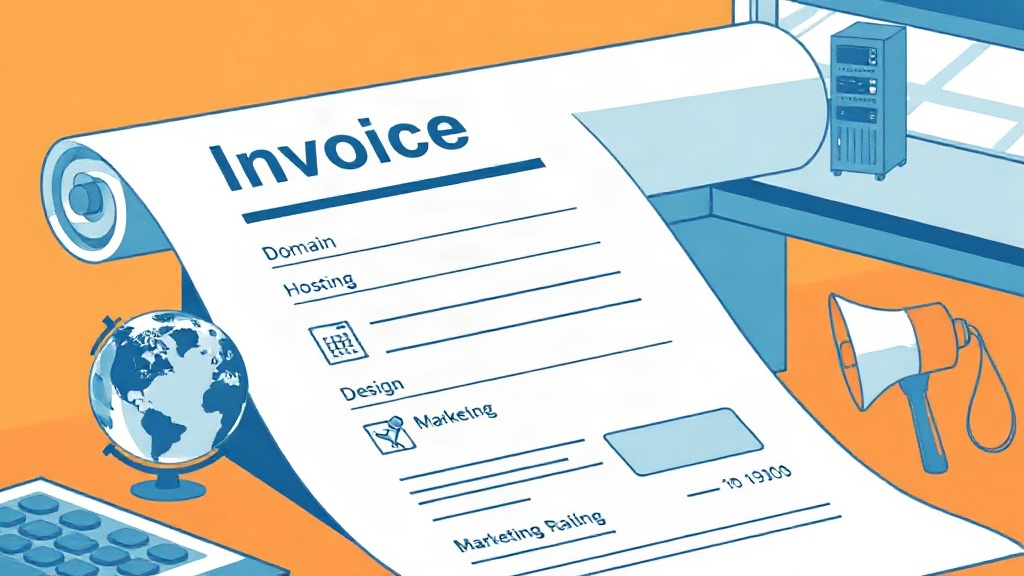
A website price quote can look deceptively simple — one number on a proposal. In reality, that number covers only part of what you’ll spend. Here’s a transparent look at every cost category a small business owner should anticipate before signing anything.
Domain Name and Hosting
A .com domain runs $12–$20/year through registrars like Namecheap or Google Domains. Managed WordPress hosting — the gold standard for lead gen sites — costs $25–$100/month from providers like WP Engine, Kinsta, or Flywheel. Shared hosting (Bluehost, SiteGround) starts at $3–$12/month but introduces speed and security risks that directly hurt conversion rates. Google’s own data shows a 1-second delay in page load time reduces conversions by 7% — cheap hosting is rarely cheap in the long run.
Design, Copywriting, and Development
These three disciplines are often bundled by agencies but priced separately by freelancers. Rough market rates:
- UI/UX design: $500–$3,000 (templates) to $5,000–$20,000 (custom)
- Conversion copywriting: $150–$500 per page
- WordPress development: $1,000–$8,000 depending on custom functionality
- Custom plugin development: $500–$5,000+ per plugin
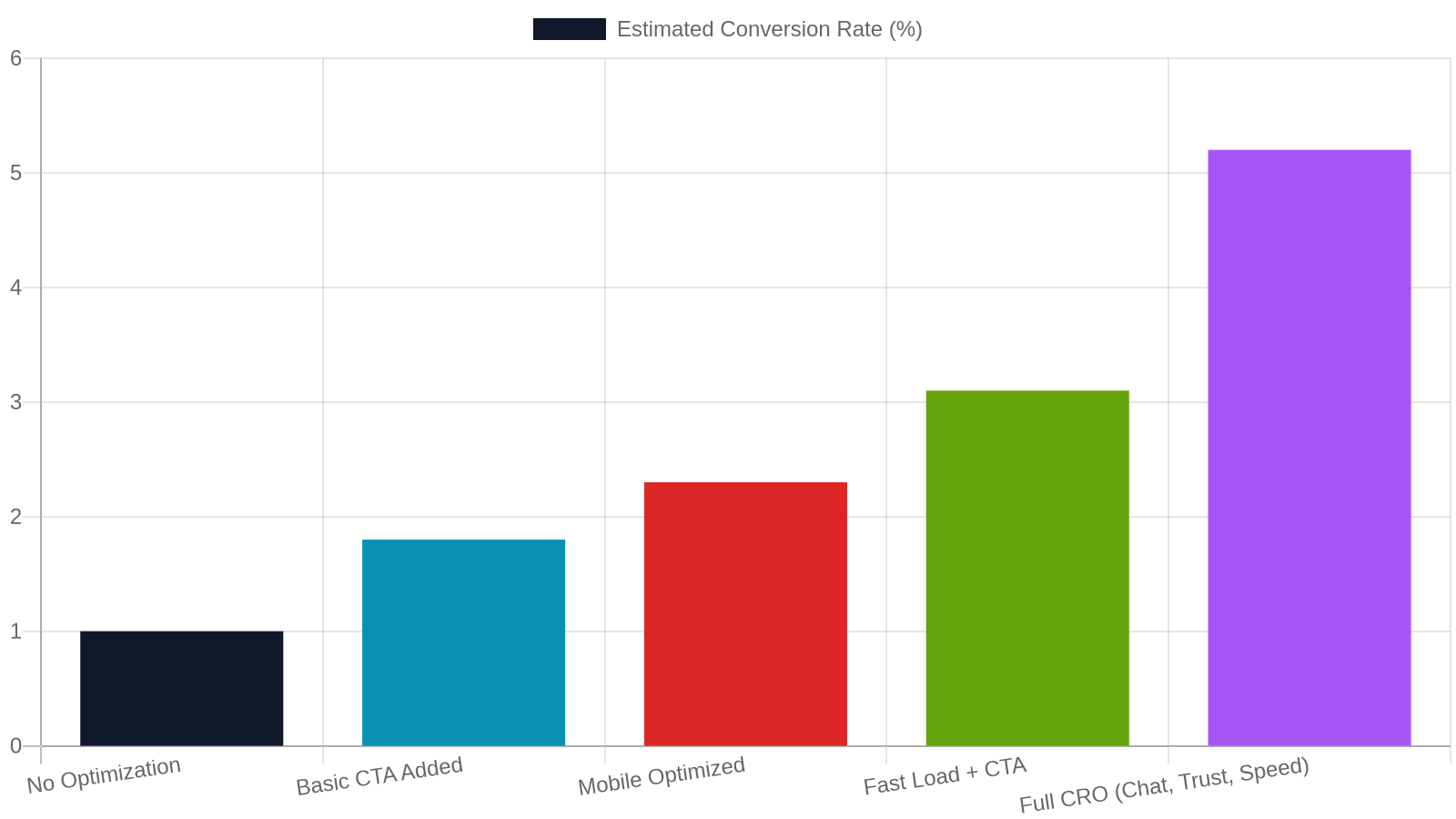
Skimping on copywriting is the most common mistake small businesses make. A beautifully designed page with weak copy converts at 1–2%. Strong copy on a mediocre design converts at 3–5%. Invest in words.
Ongoing Monthly Costs You Must Budget For
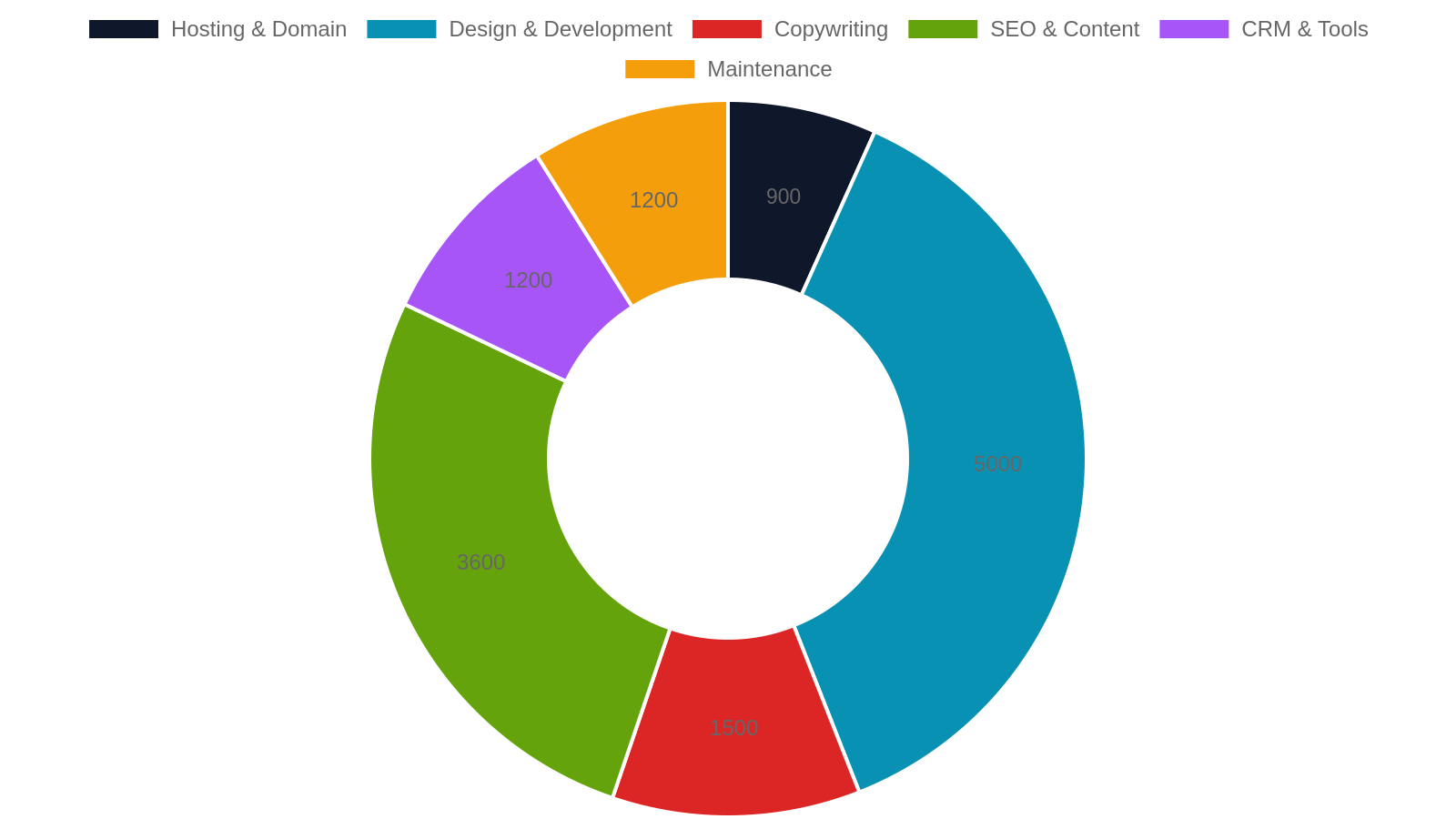
The build cost is a one-time event. The ongoing costs are forever — and they’re where most small businesses underestimate their total investment:
- Hosting + security: $25–$100/month
- SEO retainer: $300–$2,000/month
- Content updates: $200–$800/month
- CRM/email platform: $50–$300/month
- Paid ads (Google/Meta): $500–$5,000/month ad spend
- Website maintenance: $50–$200/month
A realistic all-in monthly budget for a Nashville-area small business running a serious lead gen operation: $1,200–$4,500/month including ads.
How Industry and Competition Level Change Your Budget

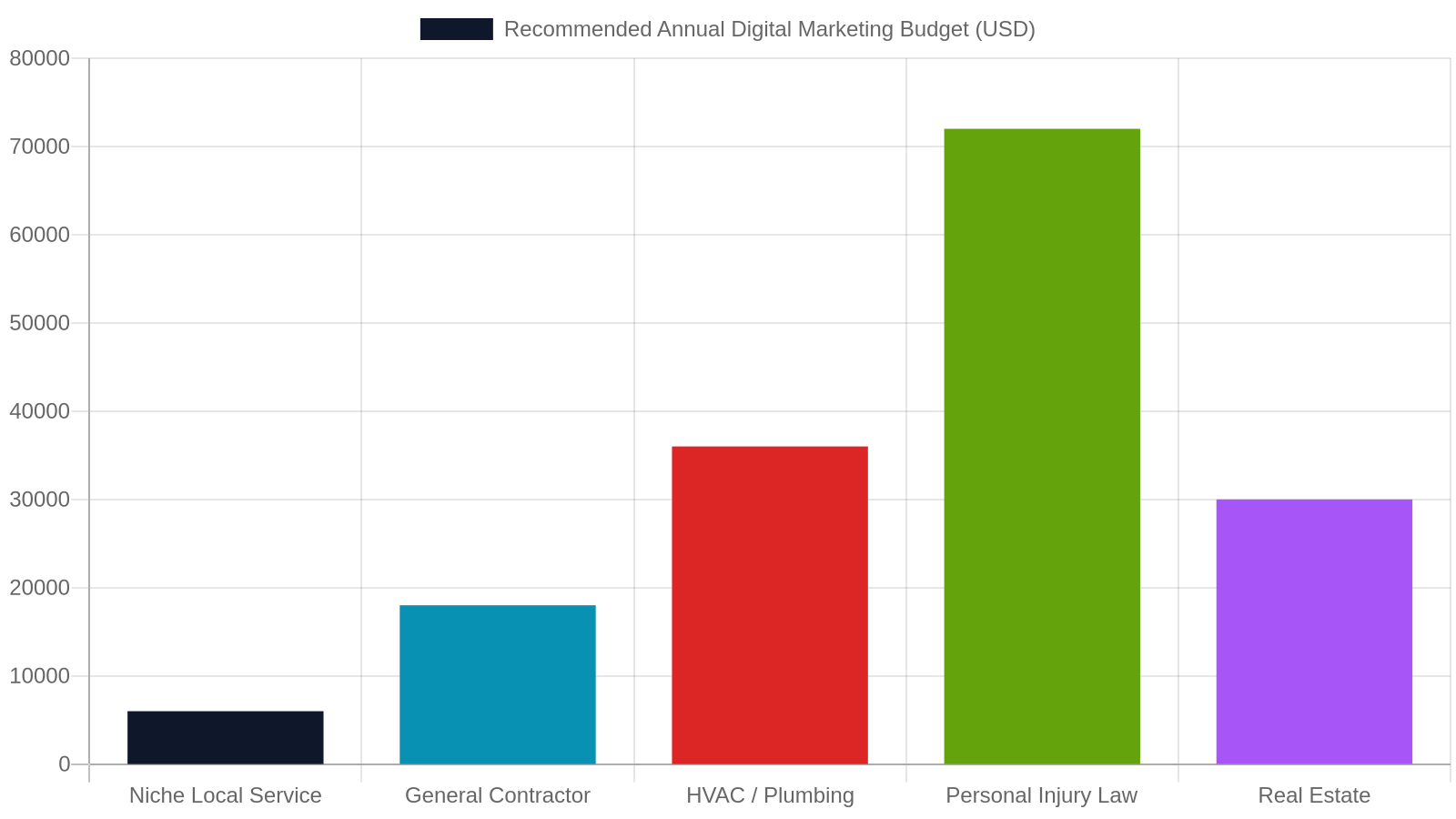
Not every small business needs the same website. A solo bookkeeper in Jackson, TN has very different competitive pressures than a multi-location HVAC company in the Nashville metro. Your industry’s keyword competition, average customer lifetime value, and local market saturation should all shape your website budget — not just what you feel comfortable spending.
Low-Competition Local Niches
If you’re a niche service provider in a smaller Tennessee market — say, a specialty cleaning company in Jackson or a mobile notary in Murfreesboro — you may be able to generate solid leads with a $2,500–$5,000 site and a modest $300–$600/month SEO investment. Competition is thin enough that a well-structured, fast-loading site with proper local schema markup can rank on page one within 3–6 months without a massive content budget.
High-Competition Industries (HVAC, Law, Real Estate, Dental)
In Nashville’s most competitive service categories, the bar is dramatically higher. HVAC companies, personal injury law firms, real estate agents, and dental practices are spending $5,000–$20,000 on initial builds and $2,000–$8,000/month on SEO and paid ads. WordStream data shows the average cost-per-click for legal keywords in Tennessee exceeds $45, and HVAC keywords average $18–$30 CPC. In these markets, a $1,500 website is not a budget decision — it’s a surrender.
The Nashville Metro Premium
Nashville’s rapid growth — the metro added over 100 new residents per day in 2023 according to the U.S. Census Bureau — has made it one of the most competitive local SEO markets in the Southeast. Brentwood, Franklin, and Hendersonville businesses compete not just locally but against Nashville-branded competitors with large digital marketing budgets. Expect to pay 15–25% more for competitive keyword rankings in the Nashville metro than in comparable mid-sized Tennessee cities. That premium is worth it: Nashville’s median household income of $72,000+ means higher-value customers when you do convert.
SEO and AEO: The Hidden Multiplier on Your Website's Value

Many small business owners treat SEO as an add-on — something to think about after the website is live. That’s a costly mistake. SEO and Answer Engine Optimization (AEO) are structural decisions that affect how your site is built, how its pages are written, and how its data is marked up. Getting them right from day one can cut your time-to-first-lead by months.
Why SEO Is Not Optional for Lead Gen Sites
A lead generation website with no SEO is a billboard in a cornfield — beautifully built and completely invisible. BrightEdge research shows that 53% of all website traffic comes from organic search, making SEO the single highest-ROI channel for most small businesses. For a Nashville plumber or a Jackson, TN accountant, ranking in the top 3 Google results for their primary service keywords can mean the difference between 5 leads per month and 50.
Basic on-page SEO — keyword-optimized page titles, meta descriptions, header hierarchy, image alt text, and internal linking — should be baked into every page at build time, not added as an afterthought. Expect to pay $500–$1,500 for proper on-page SEO during the initial build.
Answer Engine Optimization (AEO): The New Frontier
Answer Engine Optimization (AEO) is the practice of structuring your content so that AI-powered search tools — Google’s AI Overviews, ChatGPT, Perplexity, and Bing Copilot — cite your business when users ask questions. As of 2024, Google’s AI Overviews appear in over 30% of search results pages for informational queries, and that share is growing rapidly. A business that appears in AI Overviews gets brand exposure even when the user doesn’t click.
AEO requires FAQ schema markup, structured data, authoritative long-form content, and citation-friendly factual writing. Studio Blue Creative’s AEO services are specifically designed to help Tennessee small businesses appear in these AI-generated answers — a competitive edge most local competitors haven’t discovered yet.
Local SEO and Google Business Profile: Non-Negotiable
For any brick-and-mortar or service-area business in the Nashville metro or West Tennessee, local SEO is the fastest path to leads. The Google Local Pack (the map with three business listings) appears in 93% of local searches with commercial intent, according to Moz. Optimizing your Google Business Profile, building local citations, and earning reviews are all activities that compound over time and dramatically lower your cost-per-lead compared to paid ads. Budget $300–$800/month for a professional local SEO retainer in a moderately competitive market.
Conversion Rate Optimization: What Separates a $500 Site from a $5,000 Site

Two websites can have identical traffic and wildly different lead counts. The difference is almost always conversion rate — and conversion rate is a function of design, copy, speed, and trust. Here’s what the data says about what actually moves the needle.
The Math Behind Conversion Rate Improvements
Conversion rate optimization (CRO) is the discipline of getting more leads from the same traffic. Consider this: if your site gets 500 visitors per month and converts at 1%, you get 5 leads. Improve conversion to 3% — a realistic target for a well-optimized lead gen site — and you get 15 leads from the same traffic. That’s 3x the leads without spending a dollar more on ads. Industry benchmarks from Unbounce show that the top 25% of landing pages across all industries convert at 5.31% or higher. The median is 2.35%.
Design Elements That Directly Impact Conversion
These are the specific design and UX decisions that separate high-converting lead gen sites from average ones:
- Above-the-fold CTA: A clear call-to-action button visible without scrolling increases conversions by 47% (Crazy Egg data)
- Mobile optimization: Over 60% of local service searches happen on mobile — a non-mobile-optimized site loses the majority of its audience
- Page speed: Pages loading in under 2 seconds convert at nearly double the rate of pages loading in 5+ seconds
- Trust signals: Reviews, certifications, and client logos increase form completions by 34% on average
- Short forms: Reducing form fields from 11 to 4 increases conversions by 120% (HubSpot, 2023)
AI Chatbots and Live Chat: The Lead Capture Safety Net
Not every visitor is ready to fill out a form. An AI chatbot on your lead gen site acts as a 24/7 sales assistant — answering questions, qualifying visitors, and capturing contact information even at 2 a.m. on a Sunday. Drift’s research shows that websites with live chat or chatbots generate 40% more leads than those without. For Nashville and Jackson small businesses competing against larger companies with full sales teams, an AI chatbot levels the playing field. See how Studio Blue Creative builds custom AI chatbots that integrate directly with your CRM and lead pipeline.
DIY vs. Freelancer vs. Agency: A 10-Point Comparison

Choosing who builds your lead generation website is arguably more important than any individual design decision. The comparison table below scores each option across ten dimensions that matter most to small business owners in Nashville and West Tennessee. Use it as a decision framework, not a definitive verdict — your specific situation may weight some factors more heavily than others.
How to Calculate Your ROI Before You Spend a Dollar

The best way to justify a website investment — to yourself, your business partner, or your accountant — is to model the return before you spend. This section gives you a simple framework to calculate expected ROI from a lead generation website, so you can make a data-driven decision rather than a gut-feel one.
The Lead Gen Website ROI Formula
Before committing to any website budget, run this simple calculation:
- Monthly site visitors × conversion rate = monthly leads
- Monthly leads × close rate = new customers/month
- New customers/month × average customer value = monthly revenue from site
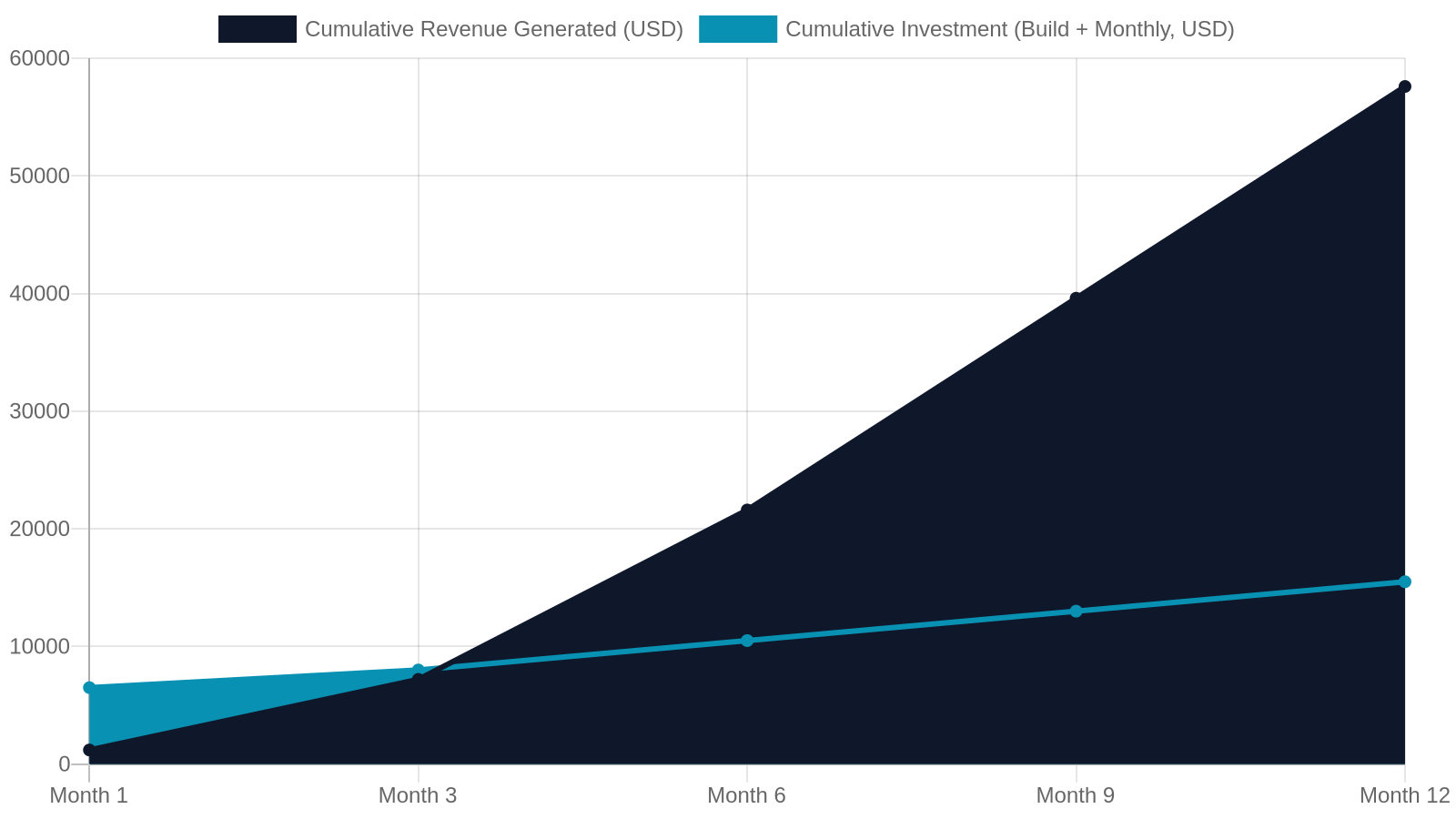
Example: 800 visitors/month × 2.5% conversion = 20 leads. 20 leads × 25% close rate = 5 new customers. 5 customers × $1,200 average job = $6,000/month in new revenue. If your total website + SEO spend is $1,500/month, your ROI is 300%. That math justifies the investment clearly.
Payback Period: How Long Until Your Site Pays for Itself?
For a $5,000 website generating $6,000/month in new revenue (from the example above), the payback period is less than one month — assuming the traffic and conversion rates hold. More conservatively, most well-built lead gen sites in competitive Tennessee markets reach payback within 3–9 months when paired with a consistent SEO or paid ads strategy. Sites with no ongoing marketing investment often never reach payback because traffic stagnates after the initial launch spike.
When to Invest More vs. Start Small
Invest more upfront when: your average customer lifetime value exceeds $2,000, you’re in a high-competition market, or you’re replacing a site that’s actively losing you leads. Start smaller when: you’re pre-revenue or early-stage, your market is low-competition, or you need to validate your offer before scaling. A $2,000 template-based site with solid SEO fundamentals is a smarter starting point than a $500 DIY site with no strategy — even if you plan to upgrade in 18 months.
DIY vs. Freelancer vs. Template Agency vs. Full Agency: 10-Point Comparison
Use this table to evaluate your four main options for building a lead generation website. Scores reflect typical outcomes for a small business in a moderately competitive Tennessee market.
Red Flags to Watch for When Getting Website Quotes

The web design industry has its share of low-quality providers who charge professional prices for amateur work. Knowing the warning signs before you sign a contract can save you thousands of dollars and months of frustration. Here are the most common red flags Nashville and West Tennessee small business owners encounter when shopping for a lead gen website.
Vague Deliverables and No Discovery Process
A reputable agency or freelancer will ask you detailed questions before quoting: What are your goals? Who is your target customer? What does a lead look like for your business? If a provider sends you a price within 10 minutes of your first contact with no discovery call, they’re quoting a commodity product, not a custom solution. Lead gen websites require strategy — and strategy requires understanding your business first.
No Mention of SEO, Speed, or Conversion
If a website proposal doesn’t mention page speed, mobile optimization, on-page SEO, or conversion rate optimization — walk away. These aren’t advanced features; they’re table stakes for any lead gen site built in 2025. A beautiful site that loads in 6 seconds on mobile and has no keyword strategy will generate approximately zero organic leads. Ask every provider directly: What’s your process for ensuring this site ranks and converts? If they can’t answer specifically, keep looking.
Ownership and Lock-In Clauses
Some agencies — particularly those offering very low monthly fees — retain ownership of your website, domain, or content. If you leave, you lose everything. Always confirm in writing that you own your domain, your hosting account, your WordPress installation, and all content. Ask specifically: If I cancel, can I take my site with me? The answer should be an unqualified yes. Proprietary website builders (some franchise systems use these) are the most common source of this problem.
What a Professional Lead Gen Website Looks Like in Practice
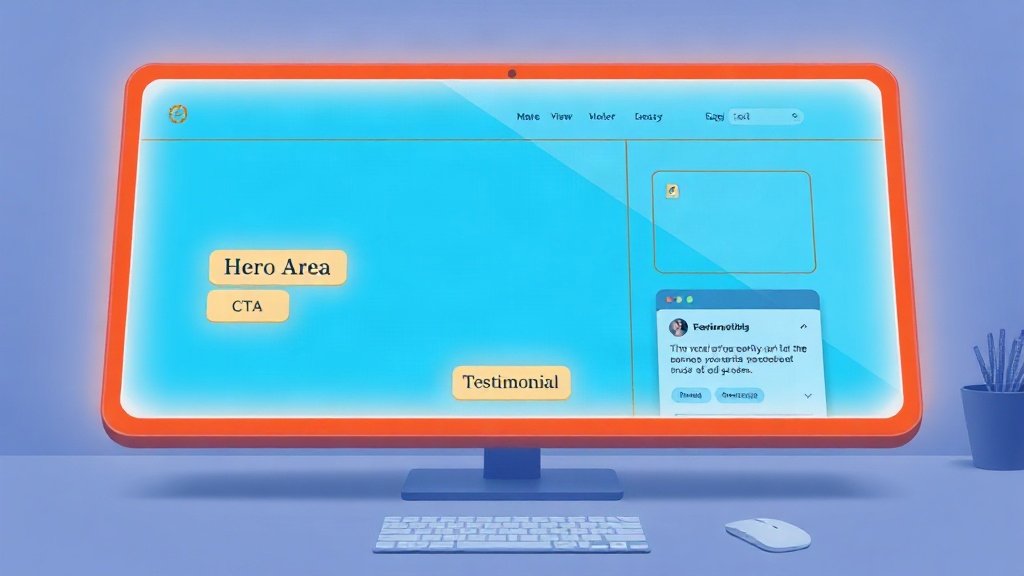
Abstract advice about ‘good design’ is hard to act on. Concrete examples are easier. Here’s what a professionally built lead generation website actually contains — the specific pages, sections, and features that separate sites that generate consistent leads from sites that don’t.
The Anatomy of a High-Converting Homepage
A professional lead gen homepage follows a proven structure:
- Hero section: Clear headline stating what you do and who you serve, with a primary CTA button (e.g., ‘Get a Free Estimate’) visible above the fold
- Social proof bar: Logos of recognizable clients, review stars, or a key metric (e.g., ‘500+ Nashville homeowners served’)
- Service overview: 3–6 service cards with brief descriptions and individual CTAs
- Trust section: Testimonials with real names and photos, BBB rating, industry certifications
- FAQ section: Answers to the top 5 questions prospects ask — this also powers AEO and featured snippets
- Sticky header with phone number: Visible on every scroll position, especially on mobile
Landing Pages vs. Homepage: When You Need Both
Your homepage serves all audiences. A dedicated landing page serves one audience with one message and one CTA — and converts dramatically better for paid traffic. If you’re running Google Ads for ’emergency HVAC repair Nashville,’ sending that traffic to your homepage wastes 60–80% of your ad spend. A targeted landing page for that keyword, with matching copy and a single form, typically converts at 3–8% vs. 1–2% for a generic homepage. Budget for at least 2–3 dedicated landing pages if you plan to run any paid campaigns.
Portfolio and Case Studies: The Underused Lead Gen Asset
For service businesses, a portfolio or case study section is one of the highest-converting page types — yet most small business sites either skip it entirely or bury it where no one finds it. A well-written case study that shows a before/after result (e.g., ‘We helped a Franklin, TN restaurant increase online reservations by 40% in 90 days’) builds trust faster than any testimonial. Browse Studio Blue Creative’s portfolio to see examples of lead gen sites and digital campaigns we’ve built for Tennessee businesses.
Nashville and West Tennessee Pricing Reality Check
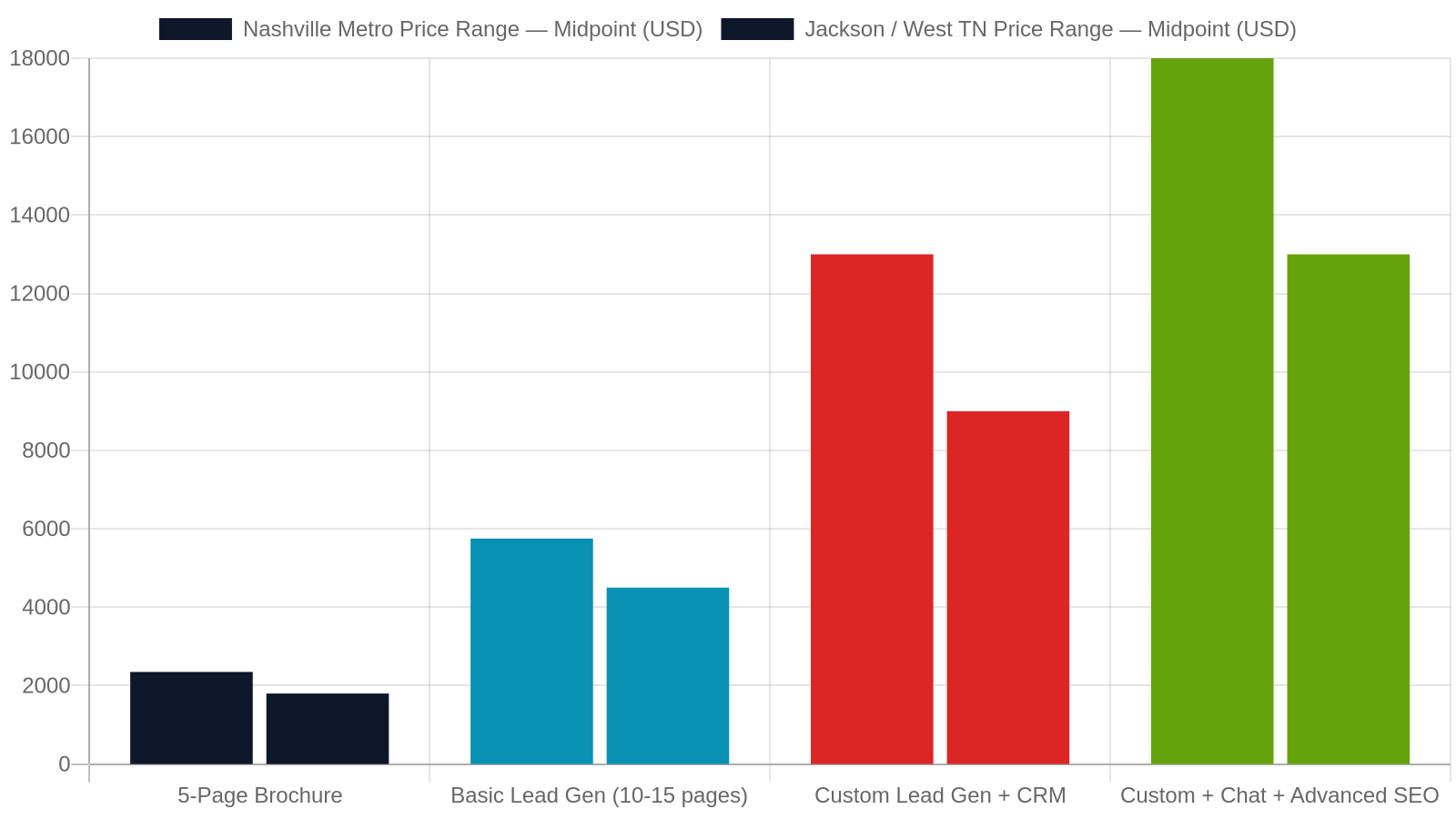
National pricing guides are useful context, but what matters most to a small business owner in Murfreesboro or Hendersonville is what they’ll actually pay to a Tennessee-based provider. Here’s a grounded look at current local market pricing — no inflated national averages, no race-to-the-bottom freelancer rates.
What Local Agencies Actually Charge in Tennessee
Tennessee web design pricing sits slightly below national averages but above deep-South markets. Based on current market data for the Nashville metro and Jackson, TN area:
- 5-page brochure site: $1,200–$3,500
- Lead gen site (10–15 pages, basic integrations): $3,500–$8,000
- Custom lead gen site with CRM, chat, and advanced SEO: $8,000–$18,000
- Monthly SEO retainer (Nashville metro): $500–$2,500
- Monthly SEO retainer (Jackson / West TN): $300–$1,200
These ranges reflect agency pricing. Freelancers typically come in 30–40% lower with proportionally less strategic support.
Jackson and West Tennessee: An Underserved Opportunity
While Nashville gets most of the digital marketing attention, Jackson and West Tennessee represent a significant opportunity for small businesses willing to invest in digital. Competition for local keywords in Jackson is substantially lower than in Nashville, meaning a $3,500–$5,000 lead gen site with a $400–$700/month SEO investment can achieve top-3 rankings within 4–8 months in most service categories. For businesses serving both markets, a geo-targeted strategy with separate landing pages for Nashville and Jackson audiences maximizes reach. Learn more about our web design services in Jackson, TN and how we approach West Tennessee markets.
Ready to Get a Lead Gen Website That Actually Works in Tennessee?

You now have a clear picture of what a lead generation website costs, what drives those costs, and how to calculate whether the investment makes sense for your business. The next step is getting a real number — one based on your specific goals, market, and competitive landscape, not a generic price sheet.
What to Do Before You Call an Agency
Before you contact any web design provider — including us — do three things: (1) Define your lead goal. How many leads per month do you need to justify the investment? (2) Know your average customer value. A $200 job requires a very different ROI model than a $5,000 job. (3) Audit your current site if you have one — understand what’s working and what isn’t before starting over. Studio Blue Creative offers a free website health check that identifies your biggest conversion and SEO gaps before you spend a dollar on a new build. Request your free website health check here and get a clear picture of where you stand.
Why Studio Blue Creative for Nashville and West Tennessee Businesses
Studio Blue Creative is a Tennessee-based digital agency with deep roots in both the Nashville metro and Jackson / West Tennessee markets. We build custom WordPress websites, implement AEO and GEO strategies, develop AI chatbots and workflow automation tools, and manage full-service SEO campaigns — all under one roof. We don’t outsource your project overseas or hand it to a junior designer. Every engagement starts with a strategy conversation, not a template selection. And every estimate is free, with no pressure and no obligation.
Call us at 731-402-0402 to talk through your project. Whether you’re in Franklin, Brentwood, Murfreesboro, Hendersonville, Mount Juliet, Jackson, or anywhere across Middle and West Tennessee, we’re ready to build a lead generation website that pays for itself — and then some.
Frequently Asked Questions
How much does a lead generation website cost for a small business?
A lead generation website for a small business typically costs $1,500–$15,000 to build, depending on the provider and complexity. Ongoing monthly costs for hosting, SEO, and maintenance add $200–$3,000 per month. Nashville-area businesses in competitive industries should budget $5,000–$10,000 for the initial build.
Is it worth paying for a professional website instead of using Wix or Squarespace?
For most small businesses actively trying to generate leads, yes. DIY builders limit your SEO customization, CRM integrations, and conversion optimization options. A professionally built site in the $3,500–$8,000 range typically generates 3–5x more leads than a DIY site in the same market, making the ROI strongly positive within 6–12 months.
How long does it take for a new lead generation website to start generating leads?
Paid traffic (Google Ads, Meta Ads) can generate leads within days of launch. Organic SEO typically takes 3–9 months to reach page-one rankings in a competitive market. Most Nashville and West Tennessee small businesses see meaningful organic lead flow within 4–6 months when SEO is implemented correctly from day one.
What is the difference between SEO and AEO for a small business website?
SEO (Search Engine Optimization) helps your site rank in traditional Google search results. AEO (Answer Engine Optimization) structures your content so AI-powered tools like Google's AI Overviews, ChatGPT, and Perplexity cite your business when users ask questions. Both are important in 2025, and the best lead gen sites are optimized for both simultaneously.
Do I need a separate landing page for each service I offer?
Ideally, yes. Dedicated landing pages for each core service — especially if you're running paid ads — convert significantly better than sending all traffic to a generic homepage. A well-structured lead gen site for a service business typically includes 5–15 service-specific pages, each targeting a distinct keyword and customer intent.
How do I know if my current website is costing me leads?
Key warning signs include: page load time over 3 seconds, no clear call-to-action above the fold, less than 1% conversion rate on contact forms, no mobile optimization, and no appearance in Google's local pack for your primary service keywords. A free website health check can identify these issues quickly before you invest in a new build.
Find out if ChatGPT recommends your business.
Right now, your customers are asking AI for recommendations. The AI is naming somebody. Is that name yours? Run our free AEO Scorecard — we test 3 of your real queries against ChatGPT and Claude and email you a personalized report.
Ready for a real website?
Get a tailored 3-tier proposal in under a minute — including our Launch Deal ($699), a custom build, or our SEO Growth Package. No call required.