

Quick answer: If you're a small business in or near Tupelo, MS searching for a web designer, the most important factors are local market knowledge, mobile-first design, built-in SEO, and transparent pricing. A professionally built website typically costs $2,500–$8,000 and can be live within 4–10 weeks. Prioritize designers who offer ongoing support, understand North Mississippi buyer behavior, and can integrate tools like Google Business Profile and schema markup. Agencies just across the state line in West Tennessee — like Studio Blue Creative — frequently serve the Tupelo corridor and bring the same regional expertise at competitive rates.
1. Why Tupelo Small Businesses Need a Purpose-Built Website in 2025

Tupelo, Mississippi sits at the crossroads of several major economic corridors — U.S. Highway 45, the Natchez Trace Parkway, and Interstate 22 — making it a genuine regional commerce center. Small businesses here compete not just with each other but with big-box retailers and national e-commerce brands. A professionally designed website is no longer optional; it is the single most leveraged marketing asset a local business can own.
The Local Search Reality for Tupelo Businesses
According to Google, 46% of all searches have local intent — meaning nearly half of every query typed into a search bar is someone looking for a product or service near them. In a city like Tupelo, MS — home to roughly 38,000 residents and a regional retail hub for Lee County’s 85,000+ population — that translates to thousands of daily searches for local plumbers, restaurants, attorneys, contractors, and retailers.
Yet a 2024 BrightLocal study found that 36% of small businesses in mid-sized U.S. cities still operate without a mobile-optimized website. If your site loads slowly on a phone, displays broken layouts, or lacks basic contact information, you’re handing those searchers directly to a competitor.
What a Website Actually Does for Revenue
A website isn’t a digital brochure — it’s a 24/7 sales representative. For a Tupelo HVAC company, a well-optimized site can generate 15–30 inbound service calls per month from organic search alone. For a boutique retailer on Main Street, an e-commerce-enabled site can extend revenue beyond foot traffic by 20–40%.
The key is intentional design: clear calls-to-action, fast load times (under 2.5 seconds on mobile), and content that answers the questions your customers are already typing into Google. Without those elements, even a visually stunning site will fail to convert visitors into paying customers.
2. What to Look for in a Web Designer Near Tupelo, MS

Choosing the right web designer is one of the most consequential vendor decisions a small business owner makes. The wrong choice costs you time, money, and missed revenue — sometimes all three. Here are the three most important criteria to evaluate before signing any contract.
Portfolio Depth and Industry Relevance
Before hiring any web designer, ask to see at least 5–8 completed projects, ideally in industries similar to yours. A designer who has built sites for healthcare practices, law firms, or home-service contractors in the Mid-South understands the compliance nuances, buyer psychology, and content expectations unique to those sectors.
Look for live URLs — not just screenshots. Visit those sites on your phone, check load speed with Google PageSpeed Insights (a score above 70 on mobile is a good baseline), and read the copy. If the designer’s own portfolio sites feel outdated or slow, that’s a red flag.
Communication Style and Project Management
Web design projects fail most often due to communication breakdowns, not technical skill gaps. Ask prospective designers: How do you handle revision rounds? What project management tool do you use? Who is my main point of contact?
A reputable agency will use tools like Asana, Basecamp, or a shared Google Drive folder to keep milestones visible. They’ll set clear expectations about turnaround times for feedback — typically 48–72 hours per revision cycle — and won’t disappear for weeks between deliverables. For small businesses with limited bandwidth, this structured approach is essential.
Post-Launch Support and Maintenance Plans
Your website is a living asset. WordPress core, plugins, and themes require regular updates — and a site that goes unpatched for 6+ months becomes a security liability. Ask every designer: What happens after launch?
Quality agencies offer monthly maintenance retainers ranging from $75–$250/month that cover security patches, uptime monitoring, plugin updates, and minor content edits. Some bundle hosting into that fee. Avoid designers who hand over the keys and disappear — ongoing support is what separates a professional agency from a freelancer who moves on to the next project.
3. How Much Does a Website Cost for a Tupelo Small Business?
One of the first questions every small business owner asks is: How much is this going to cost? The honest answer is that it depends — but there are reliable ranges you can use to budget intelligently and avoid being overcharged or underserved.
Typical Price Ranges by Website Type
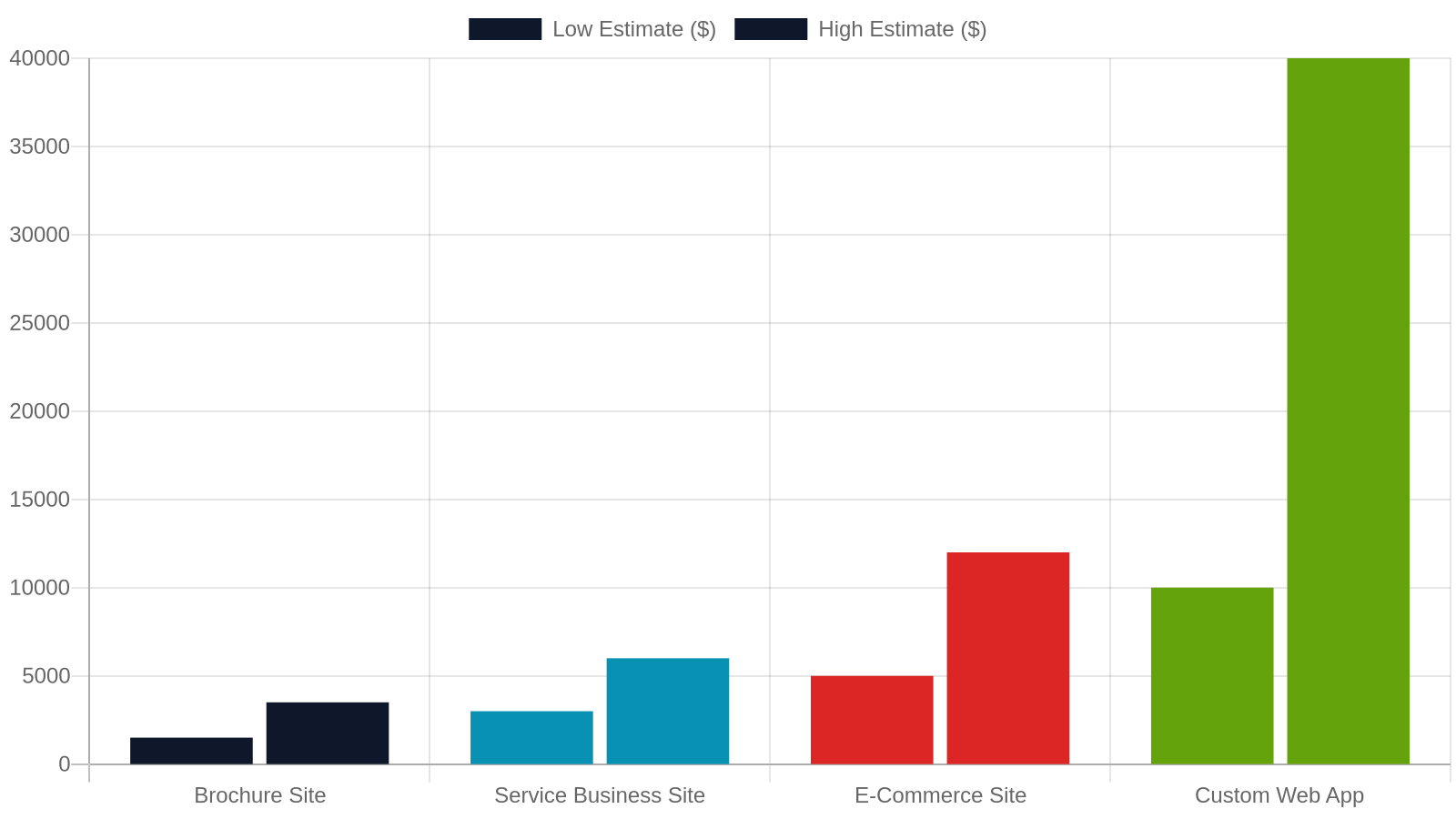
Web design pricing varies enormously based on scope, platform, and the designer’s experience level. Here are realistic 2025 benchmarks for small businesses in the Tupelo / North Mississippi / West Tennessee market:
- Basic brochure site (5–7 pages): $1,500–$3,500
- Service business site with lead forms and local SEO: $3,000–$6,000
- E-commerce site (WooCommerce or Shopify, up to 100 products): $5,000–$12,000
- Custom web application or membership portal: $10,000–$40,000+
Beware of quotes under $800 for a full business website — at that price point, you’re likely getting a template with minimal customization and no SEO foundation.
Hidden Costs to Budget For
The quoted design fee is rarely the total cost of ownership. Factor in these additional line items:
- Domain registration: $12–$20/year (via Namecheap or Google Domains)
- Web hosting: $15–$60/month for managed WordPress hosting (WP Engine, Kinsta, SiteGround)
- SSL certificate: Usually included with hosting, but verify
- Stock photography: $0 (free sources like Unsplash) to $200+ per project
- Copywriting: $75–$150 per page if the designer writes your content
- Ongoing SEO retainer: $300–$1,500/month depending on competitiveness
A realistic all-in first-year budget for a quality small-business website in this region is $4,000–$9,000, including design, hosting, and basic SEO setup.
4. Mobile-First Design: Non-Negotiable for North Mississippi Customers

If there is one design principle that separates websites that generate leads from websites that simply exist, it is mobile-first design. For small businesses serving Tupelo and the surrounding Lee County area, this isn’t a trend — it’s a baseline requirement that directly affects your Google ranking and your conversion rate.
Why Mobile Traffic Dominates in Mid-Sized Markets
In markets like Tupelo, where commute times are longer and broadband infrastructure varies by neighborhood, mobile devices account for 63–72% of all web traffic to local business sites (Statista, 2024). That means if your site isn’t optimized for a 6-inch screen, you’re alienating the majority of your visitors before they even read your headline.
Google’s mobile-first indexing — fully rolled out since 2023 — means the mobile version of your site is what Google evaluates for ranking purposes. A site that looks great on a desktop but breaks on mobile will rank lower, load slower, and convert worse.
What Mobile-First Design Actually Means
Mobile-first is not the same as mobile-responsive. A responsive site adapts a desktop layout to smaller screens. A mobile-first site is designed for the small screen first and scaled up — a fundamentally different approach that produces faster, cleaner experiences.
Key mobile-first features to demand from your web designer:
- Tap-friendly buttons (minimum 44×44px touch targets)
- Single-column layouts that don’t require horizontal scrolling
- Click-to-call phone numbers embedded in the header
- Images compressed to WebP format for fast loading on 4G/LTE
- Core Web Vitals scores: LCP under 2.5s, CLS under 0.1, INP under 200ms
5. Local SEO Must Be Baked Into Your Website From Day One

A beautiful website that no one can find is a liability, not an asset. Local SEO — the practice of optimizing your site to appear in geographically relevant searches — must be integrated at the design stage, not treated as an afterthought. Here’s what that looks like in practice for a Tupelo small business.
On-Page SEO Foundations Every Tupelo Site Needs
Local SEO isn’t something you bolt on after a site launches — it must be architected into the site from the first wireframe. At minimum, every page of a Tupelo small-business website should include:
- Title tags with city + service keyword (e.g., “Plumber in Tupelo MS | [Business Name]”)
- Meta descriptions under 160 characters with a clear call to action
- H1 and H2 headings that include geographic modifiers
- NAP consistency — Name, Address, Phone Number displayed identically on every page and matching your Google Business Profile
- LocalBusiness schema markup embedded in the site’s code so search engines can parse your business details as structured data
Google Business Profile Integration
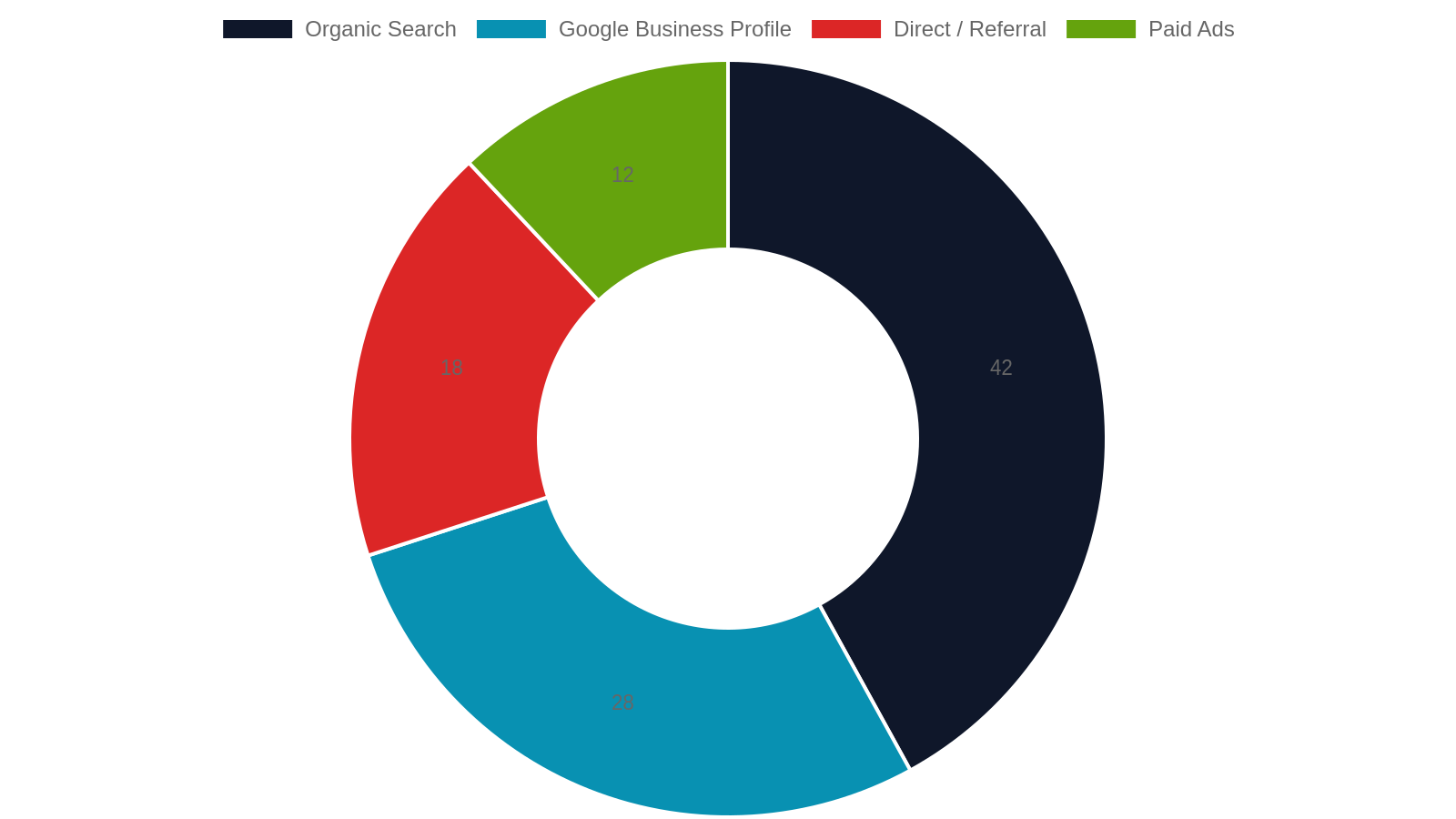
Your website and your Google Business Profile (GBP) are not separate marketing channels — they are a unified local search ecosystem. A well-optimized GBP listing with 50+ reviews, weekly posts, and complete category tagging can drive 35–60% of a local business’s inbound calls without any paid advertising.
Your web designer should embed a Google Map widget on your Contact page, ensure your site’s structured data matches your GBP exactly, and ideally help you set up or audit your GBP listing as part of the project scope. Studio Blue Creative offers LocalBusiness schema implementation as a standalone service for businesses that need to strengthen this foundation quickly.
The Role of AEO and GEO in 2025 Local Search
Beyond traditional SEO, two emerging disciplines are reshaping how local businesses get discovered: Answer Engine Optimization (AEO) and Generative Engine Optimization (GEO). AEO ensures your content is structured to appear in Google’s AI Overviews, featured snippets, and voice search results. GEO ensures your business is cited accurately by AI tools like ChatGPT, Perplexity, and Google Gemini when users ask local service questions.
For a Tupelo HVAC company, that might mean appearing as the recommended contractor when someone asks ChatGPT, “Who is the best AC repair company near Tupelo, Mississippi?” These are real, measurable traffic and lead sources in 2025 — not hypothetical future trends.
6. WordPress vs. Other Platforms: Which Is Right for Your Business?

One of the first technical decisions in any web design project is platform selection. The platform you choose affects your long-term costs, your ability to make updates, your SEO flexibility, and how easily you can add features as your business grows. Here’s an honest breakdown of the most common options for small businesses.
Why WordPress Dominates Small-Business Web Design
WordPress powers 43.5% of all websites on the internet (W3Techs, 2024) and for good reason: it is open-source, endlessly customizable, and supported by a global ecosystem of 59,000+ plugins. For small businesses, this means you can add e-commerce, booking systems, membership portals, or custom forms without rebuilding your site from scratch.
Critically, WordPress gives you ownership. Unlike Wix or Squarespace, where your site lives on a proprietary platform, a WordPress site can be moved to any host, handed off to any developer, and customized at the code level. That portability is worth a great deal over a 5–10 year business horizon.
When to Consider Shopify, Webflow, or a Custom Build
WordPress isn’t always the right answer. Here’s when alternatives make more sense:
- Shopify: Best for product-heavy e-commerce businesses (100+ SKUs) that need robust inventory management, abandoned cart recovery, and multi-channel selling. Monthly cost: $39–$399.
- Webflow: Best for design-forward brands that need pixel-perfect layouts without developer dependency. Steeper learning curve, but excellent CMS. Monthly cost: $23–$212.
- Custom build (React, Next.js): Best for web applications, SaaS products, or businesses with unique functionality requirements. Higher upfront cost ($15,000+) but maximum flexibility.
For most Tupelo small businesses — a law firm, a dental practice, a landscaping company, a boutique retailer — WordPress remains the most cost-effective and future-proof choice.
7. How Long Does a Website Project Take? Realistic Timelines Explained
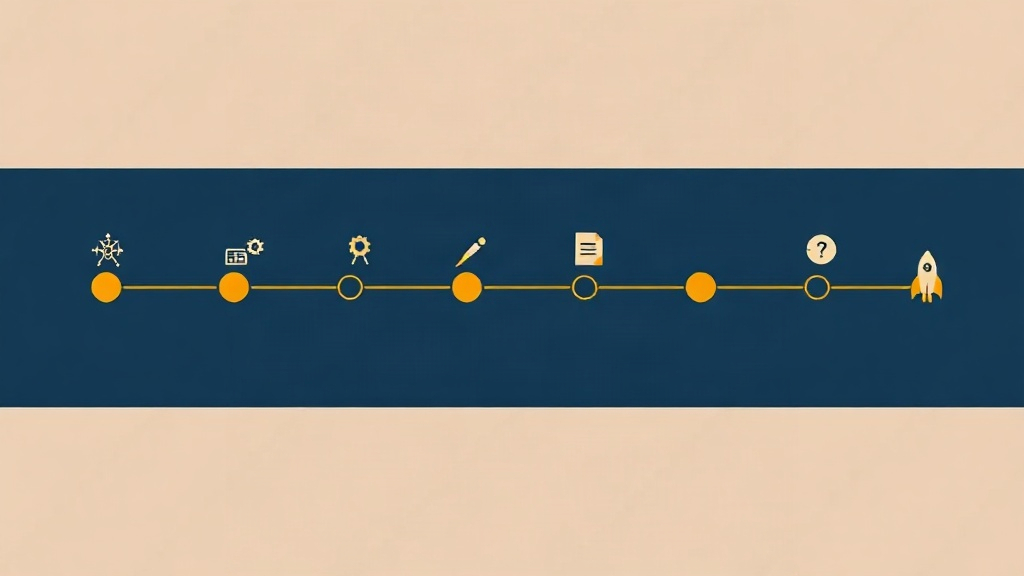
“How long will this take?” is the second question every business owner asks, right after price. The honest answer depends on project scope, how quickly you provide feedback, and whether your designer has a structured process. Here’s what a well-run project actually looks like, week by week.
Phase-by-Phase Project Timeline
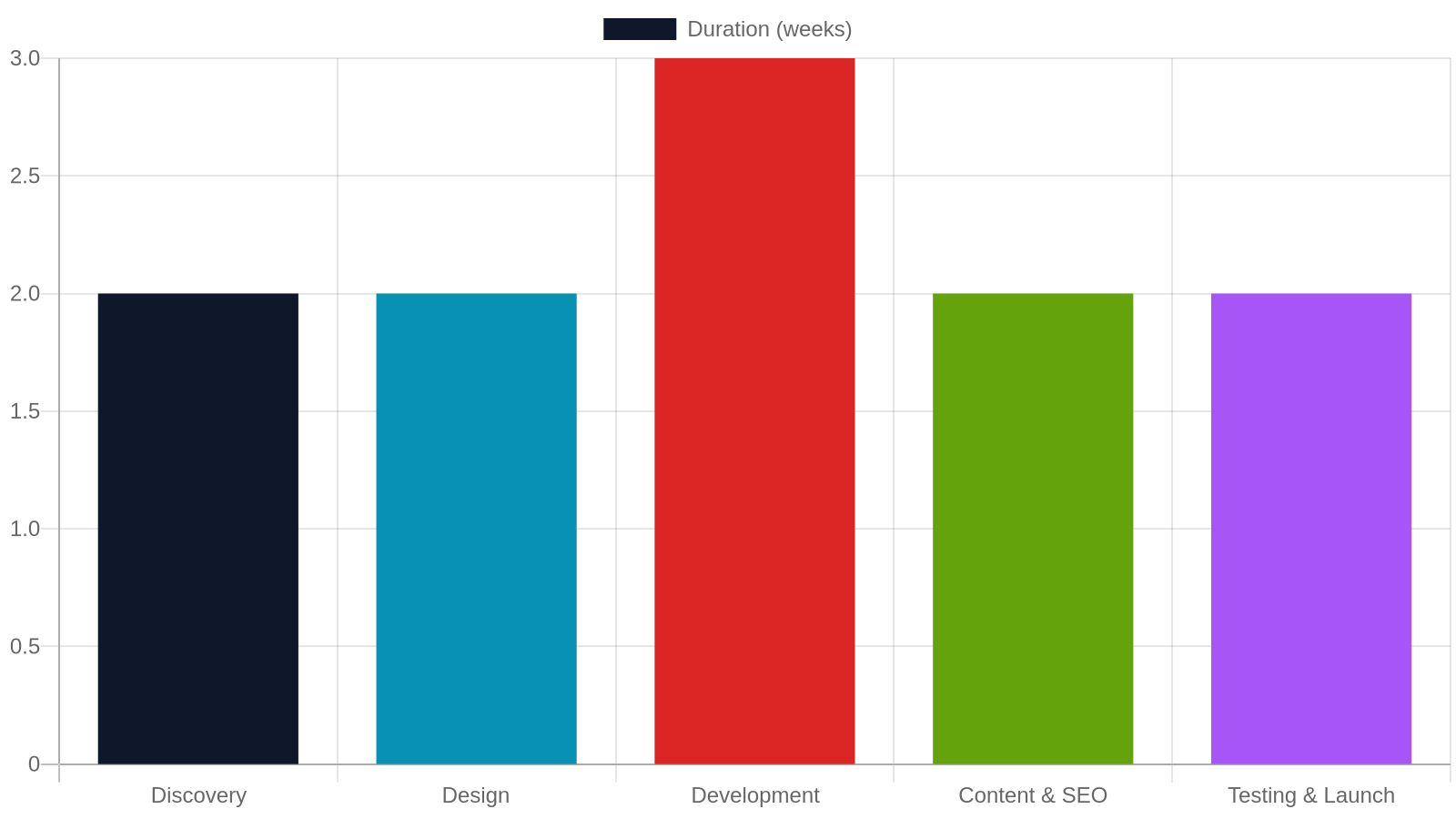
A professionally managed website project for a small business typically moves through five phases:
- Discovery and strategy (Week 1–2): Goals, audience, competitor analysis, sitemap approval
- Design (Week 2–4): Wireframes, mockups, brand alignment, client approval
- Development (Week 4–7): Building on the chosen platform, plugin integration, mobile optimization
- Content and SEO (Week 6–8): Copy, images, on-page SEO, schema markup
- Testing and launch (Week 8–10): Cross-browser QA, speed optimization, DNS transfer, go-live
Total elapsed time for a standard 5–10 page business site: 6–10 weeks. E-commerce or custom-feature projects run 12–20 weeks.
The Biggest Cause of Delays (and How to Avoid It)
The number-one cause of project delays is not the designer — it’s slow client feedback and missing content. Designers cannot build pages around placeholder text indefinitely. Before your project kicks off, prepare:
- Your logo in vector format (SVG or AI file)
- Brand colors (hex codes) and fonts if you have them
- High-resolution photos of your team, location, and products
- A draft of your “About Us” story
- A list of services with brief descriptions
Businesses that arrive at kickoff with this material ready consistently launch 2–3 weeks faster than those who gather content during the project.
Web Design Options Compared: What Tupelo Small Businesses Actually Get
Not all web design options are created equal. Use this comparison to evaluate your choices across the dimensions that matter most to a small business owner.
8. Red Flags to Watch for When Hiring a Web Designer

The web design industry has a low barrier to entry — anyone with a laptop and a Fiverr account can call themselves a web designer. That makes due diligence essential. Here are the most common red flags that signal an inexperienced, unethical, or unreliable designer before you hand over a deposit.
Warning Signs in Contracts and Proposals
A poorly written contract is the clearest signal that a designer will be difficult to work with. Watch for these contract red flags:
- No revision limit specified: Without a defined number of revision rounds (typically 2–3), projects can spiral into scope creep that costs you months
- Designer retains ownership of the site: You should own your domain, your hosting account, and all website files upon final payment
- No milestone payment schedule: Reputable designers invoice in phases (e.g., 50% upfront, 25% at design approval, 25% at launch) — not 100% upfront
- Vague deliverables: “A great website” is not a deliverable. Insist on a scope document listing specific pages, features, and integrations
Red Flags in Communication and Process
Beyond the contract, pay attention to how a designer communicates during the sales process — it predicts how they’ll communicate during the project:
- Takes more than 48 hours to respond to an initial inquiry
- Cannot explain their process in plain language
- Refuses to provide references from past clients
- Promises first-page Google rankings within 30 days (no ethical SEO professional makes this claim)
- Pressures you to sign immediately with a “today-only” discount
Trust your instincts. If a designer makes you feel rushed, confused, or dismissed during the sales conversation, those feelings will only intensify once the project is underway and your money is on the table.
9. Should Tupelo Businesses Hire Locally or Work With a Regional Agency?

Geography is less of a constraint in 2025 than it was a decade ago — video calls, shared project boards, and cloud-based collaboration tools mean your web designer doesn’t need to be down the street. But proximity to your market still matters. Here’s how to think through the local-vs-regional decision for your Tupelo business.
The Case for Working With a Regional Tennessee Agency
Tupelo sits just 90 miles from the Tennessee state line, and many North Mississippi businesses already have strong commercial ties to Memphis, Jackson TN, and the Nashville corridor. Working with a Tennessee-based agency like Studio Blue Creative — which serves both the Nashville Metro and West Tennessee markets — offers several practical advantages:
- Same Central Time Zone for real-time collaboration
- Familiarity with Mid-South buyer behavior, seasonal patterns, and regional search trends
- Established relationships with Tennessee-based hosting, legal, and marketing vendors
- In-person meetings accessible via a short drive to Jackson or Memphis
You can explore Studio Blue Creative’s full range of digital services — from web design and SEO to AI systems and custom app development — at studiobluecreative.com/services.
When a Local Tupelo Freelancer Makes Sense
A local freelancer can be the right choice when your needs are simple and your budget is tight. If you need a basic 3–5 page brochure site with no e-commerce, no custom functionality, and no SEO ambitions, a skilled local freelancer charging $1,200–$2,500 can deliver adequate results.
The limitation appears when you need growth. Freelancers typically lack the bandwidth to manage SEO, run paid campaigns, build custom plugins, and maintain your site simultaneously. As your business scales, you’ll likely outgrow a solo operator within 18–24 months and face the cost and disruption of migrating to a full-service agency anyway. Starting with the right partner from day one is almost always more economical in the long run.
10. Measuring ROI: How to Know If Your Website Is Actually Working

Investing $4,000–$8,000 in a website is a meaningful commitment for a small business. You deserve to know whether that investment is paying off — and the only way to know is to measure the right things from the start. Here’s a practical framework for tracking website ROI without a marketing degree.
The Four Metrics Every Small Business Should Track
Most small business owners judge their website by how it looks. The metrics that actually matter are:
- Organic sessions: How many people are finding you through Google each month? A healthy local business site should grow organic traffic by 15–30% year-over-year with consistent SEO effort.
- Conversion rate: What percentage of visitors take a desired action (call, form fill, purchase)? Industry benchmarks for local service businesses range from 2–5%. Below 2% signals a UX or messaging problem.
- Cost per lead: Divide your total website investment (design + hosting + SEO) by the number of leads generated. A well-optimized site should produce leads at $15–$60 each — far below the $80–$200 cost-per-lead typical of Google Ads in competitive local markets.
- Page load speed: Measured monthly via Google PageSpeed Insights. A drop below 60 on mobile signals a technical issue that needs immediate attention.
Tools to Set Up on Day One
Before your site launches, insist that your designer installs and configures these free tools:
- Google Analytics 4 (GA4): Tracks all visitor behavior, traffic sources, and conversion events
- Google Search Console: Shows which keywords drive impressions and clicks, and flags crawl errors
- Google Business Profile Insights: Tracks calls, direction requests, and website clicks from your GBP listing
Review these dashboards monthly — even a 30-minute monthly review will reveal whether your SEO investment is compounding or stagnating, and give you the data to have an informed conversation with your agency about next steps.
Ready to Get Your Tupelo-Area Business Online the Right Way?

You’ve done the research. You know what a quality website costs, what to look for in a designer, and how to measure success. The only step left is choosing the right partner and getting started. Here’s what working with Studio Blue Creative looks like for businesses in the Tupelo area and across the Mid-South.
What Studio Blue Creative Brings to North Mississippi Businesses
Studio Blue Creative is a Tennessee-based digital agency with deep roots in the Mid-South market. We serve small and mid-sized businesses across the Nashville Metro, Jackson, and West Tennessee — and regularly work with clients in the Tupelo corridor who want the expertise of a full-service regional agency without the price tag of a big-city firm.
Our services go well beyond web design. We build complete digital ecosystems: custom WordPress sites, local SEO, AEO and GEO optimization, AI chatbots, workflow automation, and Google Business Profile setup. Whether you need a brand-new website or want to audit and improve what you already have, we offer a free website health check to show you exactly where you stand before you spend a dollar.
Your Next Step: A Free Estimate
Every project starts with a conversation. There’s no pressure, no obligation, and no jargon — just a straightforward discussion about your business goals, your current digital presence, and what a realistic path forward looks like.
Call us directly at 731-402-0402 or visit our About page to learn more about who we are and how we work. We offer free estimates on all web design, SEO, and digital marketing projects for businesses in Tupelo, Jackson, Nashville, and the surrounding Tennessee and North Mississippi region. Let’s build something that actually works for your business.
Frequently Asked Questions
How much does a web designer cost for a small business near Tupelo MS?
A professional small-business website in the Tupelo and North Mississippi market typically costs $2,500–$8,000 for design and development, plus $75–$250/month for ongoing maintenance and hosting. Simple brochure sites start around $1,500; e-commerce sites can run $5,000–$12,000.
Do I need a local web designer in Tupelo or can I work with someone in Tennessee?
You don't need to hire someone physically in Tupelo. Regional agencies in West Tennessee and the Nashville area routinely serve North Mississippi businesses via video calls and shared project tools, often at competitive rates and with deeper expertise than a solo local freelancer.
How long does it take to build a website for a small business?
A standard 5–10 page business website takes 6–10 weeks from kickoff to launch when the client provides content promptly. E-commerce or custom-feature projects typically run 12–20 weeks. The biggest cause of delays is slow client feedback or missing content.
What is the difference between SEO and local SEO for a Tupelo business?
Traditional SEO targets broad keyword rankings nationally or regionally. Local SEO specifically optimizes your site and Google Business Profile to appear in geographically relevant searches — like 'plumber near Tupelo MS' or 'best restaurant in Lee County.' Local SEO is almost always the higher-ROI investment for brick-and-mortar and service-area businesses.
Should my small business website be built on WordPress?
For most Tupelo small businesses, yes. WordPress powers 43.5% of the web, offers thousands of plugins for added functionality, and gives you full ownership of your site files. Shopify is better for large product catalogs, and custom builds make sense only for complex web applications.
What is AEO and why does it matter for my local business website?
Answer Engine Optimization (AEO) structures your website content so it appears in Google AI Overviews, featured snippets, and voice search results. As more consumers use AI tools like ChatGPT and Google Gemini to find local businesses, AEO ensures your business is cited and recommended — not just ranked.
Find out if ChatGPT recommends your business.
Right now, your customers are asking AI for recommendations. The AI is naming somebody. Is that name yours? Run our free AEO Scorecard — we test 3 of your real queries against ChatGPT and Claude and email you a personalized report.
Ready for a real website?
Get a tailored 3-tier proposal in under a minute — including our Launch Deal ($699), a custom build, or our SEO Growth Package. No call required.