

Quick answer: Hiring a web designer in Knoxville, TN as a small business owner means navigating costs that typically range from $1,500 to $15,000, timelines of 4–12 weeks, and a crowded vendor market where quality varies widely. The best designers combine local market knowledge with technical skills — including SEO, mobile optimization, and fast load times. Before you sign anything, verify the designer's portfolio, understand ongoing maintenance fees, and confirm they build on platforms you can actually manage. This guide covers the 10 most important factors so you make a confident, informed decision.
1. Why Knoxville's Local Market Demands a Locally Aware Web Designer

Not every web designer is created equal, and in a city like Knoxville — with its distinct blend of college culture, Appalachian heritage, and rapid suburban growth — local market awareness matters enormously. A designer based in or deeply familiar with East Tennessee will make decisions about layout, tone, and content strategy that an out-of-state freelancer simply won’t.
This first section explores why local context isn’t just a nice-to-have — it’s a competitive advantage baked directly into your site’s architecture.
Knoxville's Economy Is Unique — Your Website Should Reflect That
Knoxville sits at the intersection of University of Tennessee foot traffic, Oak Ridge research corridor spillover, and a booming tourism economy centered on the Great Smoky Mountains. A web designer who understands these dynamics will build copy, imagery, and calls-to-action that resonate with local buyers rather than generic national audiences.
For example, a downtown restaurant near Market Square needs a homepage that speaks to UT game-day crowds differently than it speaks to weekday lunch regulars. A generic template from a national agency won’t capture that nuance.
Local SEO Signals Start at the Design Level
Search engines use on-page signals — city names in headings, local schema markup, and regionally relevant content — to decide which businesses show up in Knoxville-specific searches. A designer who embeds LocalBusiness schema, geo-tagged images, and neighborhood-level landing pages from day one gives you a structural SEO advantage that’s very hard to retrofit later.
- Include your Knoxville address in the site footer on every page
- Use Tennessee-specific imagery and references in hero sections
- Build separate service-area pages for West Knoxville, North Knoxville, and surrounding Knox County communities
2. What Does a Web Designer in Knoxville TN Actually Cost?
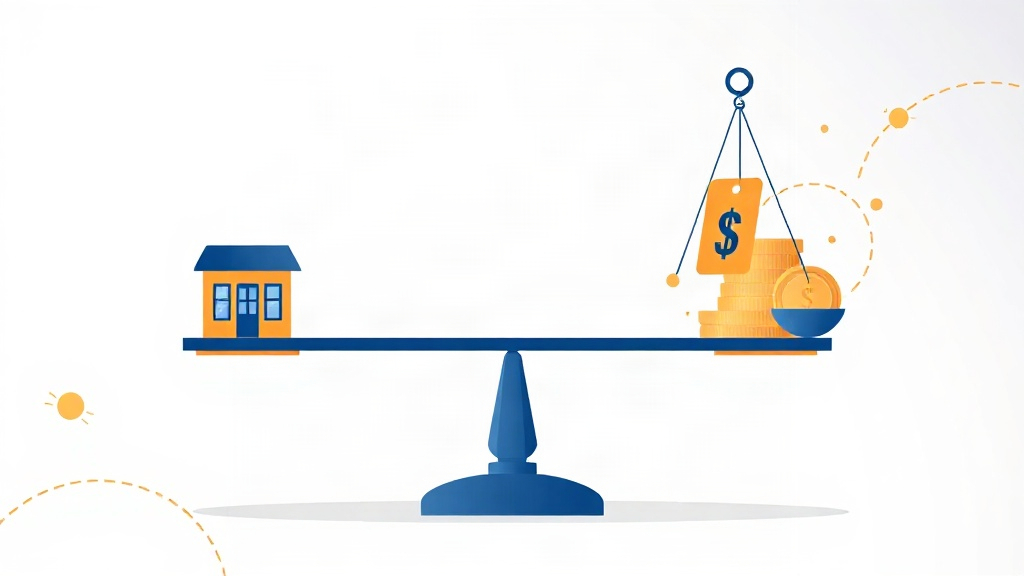
Cost is almost always the first question small business owners ask — and rightfully so. In Knoxville’s competitive market, prices vary by a factor of 10x depending on who you hire and what’s included. Understanding the full cost picture before you sign a contract protects you from sticker shock and scope creep.
Freelancer vs. Agency vs. DIY Platform Pricing
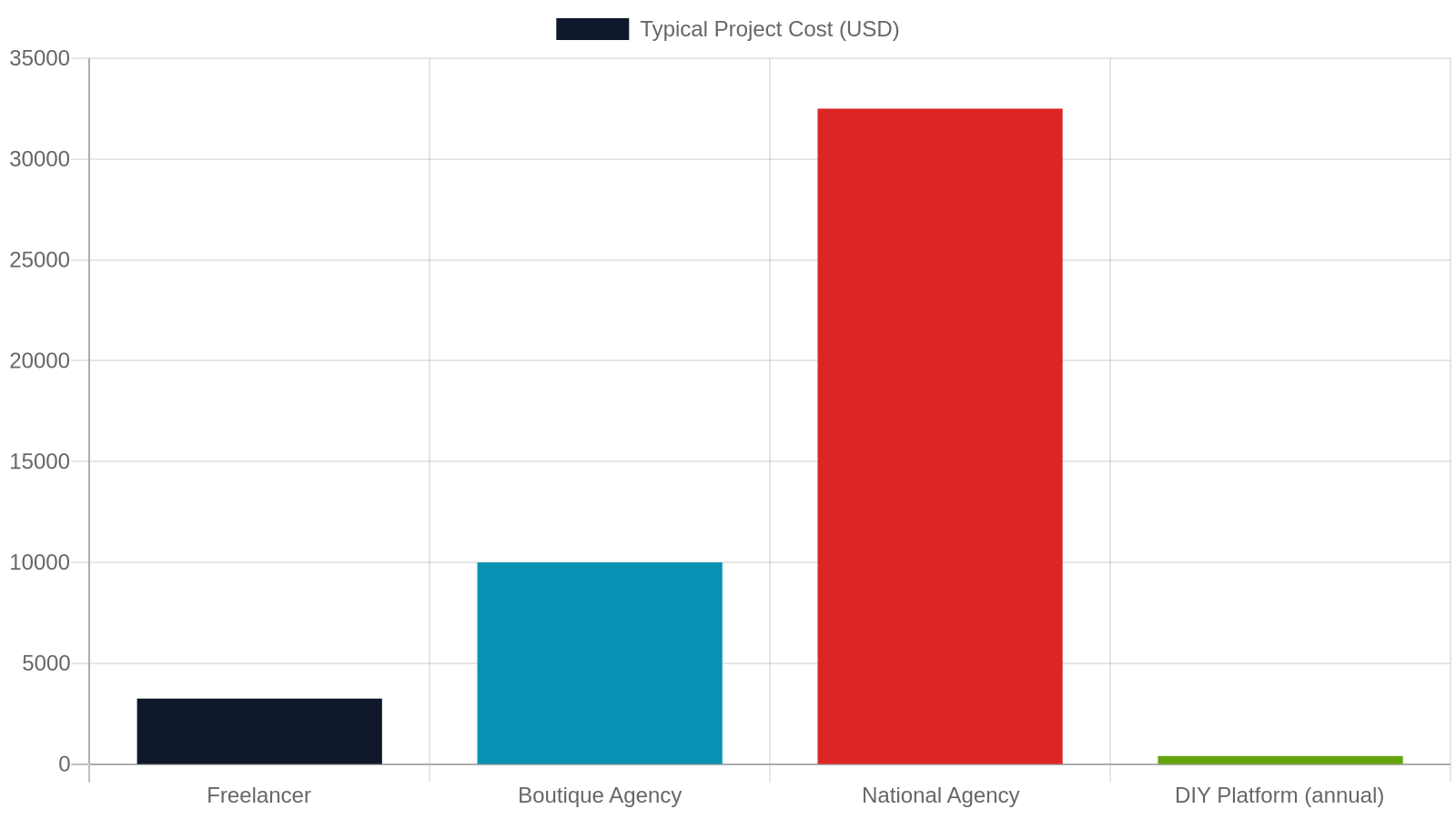
Pricing in the Knoxville market breaks down into three tiers. Freelancers typically charge $1,500–$5,000 for a small-business site of 5–10 pages. Local boutique agencies range from $5,000–$15,000 for the same scope but add project management, copywriting, and post-launch support. DIY platforms like Squarespace or Wix cost $16–$49/month but demand your own time and produce generic results.
- Freelancer: $1,500–$5,000 — best for very tight budgets
- Boutique agency: $5,000–$15,000 — best for growth-focused businesses
- National agency: $15,000–$50,000+ — rarely justified for small businesses
- DIY platform: $200–$600/year — lowest cost, highest DIY burden
Hidden Costs to Budget For
The quoted project price is rarely the final number. Watch for these common add-ons:
- Hosting: $20–$100/month for managed WordPress hosting
- Domain registration: $12–$20/year
- SSL certificate: Often free via Let’s Encrypt, but some agencies charge $50–$200/year
- Ongoing maintenance: $75–$300/month for updates, backups, and security monitoring
- SEO retainer: $500–$2,500/month if you want ongoing optimization
- Copywriting: $75–$150 per page if not included
Always ask for an itemized quote that separates design, development, content, and ongoing support.
3. How Long Does a Small-Business Website Actually Take to Build?
One of the most common frustrations small business owners experience with web design projects is timeline drift. A project quoted as ‘6 weeks’ somehow becomes 6 months. Understanding what drives timelines — and what you can control — helps you set realistic expectations and hold your designer accountable.
Realistic Timelines by Project Type
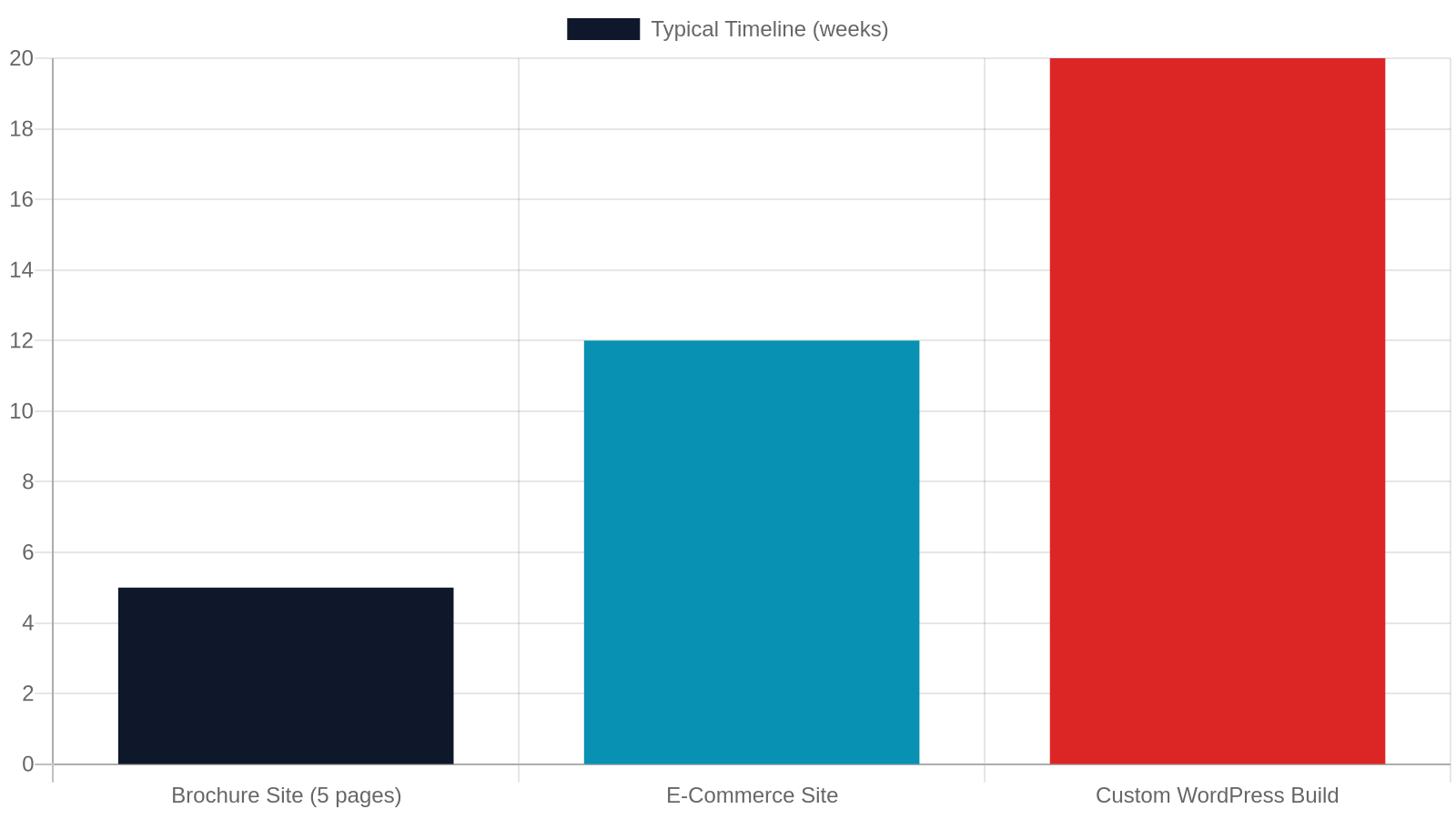
A simple 5-page brochure site with a contact form typically takes 4–6 weeks from kickoff to launch. An e-commerce site with product pages, payment integration, and inventory management runs 8–16 weeks. A fully custom WordPress build with unique functionality — booking systems, member portals, or API integrations — can take 16–24 weeks.
These timelines assume you, the client, provide content (photos, copy, logo files) on schedule. Delays in content delivery are the single most common cause of project overruns.
The Client's Role in Keeping Projects on Track
Your designer can only move as fast as you respond. Most contracts include a clause that pauses the timeline — and sometimes charges a restart fee — if client feedback is delayed more than 5–10 business days. To stay on schedule:
- Prepare all brand assets (logo, colors, fonts) before kickoff
- Write or approve all page copy in the first two weeks
- Designate one internal point of contact to consolidate feedback
- Commit to a 48-hour turnaround on revision requests
Businesses that come prepared typically launch 30–40% faster than those who treat the project as a back-burner task.
4. The 5 Technical Must-Haves Every Knoxville Small Business Site Needs
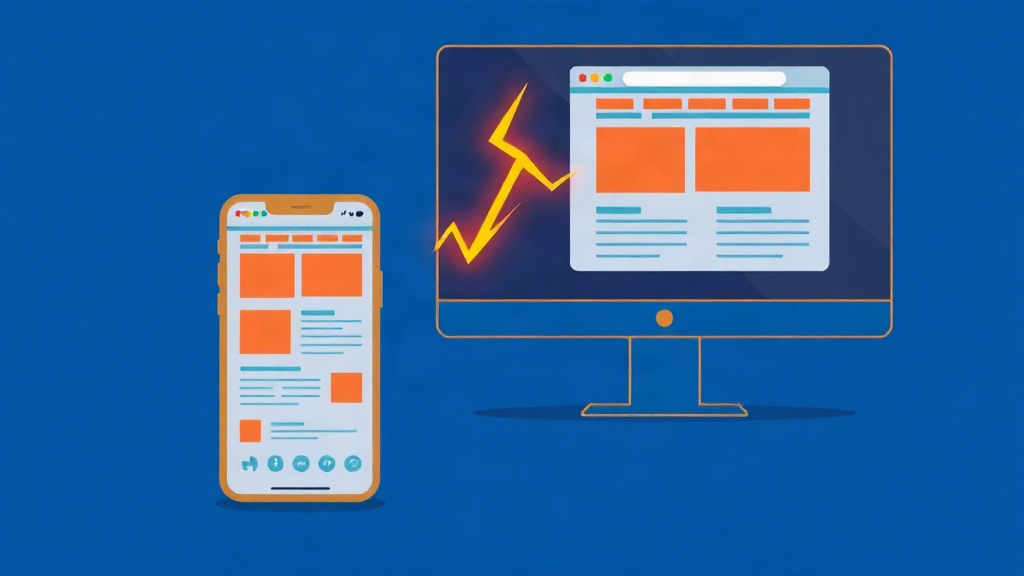
A beautiful website that loads slowly, breaks on mobile, or lacks basic security features will actively hurt your business. Before evaluating any designer’s aesthetics, verify they meet these five technical standards — they are the foundation everything else is built on.
Mobile-First Design Is Non-Negotiable
As of 2024, over 63% of all web traffic in the United States comes from mobile devices. Google’s mobile-first indexing means the mobile version of your site is what Google primarily reads and ranks. A designer who still builds desktop-first and ‘makes it responsive later’ is working with an outdated workflow that will hurt your search visibility from day one.
Ask to see your designer’s recent work on a smartphone before you hire them. If text is tiny, buttons are hard to tap, or images break the layout, keep looking.
Core Web Vitals: Speed, Stability, and Interactivity
Google’s Core Web Vitals are a set of measurable performance benchmarks that directly influence rankings. The three key metrics are:
- Largest Contentful Paint (LCP): Should be under 2.5 seconds — measures how fast the main content loads
- Cumulative Layout Shift (CLS): Should be under 0.1 — measures visual stability (no elements jumping around)
- Interaction to Next Paint (INP): Should be under 200ms — measures responsiveness to user input
Ask every prospective designer to show you PageSpeed Insights scores for recent client sites. A score of 90+ on mobile is achievable and should be your minimum standard.
SSL, Accessibility, and Schema Markup
SSL (HTTPS): Every site must have it. Browsers flag non-HTTPS sites as ‘Not Secure,’ which destroys visitor trust instantly. Accessibility (WCAG 2.1 AA): Proper contrast ratios, alt text on images, and keyboard-navigable menus aren’t just ethical — they reduce legal exposure and improve SEO. Schema markup: Structured data tells search engines exactly what your business is, where it’s located, and what it offers. LocalBusiness schema is especially powerful for Knoxville businesses competing in local search results.
5. SEO and Your Website: What Gets Built In vs. Bolted On

SEO and web design are inseparable. A site built without SEO in mind is like a billboard placed in a cornfield — it looks great, but nobody sees it. Understanding which SEO elements belong in the design phase versus the ongoing marketing phase will help you budget correctly and set realistic traffic expectations.
On-Page SEO That Should Be Standard at Launch
A competent web designer should deliver a site that includes these SEO fundamentals at no extra charge:
- Unique, keyword-optimized title tags and meta descriptions for every page
- Proper H1/H2/H3 heading hierarchy on every page
- Image alt text on every image
- A clean URL structure (e.g., /services/plumbing-knoxville/ not /page?id=47)
- An XML sitemap submitted to Google Search Console
- A robots.txt file that doesn’t accidentally block search crawlers
If a designer quotes you a ‘basic site’ that doesn’t include these items, they are not building you a competitive asset — they’re building you a digital brochure that Google may never find.
When You Need an Ongoing SEO Partner
Launch-day SEO gets you indexed. Ongoing SEO gets you ranked and keeps you there. For Knoxville small businesses in competitive categories — HVAC, legal services, restaurants, real estate — a one-time optimization is rarely enough. You’ll need:
- Regular content publishing (blog posts, service pages, FAQs)
- Local citation building and Google Business Profile management
- Backlink acquisition from local Knoxville directories and media
- Monthly rank tracking and reporting
Studio Blue Creative offers Answer Engine Optimization (AEO) services that go beyond traditional SEO — optimizing your content to appear in AI-generated answers and featured snippets, which is increasingly where small-business visibility is won or lost.
6. Platform Choices: WordPress, Squarespace, Shopify, or Custom?
The platform your site is built on affects everything: how easy it is to update, how well it ranks, how much it costs to maintain, and whether you’re locked into a vendor forever. Knoxville small business owners should understand the tradeoffs before their designer makes this choice for them — often based on their own preferences rather than your business needs.
WordPress: The Small-Business Default for Good Reason
WordPress powers approximately 43% of all websites on the internet as of 2024 — and for small businesses, it remains the most flexible, scalable, and cost-effective choice. It offers thousands of plugins for SEO, e-commerce, booking, and forms. Critically, you own your content and can switch designers or hosting providers without losing your site.
The downside: WordPress requires ongoing updates and security monitoring. Budget for a maintenance plan ($75–$200/month) or your site becomes a security liability within 12–18 months.
When Squarespace, Wix, or Shopify Makes Sense
These platforms are legitimate choices in specific scenarios:
- Squarespace: Best for portfolio-style businesses (photographers, artists, consultants) who prioritize aesthetics over SEO depth
- Wix: Best for very small budgets and simple needs — but SEO limitations are real and well-documented
- Shopify: The clear winner for product-based e-commerce with 10+ SKUs — its checkout and inventory tools are unmatched
The key question: Who owns your content if you stop paying? With hosted platforms, the answer is complicated. With self-hosted WordPress, you own everything outright.
7. How to Evaluate a Web Designer's Portfolio and References

In Knoxville’s growing market, there’s no shortage of people calling themselves web designers — from seasoned professionals to hobbyists charging $500 for a template swap. Evaluating portfolios and references rigorously is the most reliable way to separate genuine talent from polished self-promotion.
What to Look for in a Portfolio
A designer’s portfolio is their proof of concept. When reviewing it, look beyond aesthetics:
- Load speed: Open portfolio sites on your phone. If they load slowly, your site will too.
- Industry diversity: Have they worked with businesses similar to yours?
- Live vs. archived: Are the portfolio sites still live and maintained, or are they broken links?
- Mobile experience: View every portfolio example on a smartphone.
- Conversion elements: Do the sites have clear calls-to-action, contact forms, and trust signals?
Questions to Ask References
Always ask for 2–3 client references and actually call them. Use these questions:
- ‘Did the project finish on time and on budget?’
- ‘How did the designer handle revisions and feedback?’
- ‘Did your site traffic or leads improve after launch?’
- ‘Would you hire them again for your next project?’
- ‘Was there anything that surprised you — good or bad?’
A designer who hesitates to provide references or only offers email testimonials rather than live contacts is a yellow flag. Great designers are proud to connect you with happy clients.
Web Design Provider Comparison: What You Get at Each Tier
Use this table to quickly compare what different types of web design providers typically include for Knoxville small businesses. Not all providers are equal — and price alone doesn't tell the full story.
8. The Contract: 7 Clauses Every Small Business Owner Must Demand
A handshake agreement with a web designer is a recipe for disputes. A proper contract isn’t about distrust — it’s about clarity. These seven contract clauses protect your investment, your data, and your ability to work with other vendors in the future.
Ownership, IP, and Access Rights
The most important clause in any web design contract is intellectual property ownership. The contract must explicitly state that upon final payment, you own the website design, code, content, and all associated files. Without this clause, the designer may legally own your site even after you’ve paid for it.
Additionally, demand that all login credentials — hosting, domain registrar, Google Analytics, Google Search Console, and the CMS admin — are transferred to you at launch. Never let a designer hold these credentials ‘for safekeeping.’
Scope of Work, Revision Rounds, and Kill Fees
Scope creep is the most common source of budget overruns. Your contract should specify:
- Exact number of pages included
- Number of revision rounds (typically 2–3 rounds is standard)
- What constitutes a ‘revision’ vs. a new feature request
- A kill fee clause: if you cancel mid-project, what percentage of the fee is non-refundable?
- A timeline with milestone dates and consequences for missing them
A well-written scope of work protects both parties and keeps the project focused. If a designer resists putting specifics in writing, that’s a serious red flag.
9. AEO, GEO, and the New Frontier of AI-Driven Search Visibility

The search landscape is changing faster than at any point in the past decade. A web designer who only thinks about Google’s traditional blue-link results is already behind. Forward-thinking Knoxville small businesses need a digital partner who understands how AI-powered search engines discover, evaluate, and recommend local businesses.
Why Traditional SEO Is No Longer Enough
Google’s AI Overviews (formerly Search Generative Experience) now appear at the top of results for millions of queries — and they pull answers from websites without users ever clicking through. ChatGPT, Perplexity, and Bing Copilot are increasingly where people ask business questions. If your Knoxville business isn’t optimized for these AI systems, you’re invisible to a fast-growing segment of potential customers.
Answer Engine Optimization (AEO) structures your content so AI systems can extract and cite it confidently. Generative Engine Optimization (GEO) ensures your business appears when AI tools generate local recommendations — ‘best plumber in Knoxville,’ ‘top accountants near me,’ and similar queries.
What AEO and GEO Look Like in Practice
For a Knoxville small business, AEO and GEO implementation includes:
- FAQ sections with direct, concise answers on every service page
- LocalBusiness and Service schema markup throughout the site
- Authoritative long-form content that AI systems can cite as a source
- Google Business Profile optimization with complete, accurate data
- Review corpus management — volume and recency of reviews directly influence AI recommendations
Studio Blue Creative’s Generative Engine Optimization services are specifically designed to help Tennessee small businesses appear in AI-generated local search results — a capability most traditional web designers don’t offer.
10. Ongoing Support, Maintenance, and When to Redesign
Launch day is the beginning, not the end. The small businesses that get the most value from their websites treat them as living assets — regularly updated, monitored, and evolved as their business grows. Understanding what good ongoing support looks like helps you budget accurately and avoid the ‘set it and forget it’ trap that leaves sites vulnerable and stagnant.
What a Good Maintenance Plan Covers
A website is not a one-time purchase — it’s an ongoing operating expense. A proper maintenance plan should include:
- Weekly automated backups stored off-server
- Monthly WordPress core, theme, and plugin updates
- Uptime monitoring with alerts if the site goes down
- Security scanning for malware and vulnerabilities
- Performance monitoring to catch speed regressions
- Minor content updates (changing hours, adding a team member, updating a price)
Expect to pay $75–$300/month for a legitimate maintenance plan. Anything cheaper likely skips critical steps.
Signs It's Time for a Redesign
Most small-business websites have a functional lifespan of 3–5 years before they need a significant redesign. Watch for these signals:
- Mobile PageSpeed score below 50 that can’t be fixed with optimization
- Bounce rate above 70% with no improvement despite content changes
- Your site looks noticeably dated compared to competitors
- You’ve added so many plugins that the admin is slow and unstable
- Your business has pivoted and the site no longer reflects your services accurately
A redesign doesn’t always mean starting from scratch — sometimes a targeted rebuild of key pages and a performance overhaul is enough to extend the site’s life by another 2–3 years.
Ready to Build a Website That Actually Works for Your Tennessee Business?
You’ve now got a clear picture of what it takes to hire the right web designer in Knoxville, TN — from understanding real costs and timelines to evaluating portfolios, locking down contracts, and planning for the AI-driven future of search. The next step is finding a partner who can execute on all of it.
Why Tennessee Businesses Choose Studio Blue Creative
Studio Blue Creative serves small and mid-sized businesses across the Nashville Metro — including Franklin, Brentwood, Murfreesboro, Hendersonville, and Mount Juliet — as well as Jackson and West Tennessee. Our team combines custom web design, SEO, AEO, and GEO into a single, cohesive strategy so your site doesn’t just look great — it ranks, gets cited by AI systems, and converts visitors into customers.
We build on WordPress with clean, maintainable code. We don’t lock you into proprietary systems. And we offer transparent, itemized pricing with no hidden fees. Explore our full range of digital services to see how we can help your business grow online.
Get Your Free Estimate Today
Whether you’re launching your first website, redesigning an outdated one, or looking to improve your visibility in AI-powered search results, Studio Blue Creative offers free estimates with no obligation. We’ll review your current digital presence, identify the biggest opportunities, and give you a clear roadmap with honest pricing.
Call us today at 731-402-0402 — or visit our About page to learn more about our team and approach. We’re proud to serve Knoxville, Nashville, Jackson, and small businesses across all of Tennessee.
Frequently Asked Questions
How much does a web designer cost in Knoxville TN?
Web design costs in Knoxville typically range from $1,500 for a basic freelancer project to $15,000 or more for a full-service boutique agency. DIY platforms like Squarespace cost $200–$600 per year but require your own time and produce generic results. Always ask for an itemized quote that separates design, development, content, and ongoing maintenance.
How long does it take to build a small business website?
A simple 5-page brochure site typically takes 4–6 weeks. E-commerce sites run 8–16 weeks, and custom WordPress builds can take 16–24 weeks. The biggest variable is how quickly you provide content — businesses that deliver photos, copy, and approvals promptly launch 30–40% faster than those who delay.
What platform should a small business in Knoxville use for their website?
WordPress is the most flexible and SEO-friendly choice for most small businesses, powering 43% of all websites globally. Shopify is the best option for product-based e-commerce. Squarespace suits portfolio-style businesses. The key factor is ownership — with self-hosted WordPress, you own your site outright regardless of which designer or host you use.
What is AEO and why does it matter for my Knoxville business?
Answer Engine Optimization (AEO) structures your website content so AI-powered tools like Google's AI Overviews, ChatGPT, and Perplexity can extract and cite your business as an authoritative answer. As more searches happen through AI interfaces rather than traditional blue-link results, AEO is becoming as important as traditional SEO for local business visibility.
What should be included in a web design contract?
Your contract should specify: intellectual property ownership (you own everything after final payment), exact scope of work (number of pages, revision rounds), milestone dates, a kill fee clause, and transfer of all login credentials at launch. Never proceed without a written contract, and be cautious of any designer who resists putting specifics in writing.
How often should a small business redesign their website?
Most small-business websites have a functional lifespan of 3–5 years before needing a significant redesign. Key signals that it's time include a mobile PageSpeed score below 50, a bounce rate above 70%, a visibly dated appearance compared to competitors, or a major shift in your business's services or branding.
Find out if ChatGPT recommends your business.
Right now, your customers are asking AI for recommendations. The AI is naming somebody. Is that name yours? Run our free AEO Scorecard — we test 3 of your real queries against ChatGPT and Claude and email you a personalized report.
Ready for a real website?
Get a tailored 3-tier proposal in under a minute — including our Launch Deal ($699), a custom build, or our SEO Growth Package. No call required.