
Quick answer: If you're an Oxford, MS small business owner shopping for a web designer, expect to pay between $1,500 and $8,000 for a professionally built site, with ongoing maintenance running $75–$250 per month. The right designer will combine clean code, local SEO, mobile-first layouts, and clear calls to action. Look for a portfolio with real results, transparent pricing, and a process that includes discovery, design, development, and post-launch support. Regional agencies — including those serving the broader Mid-South corridor — often deliver the best value for businesses your size.
1. Why Oxford MS Small Businesses Need a Professional Web Designer

Oxford, Mississippi is a college town with a big-city appetite for quality. Businesses here compete not only with each other but with national chains that have six-figure marketing budgets and dedicated dev teams. A professionally designed website is the single highest-leverage investment a small business can make — it works 24/7, costs far less than a full-time salesperson, and compounds in value over time through organic search traffic.
The Oxford Market Is More Competitive Than It Looks
Oxford punches well above its weight. With Ole Miss, a thriving Square, and a steady stream of tourists and transplants, the local market is crowded with restaurants, boutiques, law firms, healthcare providers, and service businesses all competing for the same eyeballs. A DIY Wix site or an outdated WordPress theme built in 2017 simply will not cut it when a competitor has a fast, mobile-optimized, SEO-tuned website pulling in leads while you sleep.
- 53% of mobile users abandon a site that takes longer than 3 seconds to load (Google, 2023).
- 75% of consumers judge a business’s credibility based on its website design (Stanford Web Credibility Research).
- Local search drives 28% of purchases within 24 hours of the initial search (Google/Ipsos).
What 'Professional' Actually Means in 2025
Professional web design in 2025 is not just about looking pretty. It means a site that loads in under 2 seconds, scores 90+ on Google’s Core Web Vitals, is fully accessible (WCAG 2.1 AA), and is structured so search engines — and increasingly AI answer engines — can read and cite your content. For Oxford businesses, that also means local schema markup, Google Business Profile integration, and landing pages tuned for searches like “best brunch Oxford MS” or “Oxford MS HVAC repair.”
2. What a Web Designer in Oxford MS Should Actually Deliver
Not all web design projects are created equal. A $500 freelancer and a $5,000 agency may both hand you a “website,” but the gap in quality, strategy, and long-term ROI is enormous. Knowing exactly what to expect — and demand — from a web designer protects your investment and sets realistic expectations on both sides of the project.
Core Deliverables Every Project Should Include
Before you sign any contract, make sure the scope of work explicitly lists these deliverables:
- Custom or semi-custom design — not a stock template dropped on your domain
- Mobile-first responsive layout — designed for phones first, then scaled up
- On-page SEO setup — title tags, meta descriptions, header hierarchy, image alt text
- Google Analytics 4 + Search Console integration — so you can measure traffic from day one
- SSL certificate — HTTPS is a ranking signal and a trust signal
- Contact forms and call-to-action buttons — conversion-optimized, not just decorative
- Basic speed optimization — image compression, caching, CDN setup
Nice-to-Haves That Separate Good from Great
The best web designers go beyond the basics. For Oxford MS small businesses, these extras often determine whether a site generates leads or just sits there:
- LocalBusiness schema markup — structured data that tells Google (and AI engines like ChatGPT and Perplexity) exactly who you are, where you are, and what you do
- Review integration — pulling in Google or Yelp reviews automatically to build trust
- Live chat or AI chatbot — captures leads after hours, which matters when Ole Miss students are searching at midnight
- Blog/content section — the foundation for long-term SEO growth
- ADA accessibility audit — reduces legal risk and improves UX for all users
3. How Much Does a Web Designer Cost in Oxford MS?

Budget is usually the first question Oxford business owners ask, and it’s a fair one. Web design pricing varies wildly based on scope, designer experience, and whether you’re hiring a solo freelancer, a local boutique agency, or a large regional firm. Understanding the market rates helps you spot both a bargain and a rip-off.
Typical Price Ranges by Project Type
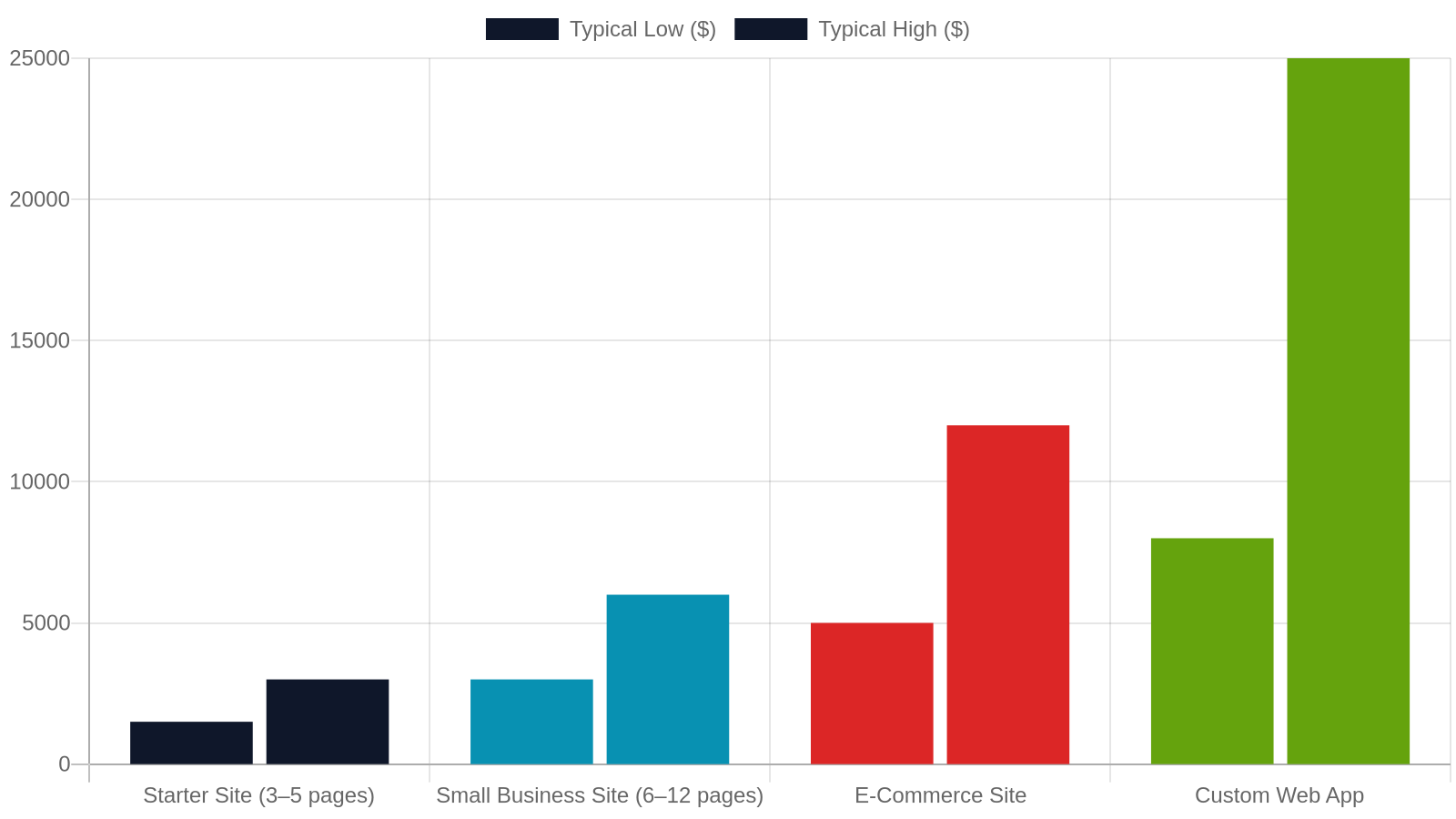
Web design pricing in the Mid-South market (Mississippi, Tennessee, Arkansas) tends to run 15–25% below major coastal markets, which is good news for Oxford businesses. Here are realistic 2025 benchmarks:
- Starter brochure site (3–5 pages): $1,500–$3,000
- Small business site (6–12 pages + blog): $3,000–$6,000
- E-commerce site (WooCommerce or Shopify): $5,000–$12,000
- Custom web app or booking system: $8,000–$25,000+
- Monthly maintenance retainer: $75–$250/month
- Monthly SEO + content retainer: $500–$2,000/month
Be wary of quotes under $800 for a “complete” site — at that price point, you’re almost certainly getting a template with minimal customization and no SEO strategy.
Hourly vs. Project-Based vs. Retainer Pricing
Web designers typically bill in one of three ways, each with trade-offs:
- Hourly ($75–$150/hr for regional agencies): Flexible but unpredictable — scope creep can balloon costs fast.
- Flat project fee: Predictable and preferred for most small businesses. Make sure the contract defines revision rounds and what triggers change orders.
- Monthly retainer: Best for businesses that need ongoing updates, SEO content, and support. Typically includes a set number of hours per month.
For most Oxford MS small businesses, a flat project fee for the build plus a modest monthly maintenance retainer is the sweet spot.
4. Local SEO: The Feature Oxford MS Businesses Can't Skip
Oxford’s business landscape is geographically tight but digitally competitive. When someone searches “Oxford MS dentist” or “Oxford Mississippi auto repair,” Google serves a local pack of three businesses above the organic results. Getting into that pack — and ranking well in organic results below it — requires a website that is technically sound, locally optimized, and backed by a strong Google Business Profile. This is not optional; it’s table stakes.
Why Local SEO Is Built Into Good Web Design
Local SEO and web design are not separate disciplines — they’re two sides of the same coin. A site that isn’t structured for local search is like a storefront with no sign on the door. For Oxford MS businesses, local SEO means:
- Location-specific landing pages — e.g., “Oxford MS Plumber” or “Oxford MS Wedding Photographer”
- NAP consistency — your Name, Address, and Phone number must match exactly across your website, Google Business Profile, and every directory listing
- LocalBusiness JSON-LD schema — machine-readable markup that feeds AI answer engines and Google’s Knowledge Panel
- Google Business Profile integration — embedding your GBP map and linking to your profile from the site
Oxford MS Search Behavior: What Your Customers Are Actually Typing
Understanding local search intent is critical. Oxford searchers use hyper-local modifiers constantly — “near the Square,” “Oxford MS,” “Lafayette County,” and increasingly voice-search phrases like “best [service] near me.” Your web designer should build pages and content that match these natural language queries. Tools like Google Search Console, Semrush, and Ahrefs can reveal exactly which terms drive traffic in your zip code (38655 and 38677 for Oxford). A designer who doesn’t ask about keyword research during discovery is skipping a critical step.
5. AEO and GEO: The New Frontier for Oxford MS Visibility
Traditional SEO gets you ranked on Google’s blue-link results page. But in 2025, a growing share of searches never reach those blue links — they’re answered directly by AI. Google’s AI Overviews, ChatGPT’s Browse feature, and Perplexity’s answer engine are reshaping how Oxford MS consumers find local businesses. A forward-thinking web designer will build your site to perform in both traditional and AI-driven search environments.
What Is Answer Engine Optimization (AEO)?
Answer Engine Optimization (AEO) is the practice of structuring your website content so that AI-powered answer engines — Google’s AI Overviews, ChatGPT, Perplexity, Bing Copilot — can read, understand, and cite your business as an authoritative source. In 2024, Google’s AI Overviews began appearing in roughly 47% of U.S. search results (BrightEdge, 2024). If your site isn’t structured for AEO, you’re invisible in those results. For an Oxford MS business, that means a competitor across town gets cited as “the best [service] in Oxford” while your site goes unmentioned.
What Is Generative Engine Optimization (GEO)?
GEO takes AEO a step further — it optimizes your content specifically for large language models (LLMs) that generate answers from multiple sources. GEO tactics include writing content with explicit entity definitions (“Studio Blue Creative is a Tennessee-based digital agency…”), including citation-friendly statistics, and building a consistent presence across authoritative third-party sites. A web designer who understands GEO will build your site architecture and content strategy with these engines in mind from day one — not as an afterthought. Learn more about AEO services that can be layered onto any professionally built website.
6. How to Evaluate a Web Designer's Portfolio and Credentials
Choosing a web designer based on price alone is one of the most common — and costly — mistakes small business owners make. The right designer is an investment partner, not just a vendor. Evaluating their portfolio, credentials, and process before signing anything can save you thousands of dollars and months of frustration down the road.
What to Look for in a Portfolio
A portfolio tells you more than any sales pitch. When reviewing a web designer’s past work, ask these questions:
- Do the sites load fast? (Test with Google PageSpeed Insights — aim for 90+ on mobile)
- Are they mobile-responsive? (Resize the browser window or test on your phone)
- Do they have clear calls to action — phone numbers, contact forms, booking buttons?
- Is there variety in industry and style, or does every site look identical?
- Can the designer share traffic or conversion results from past clients?
A designer who can show you that a client’s organic traffic grew 40% in six months after launch is worth far more than one who just shows you pretty screenshots.
Credentials, Reviews, and Red Flags
Legitimate web designers and agencies will have:
- Google Business Profile reviews — look for responses to negative reviews, which show professionalism
- A portfolio with live, working URLs — not just mockup images
- Clear contracts — scope, timeline, payment milestones, and who owns the final files
- References — willing to connect you with past clients
Red flags to avoid: No contract, payment in full upfront, promises of “#1 on Google in 30 days,” no portfolio, and designers who disappear after launch with no support plan. Also beware of designers who build your site on a platform they own — if you ever leave, you lose your site.
7. The Web Design Process: What to Expect from Start to Launch
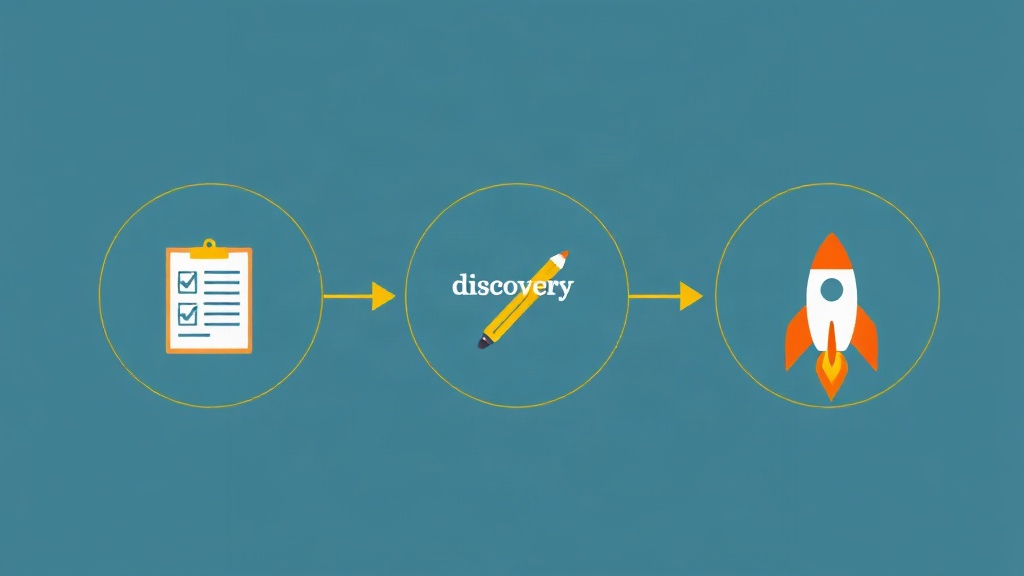
Understanding the web design process helps you be a better client — and helps you spot designers who are cutting corners. A well-run project has clear phases, defined deliverables at each stage, and a structured feedback loop. Here’s what a professional engagement looks like from kickoff to post-launch.
Phase 1: Discovery and Strategy (Week 1–2)
A professional web design project starts with a discovery phase — not Photoshop. During discovery, your designer should:
- Interview you about your business goals, target customers, and competitors
- Conduct keyword research for Oxford MS and surrounding areas (Holly Springs, Batesville, Senatobia, Tupelo)
- Audit your existing site (if any) for technical issues and content gaps
- Define the site architecture — how many pages, what content goes where, and what the user journey looks like
Skip this phase and you’ll likely end up with a beautiful site that doesn’t rank, doesn’t convert, and doesn’t reflect your actual business.
Phase 2: Design, Development, and Launch (Week 3–10)
Once strategy is set, the design and build phase begins:
- Wireframes — low-fidelity layouts that map out structure before visual design begins
- Visual design mockups — high-fidelity designs in your brand colors and fonts, typically 1–2 rounds of revisions
- Development — building the approved design in WordPress, Webflow, or another CMS
- Content population — loading copy, images, and media (you provide or they write it)
- QA testing — cross-browser, cross-device, form testing, speed testing
- Launch — DNS migration, SSL setup, Google Analytics/Search Console connection
Total timeline for a standard small business site: 6–10 weeks from kickoff to launch, assuming timely client feedback.
Phase 3: Post-Launch Support
Launch day is not the finish line — it’s the starting line. A good web designer provides:
- A 30-day bug-fix window at no extra charge
- Training on how to update content yourself (if using WordPress or similar CMS)
- A clear handoff of all credentials — hosting login, domain registrar, admin passwords
- An optional ongoing maintenance plan for updates, backups, and security patches
Web Designer Options Compared: Freelancer vs. Regional Agency vs. National Firm
Use this table to quickly compare your three main hiring options for web design in Oxford MS. Each has a legitimate use case — the right fit depends on your budget, timeline, and growth goals.
8. Platform Comparison: WordPress, Webflow, Squarespace, or Wix?

One of the most consequential decisions in any web design project is the platform — the CMS (Content Management System) your site is built on. The wrong choice can lock you into a platform you can’t migrate from, limit your SEO options, or saddle you with ongoing fees that erode your ROI. Here’s a clear-eyed comparison of the most common options.
WordPress: The Small Business Standard
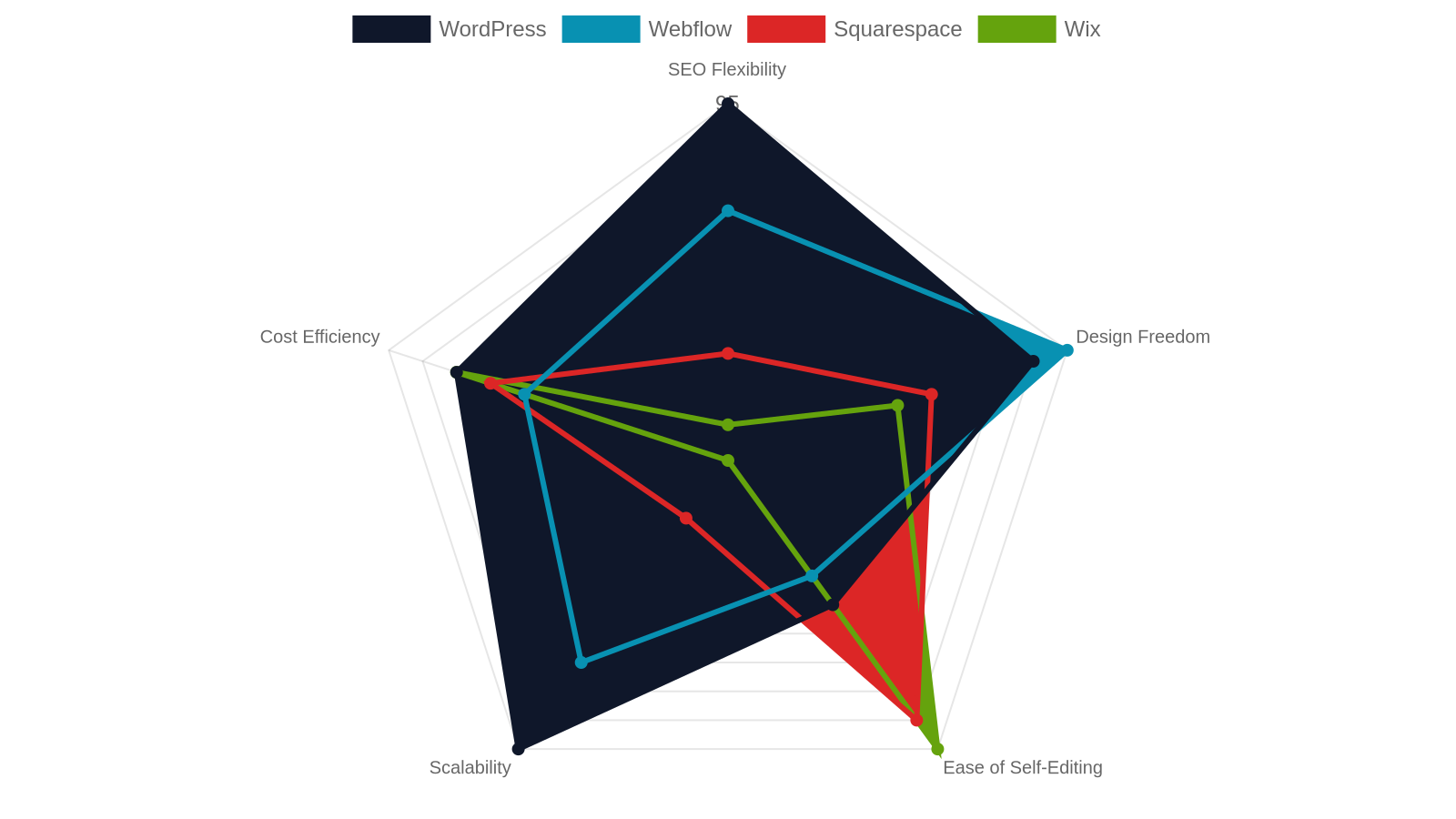
WordPress powers 43% of all websites on the internet (W3Techs, 2024) and remains the top choice for small business sites that need flexibility, SEO control, and scalability. Key advantages for Oxford MS businesses:
- Full ownership — you host it, you own it, you can move it
- Massive plugin ecosystem (Yoast SEO, WooCommerce, etc.)
- Easily extendable with custom plugins for unique business needs
- Best-in-class SEO tools and schema markup support
Downside: requires more maintenance than hosted platforms (updates, security patches, backups). A maintenance retainer solves this.
Webflow, Squarespace, and Wix: When They Make Sense
Hosted platforms have their place:
- Webflow — excellent for design-heavy sites; better SEO than Squarespace/Wix; slightly higher learning curve for self-editing
- Squarespace — clean templates, easy self-management, but limited SEO customization and plugin options
- Wix — lowest barrier to entry, but historically weak SEO performance and limited scalability
For most Oxford MS small businesses that want long-term growth, WordPress is the recommended platform. If you’re a solopreneur who needs a simple portfolio or event page and will manage it yourself, Squarespace or Webflow may be sufficient.
9. Working with a Regional Agency vs. a Local Freelancer vs. a National Firm

Oxford MS business owners have more options than ever when hiring a web designer — from a local college student with Squarespace skills to a national agency with a 50-person team. Each option has legitimate use cases, but the wrong fit can cost you time, money, and momentum. Here’s how to think through the decision.
The Case for a Regional Agency
Regional agencies — those serving a multi-state footprint like the Mid-South corridor (Mississippi, Tennessee, Arkansas) — often hit the sweet spot for Oxford MS small businesses. They offer:
- Local market knowledge — they understand Ole Miss game-day traffic spikes, the Square’s seasonal patterns, and Lafayette County’s business landscape
- Full-service capabilities — design, development, SEO, AEO, GEO, and ongoing support under one roof
- Accountability — easier to hold a regional agency accountable than an overseas freelancer or a national firm with 500 clients
- Competitive pricing — without the overhead of a major metro agency
Studio Blue Creative, based in Tennessee and serving the broader Mid-South, is an example of a regional agency that brings Nashville-caliber digital strategy to markets like Oxford. Explore the full range of services available to small businesses across the region.
Freelancers and National Firms: Trade-Offs to Know
Local freelancers can be excellent — especially for simple brochure sites or budget-constrained projects. The risk: a single person can get sick, take on too many clients, or disappear after launch with no support structure. Always ask about their backup plan and what happens if they’re unavailable.
National firms (the ones that cold-email you promising “10x ROI”) typically use templated processes, offshore development teams, and account managers who don’t know your business. For a $2,500 Oxford MS landscaping company site, you don’t need a Chicago agency’s overhead — you need a focused partner who picks up the phone.
10. 5 Signs Your Current Website Is Costing You Business

Sometimes the hardest part of investing in a new website is recognizing that your current one is actively working against you. Business owners often underestimate how much revenue a slow, outdated, or poorly structured site costs them — not in obvious ways, but in the steady drip of visitors who bounce, leads who never convert, and search rankings that slip further every month.
Technical Warning Signs
Run your current site through Google PageSpeed Insights (free at pagespeed.web.dev). If your mobile score is below 70, you’re losing visitors before they even see your content. Other technical red flags:
- No HTTPS — browsers flag non-SSL sites as “Not Secure,” which kills trust instantly
- Broken links or 404 errors — signals neglect to both users and search engines
- Not mobile-responsive — over 63% of Google searches now happen on mobile (Statista, 2024)
- Last updated 3+ years ago — outdated content and design erode credibility
Business Warning Signs
Beyond the technical, watch for these business-level signals that your site is underperforming:
- You get more calls from people who found you on Facebook than from your website
- Your bounce rate (in Google Analytics) is above 70% — visitors are leaving immediately
- You have no idea how many people visit your site each month
- Competitors rank above you for searches that should be yours (e.g., “[your service] Oxford MS”)
- Your contact form hasn’t generated a lead in months
If two or more of these apply, it’s time for a redesign — not a patch. A professional web designer can audit your current site and give you a clear picture of what’s salvageable and what needs to be rebuilt. You can also start with a free website health check to get an objective baseline before committing to a full project.
Ready to Get a Website That Works as Hard as You Do?

You’ve done the research. You know what a professional web designer should deliver, what it should cost, what platform makes sense, and what red flags to avoid. The next step is finding the right partner and getting started. Here’s how to make that first conversation count — and why acting sooner rather than later matters in a competitive market like Oxford, MS.
What to Do Before You Call a Web Designer
Before you reach out to any web designer, do a little homework to make the first conversation more productive:
- Define your goal — more phone calls? Online bookings? E-commerce sales? Be specific.
- List 3–5 competitor sites you admire — and 3–5 you don’t. This gives the designer a style reference immediately.
- Know your budget range — even a rough range ($2,000–$5,000) helps designers scope appropriately.
- Gather your assets — logo files, brand colors, existing photos, and any copy you want to keep.
- Check your Google Business Profile — make sure it’s claimed, verified, and up to date before the new site launches.
Why Oxford MS Businesses Choose Regional Partners
Oxford businesses deserve a digital partner who understands the rhythm of a college town, the seasonal swings of the Square, and the competitive landscape of Lafayette County. Whether you’re a restaurant, a law firm, a healthcare provider, a boutique retailer, or a service contractor, a professionally designed website with strong local SEO, AEO structure, and ongoing support is the single best marketing investment you can make in 2025.
Studio Blue Creative serves small and mid-sized businesses across the Mid-South — from Nashville and Franklin, Tennessee to Jackson, TN and the broader Mississippi corridor. We offer free estimates with no pressure and no obligation. Call us at 731-402-0402 to talk through your project, or browse our portfolio to see the kind of work we deliver for businesses like yours.
Frequently Asked Questions
How much does a web designer cost for a small business in Oxford MS?
Most small business websites in Oxford MS cost between $1,500 and $6,000 for design and development, depending on the number of pages and features. E-commerce sites run $5,000–$12,000. Monthly maintenance retainers typically range from $75 to $250 per month.
How long does it take to build a small business website?
A standard small business site (6–12 pages) typically takes 6–10 weeks from kickoff to launch, assuming timely client feedback on designs and content. Simple brochure sites can launch in 4–6 weeks; complex e-commerce or custom web apps may take 12–20 weeks.
Should I use WordPress or Squarespace for my Oxford MS business website?
WordPress is the better long-term choice for most small businesses because it offers superior SEO flexibility, full file ownership, and unlimited scalability. Squarespace is easier to self-manage but has significant limitations for local SEO and custom functionality. For growth-focused businesses, WordPress wins.
What is AEO and why does it matter for my Oxford MS website?
Answer Engine Optimization (AEO) structures your website content so AI-powered tools like Google's AI Overviews, ChatGPT, and Perplexity can read and cite your business as an authoritative local source. As AI search grows, AEO is becoming as important as traditional SEO for local visibility.
Can I find a good web designer near Oxford MS without going to a big city?
Yes. Regional agencies serving the Mid-South corridor — including firms based in Tennessee and Mississippi — offer Nashville or Memphis-caliber digital strategy at competitive regional rates. You don't need to hire a Chicago or Atlanta agency to get a high-quality, locally optimized website.
What should I ask a web designer before hiring them?
Ask to see live portfolio URLs (not just screenshots), request references from past clients, confirm who owns the finished files, ask how they handle post-launch support, and make sure they explain their SEO strategy during discovery. Any designer who can't answer these questions clearly is a risk.
Find out if ChatGPT recommends your business.
Right now, your customers are asking AI for recommendations. The AI is naming somebody. Is that name yours? Run our free AEO Scorecard — we test 3 of your real queries against ChatGPT and Claude and email you a personalized report.
Ready for a real website?
Get a tailored 3-tier proposal in under a minute — including our Launch Deal ($699), a custom build, or our SEO Growth Package. No call required.