

Quick answer: Custom web app development gives Jackson, TN small businesses a purpose-built digital tool — think online booking systems, customer portals, inventory dashboards, or automated workflows — instead of a patched-together stack of off-the-shelf software. A professionally built custom app typically costs $5,000–$50,000 depending on complexity, takes 6–20 weeks to launch, and pays for itself by cutting manual labor and retaining more customers. Local agencies like Studio Blue Creative serve West Tennessee businesses from concept through launch and ongoing support.
1. What Is a Custom Web App (and Why It's Not Just a Website)?
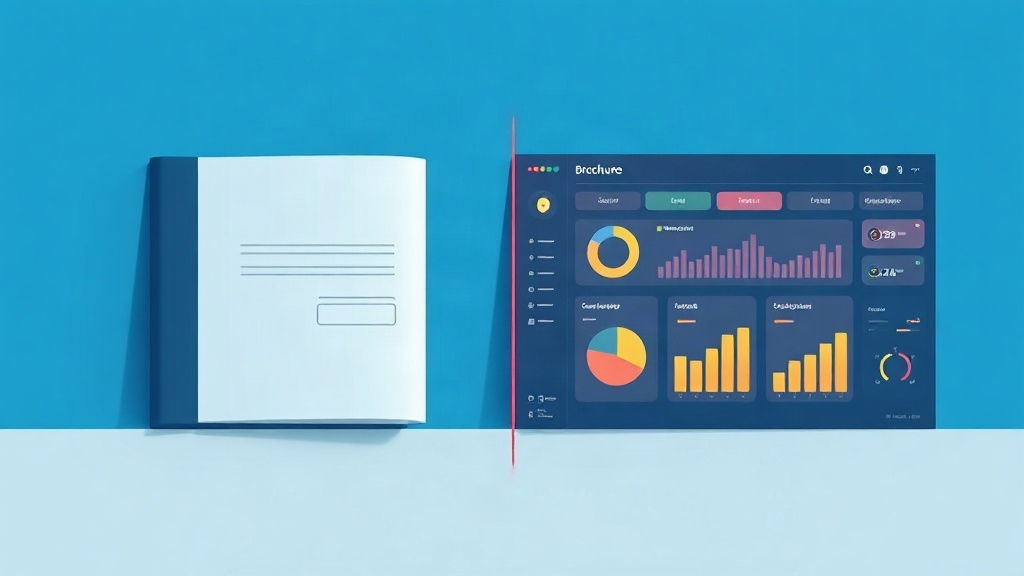
Before investing in custom development, it’s worth understanding exactly what a web app is and how it differs from the website you may already have. The distinction matters because it shapes your budget, your timeline, and the kind of development partner you need.
Websites vs. Web Applications: The Core Difference
A website is primarily informational — it tells visitors who you are, what you offer, and how to contact you. A web application, by contrast, is interactive software that runs in a browser and performs tasks: processing orders, storing customer data, generating reports, sending automated messages, or managing appointments.
- Static website: displays your menu, hours, and phone number
- Web application: lets customers place orders, track delivery status, and receive SMS confirmations — all in real time
Most Jackson, TN small businesses start with a website and eventually hit a ceiling where manual processes eat hours every week. That’s the moment a custom web app becomes a smart investment.
Off-the-Shelf Software vs. Custom-Built Solutions
Tools like Shopify, Mindbody, or QuickBooks solve common problems well — but they’re built for the average business, not yours. When your workflow doesn’t fit the template, you end up paying for features you don’t need, missing features you do, and duct-taping multiple subscriptions together.
A custom web app is engineered around your exact process. Every button, every data field, every automated rule reflects how your business actually operates — not how a software company in San Francisco imagined you might operate.
Common Custom Web App Types for Small Businesses
- Customer portals — clients log in to view invoices, documents, or project status
- Booking and scheduling systems — real-time availability, automated reminders, payment capture
- Inventory and order management dashboards — live stock counts, reorder alerts, supplier integrations
- Field-service apps — route management, job notes, and photo uploads for crews in the field
- Membership and loyalty platforms — points tracking, tiered rewards, and renewal billing
Each of these can be built as a responsive web app — no app-store approval required, accessible on any device with a browser.
2. Why Jackson, TN Small Businesses Are Turning to Custom Apps in 2025
Custom web apps aren’t just for enterprise companies anymore. Falling development costs, better open-source frameworks, and a growing pool of Tennessee-based developers have made custom software accessible to businesses with 5–50 employees. Here’s why the timing is right for Jackson-area businesses specifically.
West Tennessee's Competitive Digital Landscape
Jackson and the surrounding West Tennessee region have seen steady small-business growth, particularly in healthcare services, logistics, retail, and food and beverage. According to the U.S. Small Business Administration, Tennessee added more than 14,000 net new small businesses between 2021 and 2023 — and digital tools are increasingly the differentiator between businesses that scale and those that plateau.
In a mid-size market like Jackson, a custom web app can be a genuine competitive moat. If your nearest competitor is still taking appointments by phone and tracking inventory in spreadsheets, a polished customer portal or automated ordering system immediately elevates your brand perception.
Labor Savings: The ROI Case in Plain Numbers
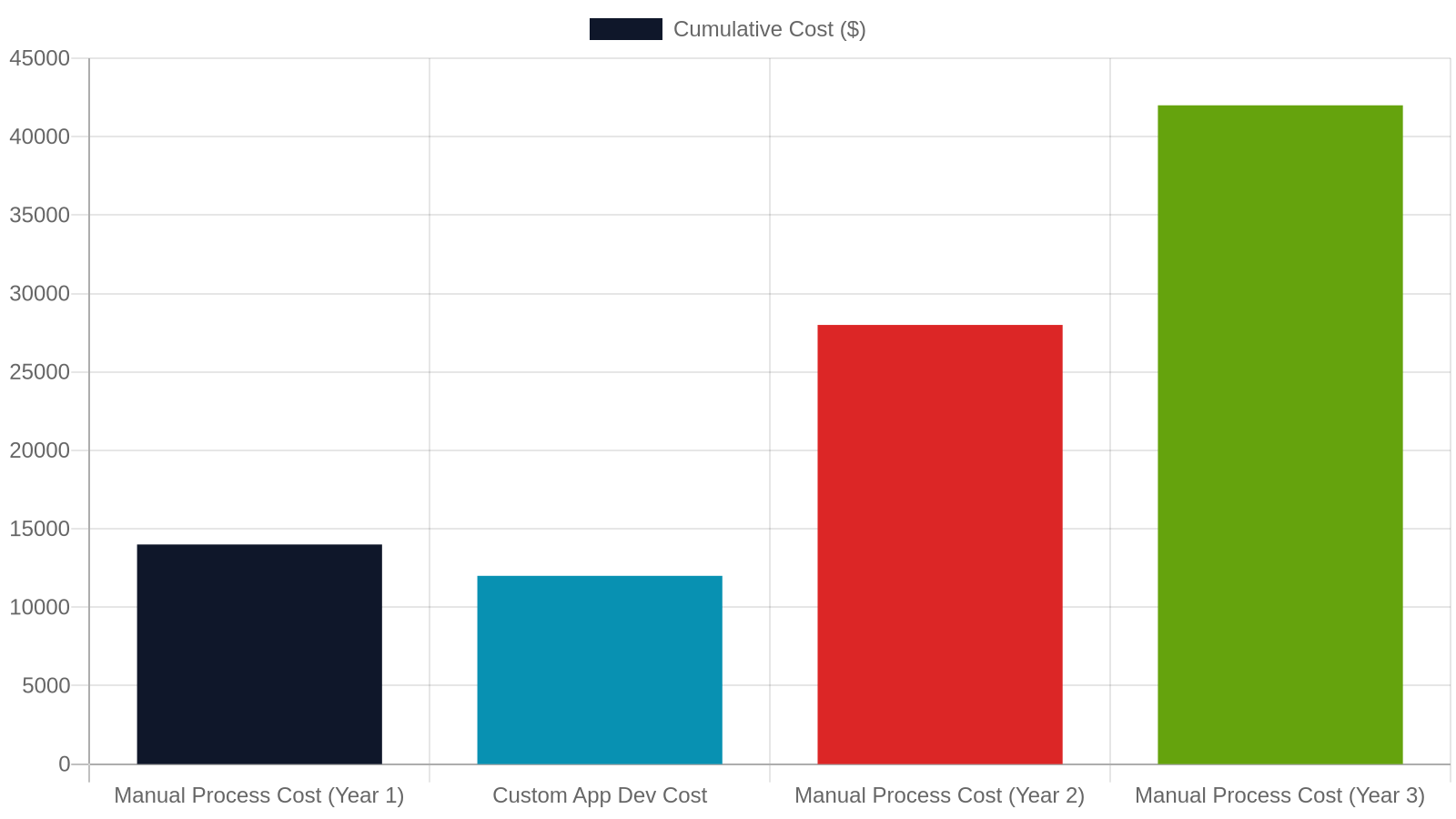
The most common ROI driver for custom web apps is labor time saved. Consider a Jackson-area service business with a front-desk employee spending 15 hours per week on manual scheduling, reminder calls, and data entry. At $18/hour, that’s $270/week or roughly $14,000/year in labor cost tied to a manual process.
A custom scheduling and reminder app can automate 80–90% of that workflow. Even at a $12,000 development cost, the app pays for itself in under 12 months — and keeps paying dividends every year after. That’s a straightforward case most small-business owners can take to their accountant.
Customer Experience as a Revenue Driver
Beyond cost savings, custom apps improve the customer experience in ways that directly lift revenue. Research by Salesforce found that 80% of customers say the experience a company provides is as important as its products or services. A seamless online portal, real-time order tracking, or a loyalty rewards dashboard keeps customers engaged between purchases and reduces churn.
For Jackson businesses competing with Nashville metro brands that have larger marketing budgets, a superior digital experience is one of the most cost-effective ways to win and retain local customers.
3. The 6 Core Features Every Small-Business Web App Should Have
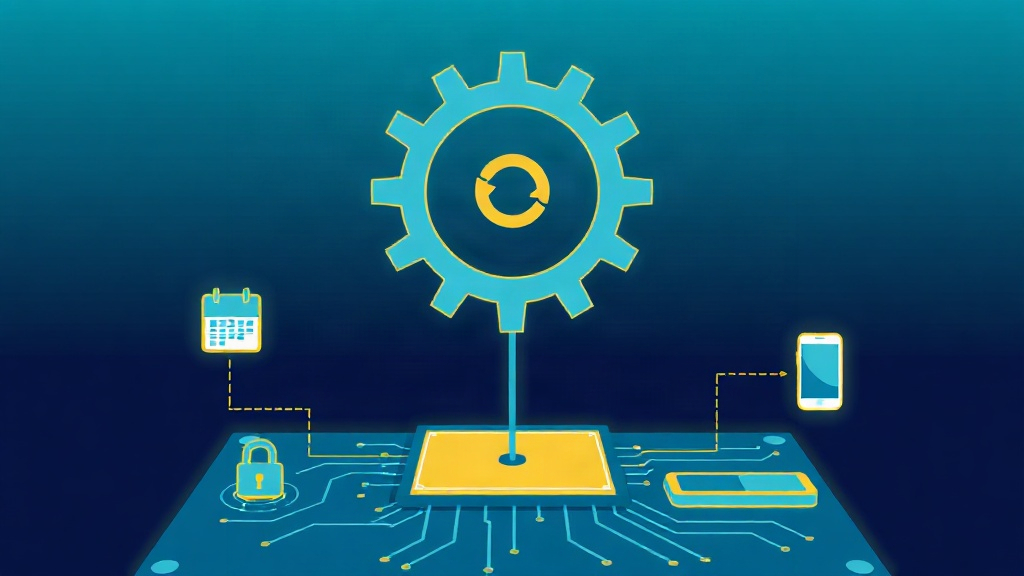
Not all custom web apps are created equal. Whether you’re building a customer portal, an inventory system, or an automated booking tool, certain features are non-negotiable for security, usability, and long-term maintainability. Make sure any proposal you receive covers all six of these areas.
Secure User Authentication and Role-Based Access
Every web app that stores customer or business data must have secure login with encrypted passwords, and ideally multi-factor authentication (MFA). Role-based access control (RBAC) ensures your front-desk staff can see appointment calendars but can’t access payroll data, while managers see everything.
In 2024, the average cost of a small-business data breach in the U.S. reached $4.88 million according to IBM’s Cost of a Data Breach Report. Proper authentication is not optional — it’s the foundation of a trustworthy app.
Mobile-Responsive Design and Progressive Web App (PWA) Capability
More than 60% of web traffic now comes from mobile devices. Your custom app must work flawlessly on a 6-inch phone screen, not just a desktop monitor. The best custom apps are built as Progressive Web Apps (PWAs) — they load fast, work offline in limited capacity, and can be added to a phone’s home screen like a native app, without requiring an App Store download.
For field crews, delivery drivers, or customers checking order status from a parking lot in Jackson, PWA capability is a practical necessity, not a luxury feature.
Integration with Your Existing Tools
A custom app that lives in isolation creates more work, not less. The best-built apps connect to the tools you already use:
- QuickBooks or Xero for accounting sync
- Stripe or Square for payment processing
- Twilio or SendGrid for SMS and email notifications
- Google Calendar or Outlook for scheduling sync
- Your existing CRM for customer data
Ask any development partner upfront which third-party APIs they’ve worked with. Integration experience is often the difference between a smooth launch and a six-month delay.
4. How Much Does Custom Web App Development Cost in Tennessee?
Budget is the first question almost every small-business owner asks — and understandably so. Custom development is an investment, and you deserve a clear picture of what drives costs before you talk to a single developer. Here’s an honest breakdown of what Jackson, TN businesses should expect to pay in 2025.
Typical Price Ranges by Project Complexity
Development costs vary widely based on the number of features, integrations, and the experience level of your development team. Here are realistic ranges for Tennessee-based projects in 2025:
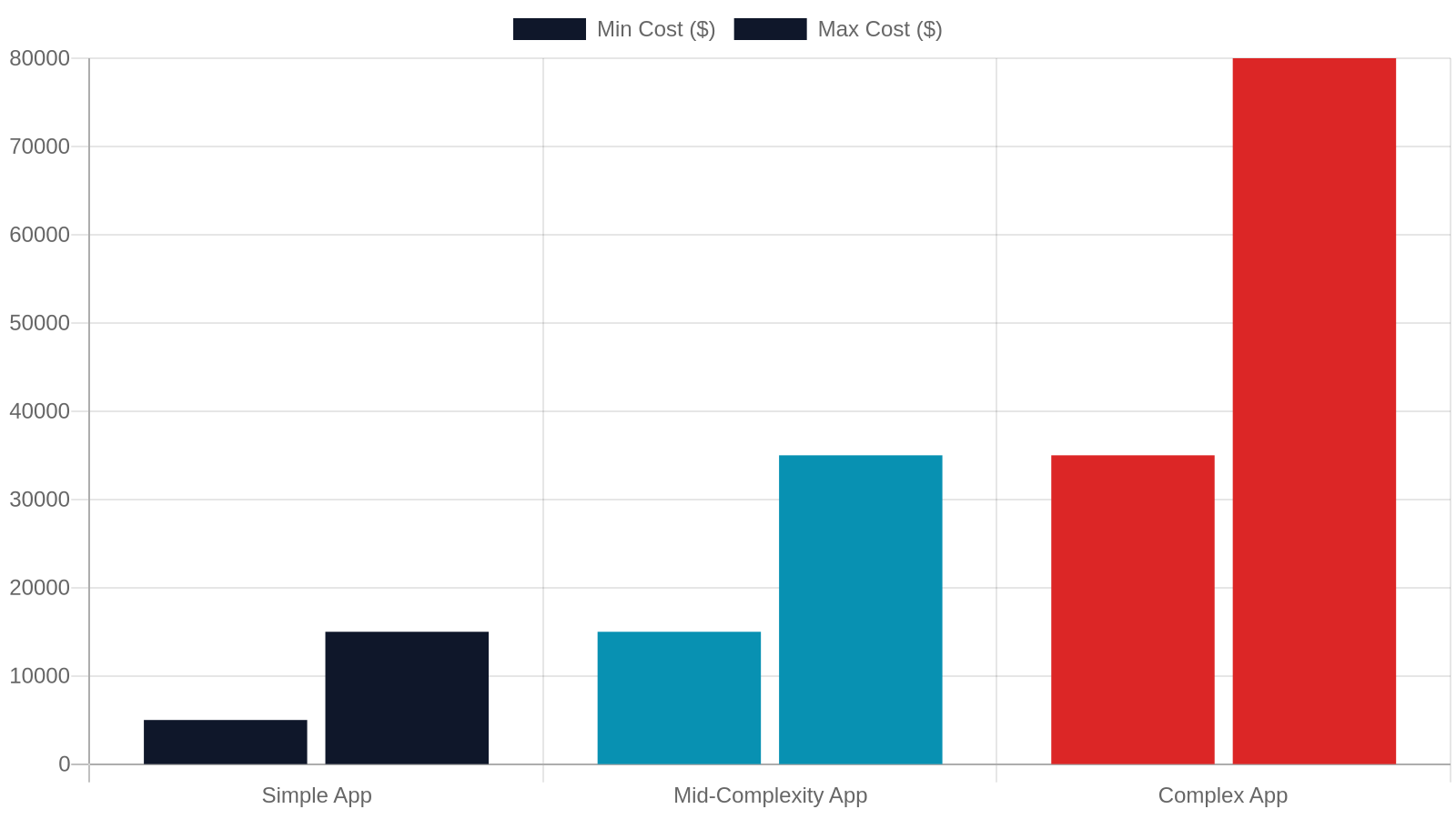
- Simple web app (1–3 core features, no complex integrations): $5,000–$15,000
- Mid-complexity app (4–8 features, 2–3 API integrations, admin dashboard): $15,000–$35,000
- Complex app (multi-role users, real-time data, multiple integrations, custom reporting): $35,000–$80,000+
These ranges assume a local or regional agency. Offshore development can be cheaper upfront but often introduces communication delays, time-zone friction, and higher long-term maintenance costs.
Ongoing Maintenance and Hosting Costs
The build cost is only part of the picture. Budget for:
- Hosting: $30–$300/month depending on traffic and infrastructure (AWS, DigitalOcean, or managed WordPress hosting)
- Maintenance retainer: $200–$1,500/month for security patches, dependency updates, and minor feature tweaks
- Annual feature updates: 15–25% of the original build cost per year is a common industry benchmark
A good development partner will be transparent about these ongoing costs before you sign anything. If a proposal only quotes the build and ignores maintenance, ask specifically.
What Drives Costs Up (and How to Control Them)
The biggest cost drivers in custom web app projects are scope creep (adding features mid-build), unclear requirements at the start, and complex third-party integrations with poorly documented APIs. You can control costs by:
- Writing a detailed requirements document before development begins
- Building a Minimum Viable Product (MVP) first — launch the core features, then add more based on real user feedback
- Agreeing on a change-order process in writing before the project starts
- Choosing a local partner who communicates proactively and flags scope issues early
5. The Custom Web App Development Timeline: What to Expect Week by Week
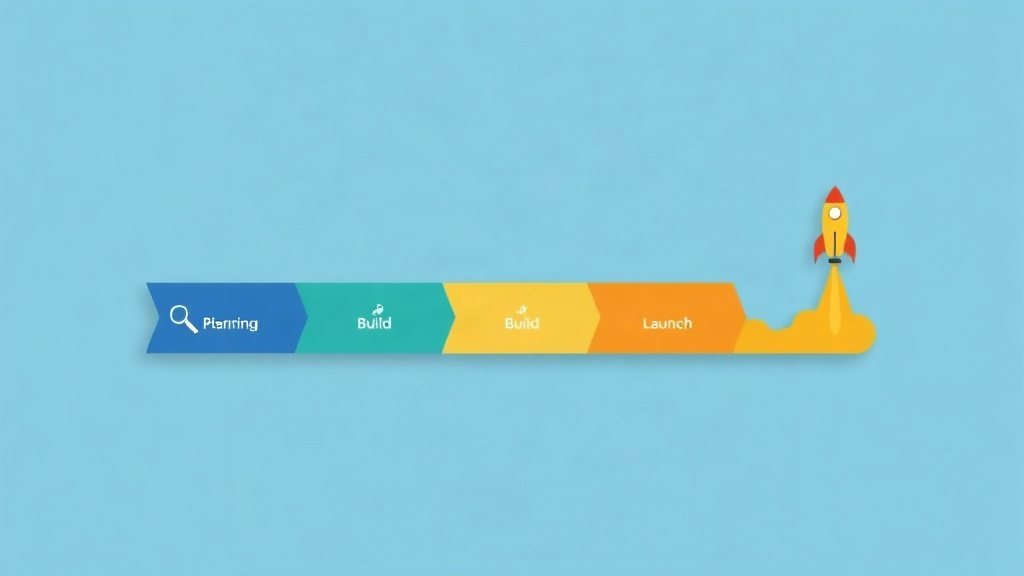
One of the most common frustrations small-business owners have with web app projects is timeline surprises. Understanding the standard phases — and what can slow each one down — lets you plan your business operations around the launch and set realistic expectations for your team.
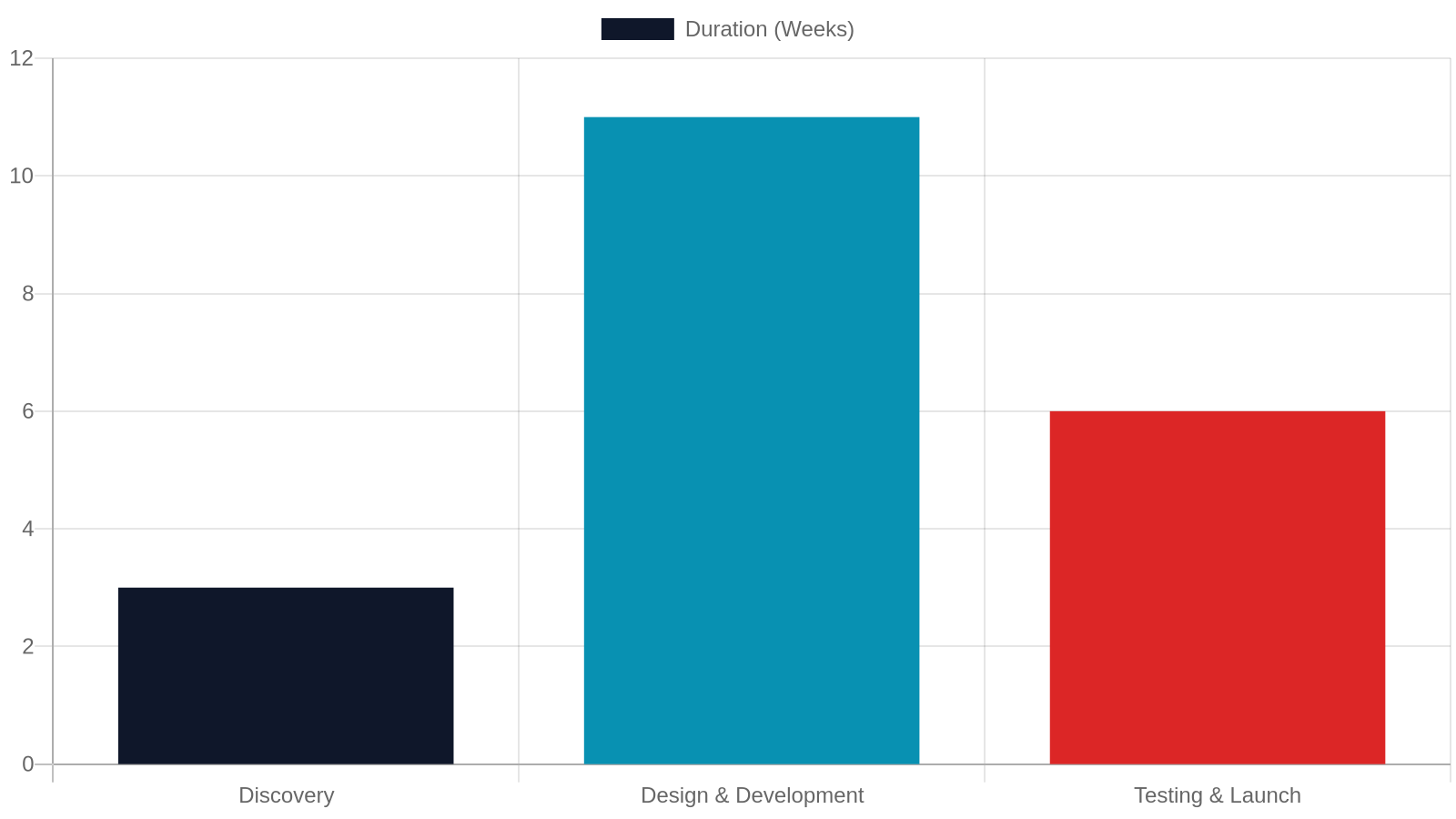
Phase 1 — Discovery and Requirements (Weeks 1–3)
The discovery phase is where your developer learns your business deeply enough to build the right thing. Expect workshops, questionnaires, and possibly process-mapping sessions. Deliverables typically include a functional requirements document, a sitemap or feature list, and a rough wireframe of key screens.
Skipping or rushing discovery is the single most common cause of failed custom app projects. Invest the time here — it saves multiples of that time during development.
Phase 2 — Design and Development (Weeks 4–14)
Design and development often overlap in modern agile workflows. A designer produces high-fidelity mockups of key screens while developers begin building the back-end infrastructure. You’ll typically see a staging environment (a private preview URL) within the first 4–6 weeks where you can review and give feedback on real, working features.
Plan for at least two structured feedback rounds during this phase. Each round of revisions adds 1–2 weeks, so timely, consolidated feedback from your team keeps the project on track.
Phase 3 — Testing, Launch, and Handoff (Weeks 15–20)
Quality assurance (QA) testing covers functional testing (does every feature work?), cross-browser and cross-device testing, security scanning, and performance benchmarking. A well-tested app should load key pages in under 2.5 seconds on a standard mobile connection — Google’s Core Web Vitals threshold for a good user experience.
After launch, expect a 30-day hypercare period where your developer monitors for bugs and resolves any issues quickly. Get this commitment in writing in your contract.
6. Choosing the Right Technology Stack for Your App

You don’t need to become a software engineer to make a good technology decision — but you should understand enough to ask the right questions. The technology stack your developer chooses affects performance, long-term maintainability, hiring options if you ever switch vendors, and integration compatibility with your other tools.
Front-End Frameworks: React, Vue, and Beyond
The front end is everything the user sees and interacts with. The dominant frameworks in 2025 are:
- React (Meta) — the most widely used, largest talent pool, excellent for complex UIs
- Vue.js — lighter weight, faster to learn, popular for mid-complexity apps
- Next.js — React-based, adds server-side rendering for better SEO and performance
For most small-business web apps, React or Vue is the right choice. Ask your developer why they’re recommending a specific framework — the answer should relate to your project’s needs, not just their personal preference.
Back-End and Database Options
The back end handles your data, business logic, and integrations. Common choices include:
- Node.js / Express — fast, JavaScript-based, great for real-time features
- Python / Django or FastAPI — excellent for data-heavy apps and AI integrations
- PHP / Laravel — mature, widely supported, often used for WordPress-adjacent projects
For databases, PostgreSQL is the gold standard for relational data (customers, orders, appointments). MongoDB suits flexible, document-based data. Most small-business apps do well with PostgreSQL hosted on a managed service like AWS RDS or Supabase.
WordPress as a Custom App Foundation
Many Jackson-area businesses already have a WordPress website. A skilled developer can extend WordPress into a lightweight web application using custom plugins, REST API endpoints, and React-powered front ends — keeping your existing content management workflow intact while adding powerful app functionality.
Studio Blue Creative specializes in custom WordPress plugin development, which can be a cost-effective path for businesses that want app-like features without abandoning their existing WordPress investment. This approach typically costs 20–40% less than building a standalone app from scratch.
7. Custom Web Apps vs. No-Code Platforms: An Honest Comparison
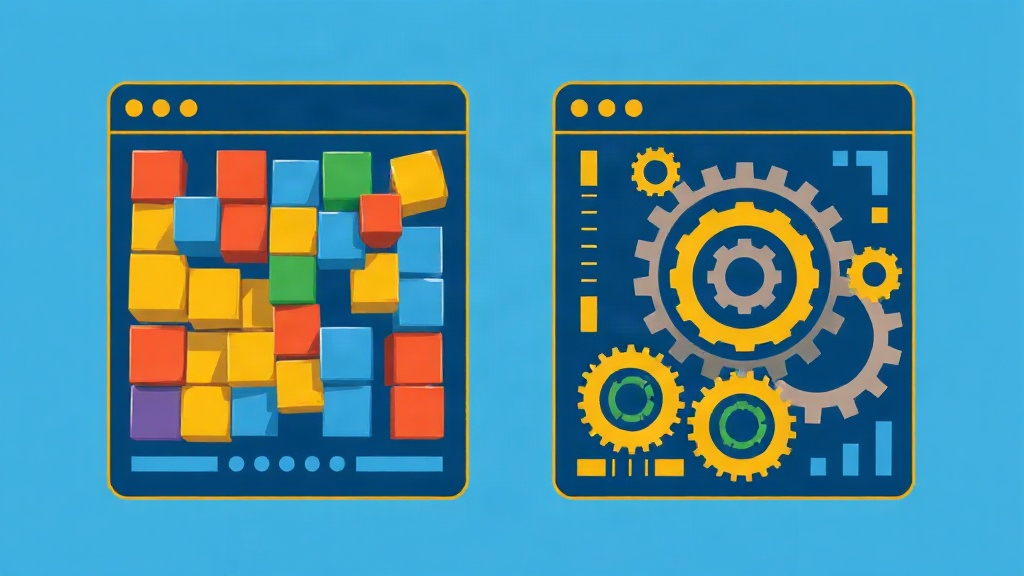
Before committing to custom development, it’s fair to ask: could a no-code tool do the job? The honest answer is — sometimes yes, often no. Here’s how to think through the decision objectively so you don’t overbuild or underbuild for your actual needs.
When No-Code Tools Like Bubble or Webflow Make Sense
No-code platforms have improved dramatically. Tools like Bubble, Webflow, Glide, and AppGyver let non-developers build functional apps visually. For very simple use cases — a basic lead-capture form with a dashboard, a simple booking page, or an internal team tracker — no-code can be faster and cheaper to launch.
No-code is worth considering when: your budget is under $3,000, your requirements are straightforward, you’re validating an idea before committing to full development, or you have an in-house person willing to maintain the platform.
Where No-Code Breaks Down for Growing Businesses
No-code platforms hit hard limits as your business grows. Common pain points include:
- Performance: Bubble apps can be 3–5× slower than custom-coded equivalents at scale
- Vendor lock-in: your app lives entirely on the platform — if pricing changes or the company shuts down, you have no code to migrate
- Integration limits: complex API integrations often require workarounds or are simply impossible
- Customization ceiling: unique business logic that doesn’t fit the platform’s model requires expensive workarounds
For a Jackson, TN business planning to grow over 3–5 years, custom development is almost always the better long-term investment.
8. Security, Compliance, and Data Privacy for Tennessee Businesses

Security and compliance aren’t the most exciting parts of a web app project, but they’re among the most consequential. A data breach or regulatory fine can cost a small business far more than the app itself. Here’s what Jackson, TN business owners need to know before their app goes live.
HIPAA Considerations for Healthcare-Adjacent Businesses
Jackson’s economy includes a significant healthcare sector — clinics, therapy practices, home health agencies, and medical billing companies. If your web app stores, transmits, or processes Protected Health Information (PHI), you must comply with HIPAA. This means:
- Data encrypted at rest (AES-256) and in transit (TLS 1.2+)
- Audit logs for all data access
- Business Associate Agreements (BAAs) with your hosting provider and any third-party services
- Role-based access controls and automatic session timeouts
Non-compliance fines range from $100 to $50,000 per violation. Make sure any developer you hire has documented HIPAA experience before signing a contract.
General Data Security Best Practices
Even if you’re not in healthcare, data security protects your customers and your reputation. Require your developer to implement:
- HTTPS everywhere — no exceptions, including admin panels
- Input validation and sanitization — prevents SQL injection and XSS attacks
- Regular automated backups — daily minimum, stored off-site
- Dependency scanning — automated alerts when a library your app uses has a known vulnerability
Ask to see a security checklist as part of the project deliverables. Any reputable agency will have one.
Tennessee Data Protection Laws
Tennessee enacted the Tennessee Information Protection Act (TIPA), effective July 1, 2025, applying to businesses that process personal data of 100,000+ Tennessee consumers per year, or 25,000+ consumers while deriving more than 50% of revenue from data sales. While most small businesses won’t hit these thresholds immediately, building privacy-respecting practices now — clear data retention policies, opt-out mechanisms, and transparent privacy notices — positions you well as regulations tighten.
Custom Web App vs. Off-the-Shelf Software vs. No-Code: 6-Point Comparison
Use this comparison to quickly identify which approach fits your business stage, budget, and growth goals.
9. How to Evaluate a Web App Development Partner in West Tennessee

Choosing a development partner is one of the highest-stakes decisions in a custom app project. The wrong choice costs time, money, and sometimes the entire project. Here’s a practical framework for evaluating agencies and freelancers serving the Jackson, TN and West Tennessee market.
Questions to Ask Before You Sign a Contract
The right development partner is as important as the right technology. Before committing, ask every candidate:
- Can you show me 2–3 web apps you’ve built for businesses similar to mine?
- Who owns the source code when the project is complete? (Answer should always be: you do.)
- How do you handle change orders and scope changes?
- What does your post-launch support look like, and what does it cost?
- Have you worked with businesses in my industry before?
Red flags include vague answers about ownership, no portfolio of live apps, and proposals that skip discovery entirely.
Local vs. Remote Development Teams
Remote development teams can be excellent — but for Jackson and West Tennessee small businesses, there are real advantages to working with a local or Tennessee-based agency:
- In-person discovery and requirements sessions are more productive than video calls
- Local agencies understand the regional business culture and customer expectations
- Time-zone alignment means faster response times during critical launch periods
- Accountability is higher when your developer is reachable in the same community
You can review a portfolio of local work at Studio Blue Creative’s project portfolio to see examples of web and app work done for Tennessee businesses.
Reading a Development Proposal: What Good Looks Like
A professional web app proposal should include:
- A detailed scope of work broken into phases
- Technology stack with justification
- A project timeline with milestones and client review points
- A clear payment schedule (typically 30–40% upfront, milestone-based thereafter)
- IP ownership and source code delivery terms
- Post-launch support terms and pricing
If a proposal is a single page with a price and a start date, keep looking. Vague proposals lead to disputed invoices and unfinished projects.
10. AI-Powered Features That Give Jackson Small Businesses an Edge
The most forward-looking small businesses in West Tennessee aren’t just digitizing their existing processes — they’re using AI-powered features inside their custom apps to do things that simply weren’t possible five years ago. Here are the AI capabilities most worth considering when planning your app in 2025.
AI Chatbots and Automated Customer Support
Integrating an AI chatbot into your custom web app means customers get instant answers to common questions — hours, pricing, availability, order status — without a staff member picking up the phone. Modern AI chatbots built on large language models (LLMs) can handle nuanced questions, escalate to a human when needed, and learn from your specific business data.
For a Jackson business open 9–5, an AI chatbot handles the 6 PM inquiry that would otherwise go unanswered until morning — and that inquiry might be a $5,000 sale. Explore AI chatbot solutions for small businesses to see what’s possible in 2025.
Workflow Automation and AI Agents
AI workflow automation connects your web app to repetitive back-office tasks: auto-generating invoices when a job is marked complete, sending follow-up emails three days after a service call, flagging low inventory before it becomes a stockout, or routing new leads to the right salesperson based on zip code or service type.
These automations run 24/7 without human intervention and compound in value over time. A business that automates five small workflows can reclaim 10–20 hours per week across the team — time that goes back into serving customers and growing revenue.
Predictive Analytics and Reporting Dashboards
Custom web apps can include built-in analytics dashboards that surface the metrics that matter most to your specific business — not the generic reports that come with off-the-shelf software. Add a layer of predictive analytics (forecasting next month’s revenue based on booking trends, or predicting which customers are at risk of churning) and your app becomes a genuine business intelligence tool.
This level of insight was previously available only to enterprise companies with dedicated data teams. In 2025, it’s achievable for a Jackson, TN business with a well-built custom app and the right development partner.
11. Real-World Use Cases: Custom Apps Across Jackson's Key Industries
Abstract benefits are easier to understand when you can see them applied to businesses like yours. While every project is unique, these illustrative scenarios reflect the types of outcomes Jackson-area businesses are achieving with custom web apps across three of the region’s most active industries.
Healthcare and Medical Services
A Jackson-area physical therapy clinic replaced a paper intake process and phone-based scheduling with a custom patient portal. The app handles new-patient intake forms (HIPAA-compliant), appointment booking with automated SMS reminders, and post-visit exercise plan delivery via a secure patient dashboard. Result: front-desk call volume dropped by 60%, and no-show rates fell from 22% to 9% within 90 days of launch.
Trades, Contractors, and Field Services
A West Tennessee HVAC company built a custom field-service app that dispatches technicians, captures job photos and notes on mobile, generates invoices on-site, and syncs everything to QuickBooks automatically. Before the app, invoicing took 2–3 days after job completion. After: invoices go out within minutes of job sign-off, cutting average payment time from 28 days to 11 days — a significant cash-flow improvement for a business running 8–12 service calls per day.
Retail, Food Service, and Hospitality
A Jackson specialty food retailer with both a brick-and-mortar location and an online store built a custom inventory management app that syncs in-store and online stock in real time, triggers reorder alerts at custom thresholds, and generates weekly sell-through reports by product category. The owner went from spending 6 hours per week on manual inventory reconciliation to 30 minutes reviewing an automated report — freeing time to focus on product sourcing and customer relationships.
Ready to Build Your Custom Web App in Jackson, TN?

Custom web app development is one of the highest-leverage investments a growing small business can make — but only when it’s planned carefully, built by the right team, and aligned with a real business problem. If you’re a business owner in Jackson, Nashville, or anywhere across Middle or West Tennessee, Studio Blue Creative is ready to help you turn a process problem into a competitive advantage.
What Your Free Estimate Includes
Studio Blue Creative offers free project estimates for custom web app development across Jackson, West Tennessee, and the Nashville metro. A free estimate isn’t a vague ballpark — it includes a preliminary scope review, technology recommendations, a rough timeline, and a transparent price range based on your specific requirements.
There’s no obligation and no sales pressure. The goal is to give you enough information to make a confident decision — whether you build with us or not. Call us at 731-402-0402 to schedule a discovery conversation, or explore our custom web app development services for Jackson, TN businesses to learn more about our process and past projects.
Your First Three Steps
Getting started is simpler than most business owners expect:
- Document your problem — write down the specific manual process or customer experience gap you want to solve. One paragraph is enough to start a productive conversation.
- Set a realistic budget range — even a rough range ($10K–$20K, or $30K–$50K) helps a developer propose the right solution rather than over- or under-building.
- Contact Studio Blue Creative — reach us at 731-402-0402 or visit our full services page to see everything we offer, from custom apps to SEO, AI systems, and Google Business Profile setup.
Jackson and West Tennessee businesses deserve digital tools built for how they actually work — not software designed for a generic national market. Let’s build something that fits.
Frequently Asked Questions
How much does it cost to build a custom web app for a small business in Jackson, TN?
Custom web app development in Jackson, TN typically costs between $5,000 and $80,000 depending on complexity. Simple apps with 1–3 features run $5,000–$15,000, mid-complexity apps with integrations and dashboards run $15,000–$35,000, and complex multi-role systems can exceed $35,000. Budget an additional $30–$1,500/month for hosting and maintenance.
How long does it take to build a custom web app?
Most custom web app projects for small businesses take 6–20 weeks from signed contract to launch. A simple app can be ready in 6–10 weeks; a mid-complexity app with integrations typically takes 12–16 weeks. Complex apps with multiple user roles and real-time data can take 18–24 weeks or more.
What's the difference between a website and a web application?
A website is primarily informational — it displays content for visitors to read. A web application is interactive software that runs in a browser and performs tasks like processing orders, managing appointments, storing customer data, or generating reports. Most businesses need a website first, then graduate to a web app as their processes grow more complex.
Should I use a no-code tool like Bubble instead of custom development?
No-code tools are a reasonable choice for very simple use cases or idea validation on a tight budget. However, they have significant limitations: slower performance at scale, vendor lock-in (you don't own the code), and a customization ceiling that becomes a problem as your business grows. For businesses planning to scale over 3–5 years, custom development almost always delivers better long-term value.
Do I need a mobile app or will a web app work on phones?
For most small businesses, a well-built web app is sufficient. Modern web apps built as Progressive Web Apps (PWAs) load fast, work on any device with a browser, and can be added to a phone's home screen — all without requiring App Store approval or a separate native app build. Native iOS/Android apps make sense only for highly specialized use cases or when offline functionality is critical.
Can Studio Blue Creative build a custom web app for my Jackson, TN business?
Yes. Studio Blue Creative is a Tennessee-based digital agency serving Jackson, West Tennessee, and the Nashville metro. They offer custom web app development, WordPress plugin development, AI integrations, and related digital services. Free estimates are available by calling 731-402-0402 or visiting their website.
Find out if ChatGPT recommends your business.
Right now, your customers are asking AI for recommendations. The AI is naming somebody. Is that name yours? Run our free AEO Scorecard — we test 3 of your real queries against ChatGPT and Claude and email you a personalized report.
Ready for a real website?
Get a tailored 3-tier proposal in under a minute — including our Launch Deal ($699), a custom build, or our SEO Growth Package. No call required.