
Quick answer: If your website is not getting traffic, the most likely culprits are poor search engine indexing, weak or missing keyword targeting, slow page speed, thin content, no backlinks, and an under-optimized Google Business Profile. Most small businesses in Nashville and West Tennessee can diagnose the core problem in under an hour using free tools like Google Search Console and PageSpeed Insights. Once you know which issue is hurting you most, fixes range from quick technical tweaks to a longer-term content strategy — and the payoff in organic visitors can be significant within 60 to 90 days.
Why Diagnosing Low Traffic Starts With Data, Not Guesswork
Most small business owners in Nashville and across West Tennessee notice low traffic when a client asks, “How did you find us?” and the answer is always “word of mouth.” That is a sign your website is invisible online. But feeling like traffic is low and knowing exactly why are two different things. Jumping straight to solutions — redesigning the site, posting on social media, running ads — without first diagnosing the root cause wastes time and money. This guide walks you through the 10 most common reasons a website fails to attract visitors, starting with how to gather the data you need to confirm which problem is actually yours.
The Three Traffic Channels You Need to Audit First
Website traffic arrives through three main doors: organic search (Google, Bing), direct/referral (people typing your URL or clicking a link from another site), and social/paid (ads, social media). When traffic is low, most small business owners assume the problem is Google — but sometimes the site simply has no social presence, no directory listings, and no backlinks sending referral visitors. Before you fix anything, open Google Analytics 4 (free) and look at the Acquisition report to see which channel is actually flat.
- Organic search zero or near-zero? You have an SEO problem.
- All channels flat? The site may not be indexed at all.
- Only direct traffic? Existing customers find you, but no new discovery is happening.
Setting Up Google Search Console in Under 10 Minutes
Google Search Console (GSC) is the single most important free tool for diagnosing traffic problems. It shows you exactly which queries your site appears for, how many impressions you receive, your average position, and which pages Google has indexed. To set it up: go to search.google.com/search-console, add your property, verify ownership via a DNS record or HTML tag, and submit your sitemap (usually yourdomain.com/sitemap.xml). Within 48 hours you will start seeing real data. If GSC shows zero impressions over 90 days, your site has an indexing or crawlability problem — move straight to Reason 1 below.
1. Google Has Not Indexed Your Site
If Google cannot find your pages, no amount of great content will drive traffic. Indexing is the foundation — it is Google’s process of discovering, reading, and storing your pages in its database so they can appear in search results. According to Google’s own documentation, a site can be blocked from indexing by a single misconfigured file, a checkbox in your CMS, or a missing sitemap. This is the first thing to rule out before investigating anything else.
How to Check Your Indexing Status Right Now
Open a browser and type site:yourdomain.com into Google. If zero results appear, Google has not indexed your site. This is more common than most people realize — especially for new sites, recently migrated sites, or WordPress installs where a developer accidentally left the “Discourage search engines” box checked. In Google Search Console, navigate to Index > Pages to see a breakdown of indexed vs. not-indexed URLs and the specific reason Google is skipping them (e.g., “Crawled – currently not indexed,” “Blocked by robots.txt,” or “Noindex tag detected”).
Fixing Common Indexing Blockers
The three most frequent indexing blockers for small business sites are:
- Robots.txt disallow: A single line reading
Disallow: /blocks all crawlers. Edit your robots.txt file to remove it. - Noindex meta tag: Check your CMS settings (in WordPress: Settings > Reading). Uncheck “Discourage search engines.”
- No sitemap submitted: Submit yourdomain.com/sitemap.xml in GSC under Sitemaps. Google can find pages faster with a roadmap.
After fixing, use the URL Inspection tool in GSC and click “Request Indexing” for your homepage and top service pages. Most pages are crawled within 1–7 days after a request.
2. You Are Targeting the Wrong Keywords (or None at All)

Keyword targeting is the bridge between what your potential customers type into Google and what your website actually says. A 2023 study by Ahrefs found that 96.55% of all web pages receive zero organic traffic from Google — and the primary reason is that those pages target keywords nobody searches for, or target no keywords at all. For Nashville and West Tennessee small businesses, this often means pages that say “Welcome to our website” instead of “Plumbing Services in Nashville, TN.”
The Difference Between Branded and Transactional Keywords
Many small business websites are optimized — accidentally — only for their own business name. If someone already knows you exist and searches “Acme Plumbing Nashville,” they will find you. But that is not new traffic; it is existing customers. Transactional and informational keywords — phrases like “emergency plumber Nashville” or “how much does a water heater replacement cost” — are what bring in strangers who become new customers. These are the keywords you need to target deliberately on your service pages and blog content.
Free Keyword Research Tools for Tennessee Businesses
You do not need an expensive subscription to start keyword research. Three free tools cover the basics:
- Google Search Console: The Queries report shows what you already rank for — look for keywords with high impressions but low clicks (positions 5–20) as quick-win opportunities.
- Google Keyword Planner (free with a Google Ads account): Shows monthly search volume and competition level for any keyword.
- AnswerThePublic.com: Generates question-based keywords (“how,” “what,” “why,” “best”) that are ideal for blog content and AEO optimization.
Aim to identify 3–5 primary keywords per service page, each with at least 100 monthly searches in your target area.
3. Your Page Speed Is Killing Your Rankings

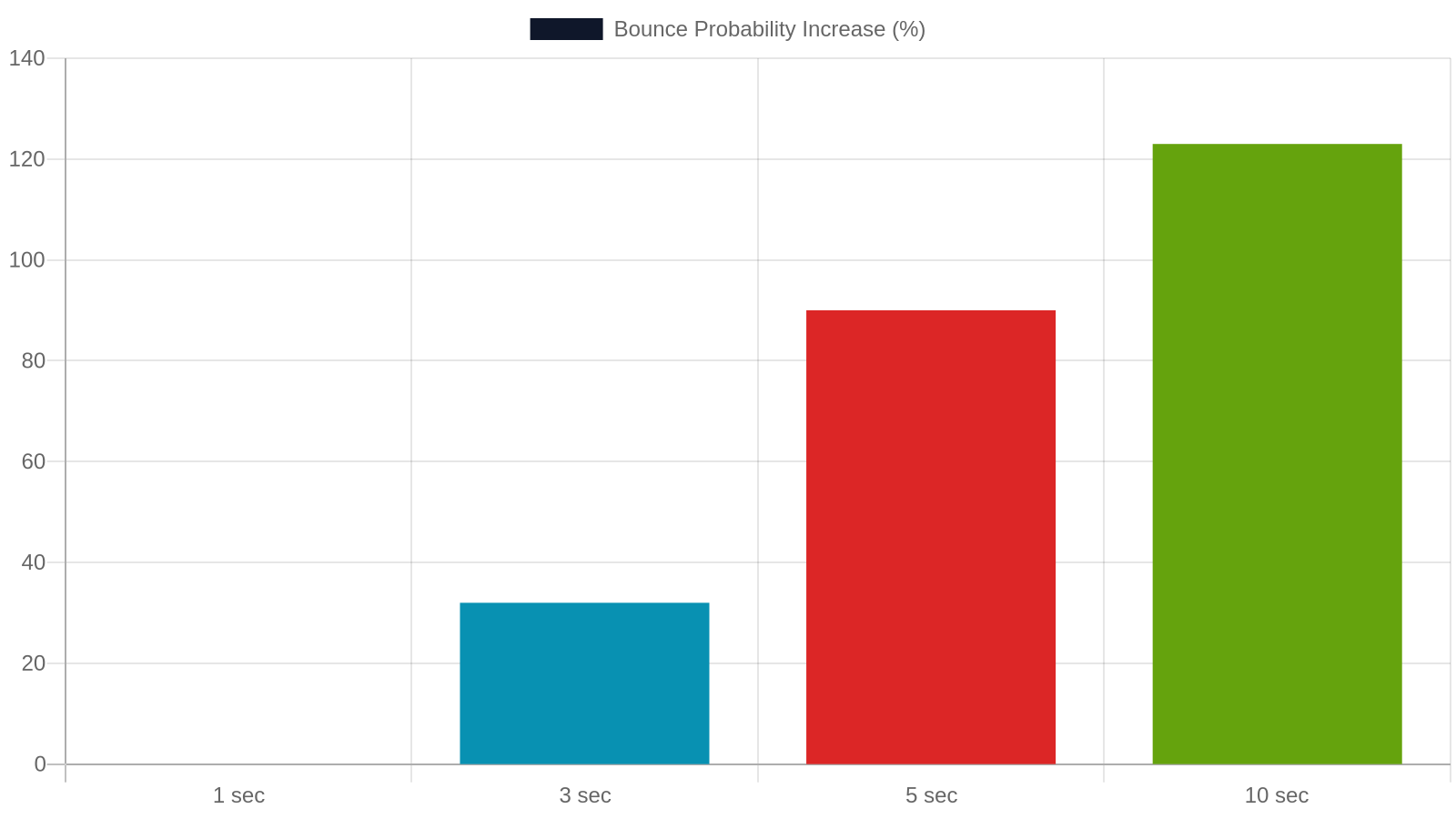
Google has been explicit: page speed is a ranking factor. According to Google’s own data, as page load time increases from 1 second to 3 seconds, the probability of a visitor bouncing increases by 32%. At 5 seconds, that probability jumps to 90%. For a local service business in Nashville or Jackson, a slow website does not just hurt rankings — it costs you leads the moment someone clicks and waits.
How Google Measures and Penalizes Slow Sites
Since 2021, Google has used Core Web Vitals as a ranking signal. The three metrics that matter most are: Largest Contentful Paint (LCP) — how long the main content takes to load (target: under 2.5 seconds); Interaction to Next Paint (INP) — how quickly the page responds to clicks (target: under 200 ms); and Cumulative Layout Shift (CLS) — how much the page jumps around as it loads (target: under 0.1). A site that fails all three can lose significant ranking positions to a slower-but-technically-sound competitor.
Quick Wins to Speed Up Your Website Today
Run your site through PageSpeed Insights (pagespeed.web.dev) for a free score and specific recommendations. The most impactful quick wins for most small business sites are:
- Compress images: Use WebP format and compress to under 150 KB per image. Uncompressed photos are the #1 speed killer on small business sites.
- Enable caching: A caching plugin (WP Rocket, W3 Total Cache) can cut load time by 30–60%.
- Use a CDN: Cloudflare’s free tier delivers your site from servers closer to your visitors.
- Upgrade hosting: Shared hosting plans under $5/month often cap CPU usage, causing slow response times. A managed WordPress host typically starts at $20–$30/month and delivers dramatically better performance.
4. Your Content Is Too Thin or Too Generic
One of the most common reasons Nashville and West Tennessee small business websites fail to rank is that their pages simply do not say enough. A homepage with 150 words and a contact page with 50 words gives Google almost nothing to evaluate. Content depth is a proxy for expertise — and Google’s algorithms have become remarkably good at distinguishing a page written by someone who knows their craft from one that is just filling space.
What 'Thin Content' Actually Means
Google defines thin content as pages that provide little or no added value to a searcher. This includes: service pages with fewer than 300 words, duplicate content copied from a supplier or franchise template, pages that say “We offer great service at great prices” without any specifics, and auto-generated pages. Google’s Helpful Content system (updated in 2024) specifically targets sites where the majority of content appears written for search engines rather than real humans. If your service pages read like a list of keywords rather than a genuine explanation of what you do, they will not rank.
The Content Depth Formula That Works for Local Businesses
Each core service page should answer four questions a real customer would ask:
- What exactly do you do? Describe the service in plain language, including what the process looks like from the customer’s perspective.
- Who is it for? Name the types of businesses or homeowners you serve — and name the cities (Nashville, Franklin, Brentwood, Jackson, etc.).
- What does it cost? Even a price range builds trust and satisfies searchers looking for cost information.
- Why you? Years in business, certifications, number of clients served, or a specific differentiator.
A page that answers all four questions typically runs 600–1,200 words and naturally incorporates the keywords your customers use — without any keyword stuffing.
5. You Have No Backlinks Pointing to Your Site

Backlinks remain one of Google’s top three ranking signals, alongside content relevance and RankBrain (user behavior signals). Yet the majority of small business websites in Middle Tennessee and West Tennessee have fewer than 10 referring domains — meaning almost no other site on the internet is vouching for them. You can check your own backlink count for free at Ahrefs Webmaster Tools or Moz Link Explorer (both offer free tiers).
Why Backlinks Still Matter in 2025
A backlink is a link from another website to yours. Google treats backlinks as votes of confidence — the more authoritative sites that link to you, the more trustworthy your site appears. A 2024 study by Semrush analyzing 1.4 million pages found that pages ranking in positions 1–3 had an average of 3.8x more referring domains than pages ranking in positions 4–10. For local businesses, even 10–20 quality backlinks from local directories, chambers of commerce, and industry associations can move the needle significantly.
5 Realistic Ways to Earn Backlinks as a Local Business
You do not need a PR team to build backlinks. Here are five approaches that work for small businesses in Tennessee:
- Chamber of Commerce listings: The Nashville Area Chamber and the Jackson Area Chamber both link to member websites.
- Local news mentions: Sponsor a community event or offer expert commentary to local journalists at The Tennessean or The Jackson Sun.
- Supplier/partner pages: Ask vendors, distributors, or complementary businesses to add a link to their “partners” page.
- Industry directories: Houzz (contractors), Avvo (attorneys), Healthgrades (medical), and dozens of niche directories provide do-follow links.
- Guest blog posts: Write a useful article for a complementary local business’s blog in exchange for a byline link.
6. Your Google Business Profile Is Incomplete or Missing
Your Google Business Profile is not just a directory listing — it is a separate ranking system that operates alongside (and often above) your website’s organic rankings. Many small business owners in Nashville and Jackson spend months trying to rank their website while neglecting a free tool that could drive calls and foot traffic within days of being properly optimized.
The Local Pack: Where Most Local Traffic Actually Comes From
When someone in Nashville searches “HVAC repair near me” or “web designer Jackson TN,” the first results they see are usually the Google Local Pack — the map with three business listings. These listings come from Google Business Profile (GBP), not from your website’s organic rankings. According to BrightLocal’s 2024 Local Consumer Review Survey, 98% of consumers used the internet to find local businesses, and the Local Pack appears in 93% of local searches. If your GBP is incomplete or missing, you are invisible in the most valuable real estate on the search results page.
A 10-Point Google Business Profile Checklist
Log into your GBP dashboard (business.google.com) and verify each of the following:
- Business name matches your legal/branding name exactly
- Primary category is as specific as possible (e.g., “Web Designer” not just “Business”)
- Address or service area is fully filled in
- Phone number is current and matches your website
- Website URL is linked
- Hours of operation are set (including holiday hours)
- At least 10 recent photos uploaded
- Services section lists your specific offerings
- You have responded to all reviews (positive and negative)
- You post at least 2 GBP updates per month
Businesses with complete GBP profiles receive 7x more clicks than those with incomplete profiles (Google, 2023).
7. Your Site Is Not Mobile-Friendly
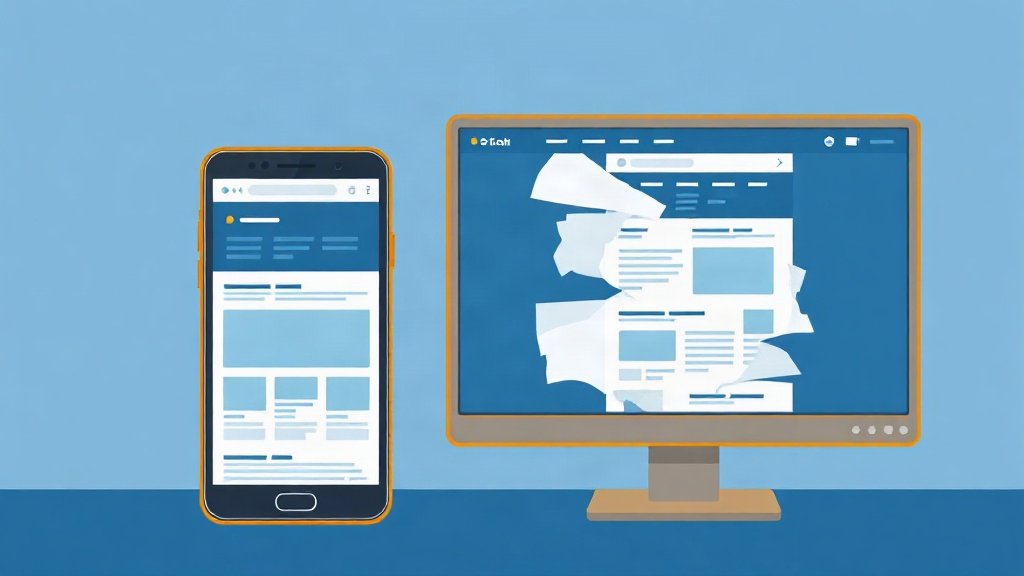
A website that is not mobile-friendly suffers on two fronts: it ranks lower because Google’s mobile-first index penalizes it, and it loses visitors immediately because the experience is frustrating. Mobile usability is not optional in 2025 — it is a baseline requirement for any site that wants to appear in search results.
Mobile-First Indexing: What It Means for Your Rankings
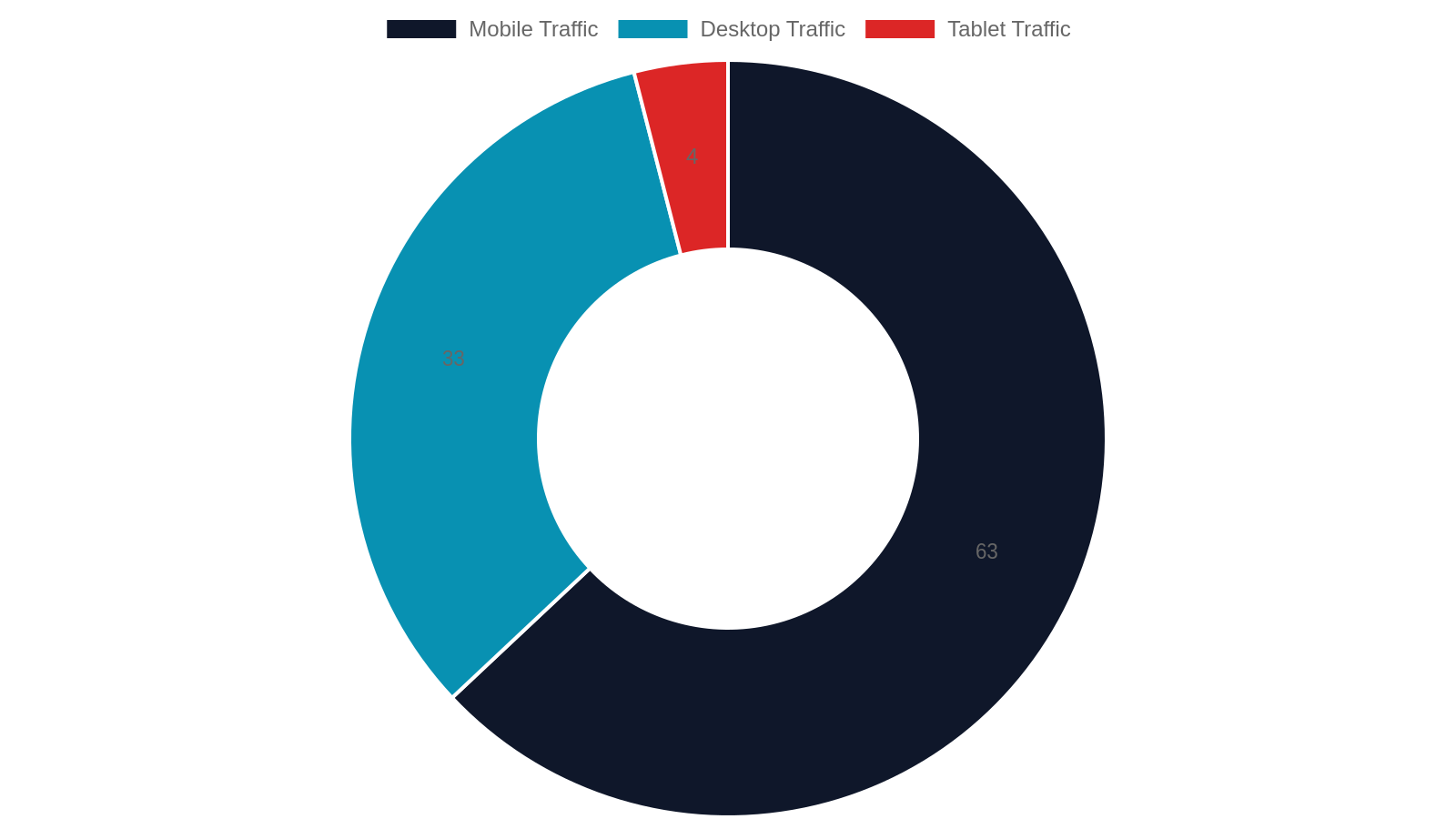
Since 2023, Google uses mobile-first indexing for all websites — meaning it primarily uses the mobile version of your site to determine rankings, even for desktop searches. If your site looks fine on a laptop but breaks on a phone, Google sees the broken version first. According to Statista, 63% of all U.S. web traffic now comes from mobile devices. For local service businesses, that number is often higher — someone searching for a plumber or a restaurant is almost always on their phone.
How to Test and Fix Mobile Usability Issues
Use Google’s free Mobile-Friendly Test (search.google.com/test/mobile-friendly) to scan any URL and get a pass/fail result with specific issues listed. Common problems and their fixes include:
- Text too small to read: Set your base font size to at least 16px in your CSS.
- Clickable elements too close together: Buttons and links need at least 48px of touch target space.
- Content wider than screen: Use responsive CSS (max-width: 100%) on images and containers.
- Intrusive pop-ups: Google penalizes pop-ups that cover content on mobile. Use banners or delayed pop-ups instead.
If your site was built before 2018 and has never been redesigned, a mobile-responsive rebuild is likely the most impactful single investment you can make for organic traffic.
10 Traffic Problems at a Glance: Diagnosis, Difficulty, and Time to Results
Use this table to quickly identify which issues are most likely affecting your site and how hard each one is to fix.
8. You Are Missing Local SEO Signals
Local SEO is a distinct discipline from general SEO, and it is the primary driver of traffic for businesses that serve a geographic area rather than a national audience. For Nashville metro businesses and West Tennessee businesses alike, local SEO signals — citations, reviews, GBP optimization, and location-specific content — often matter more than traditional backlinks and domain authority.
NAP Consistency: The Hidden Local Ranking Factor
NAP stands for Name, Address, Phone number. Google cross-references your NAP across dozens of online directories — Yelp, Yellow Pages, Apple Maps, Bing Places, Facebook, and industry-specific directories — to confirm your business is legitimate and located where you say it is. If your business name appears as “Studio Blue Creative” on your website but “Studio Blue Creative LLC” on Yelp and “Studio Blue” on Facebook, Google’s confidence in your location data drops. Use a tool like BrightLocal or Moz Local to audit your citations and find inconsistencies.
Location Pages: The Secret Weapon for Multi-City Businesses
If you serve multiple cities — say, Nashville, Franklin, Brentwood, Murfreesboro, and Jackson — you need a dedicated landing page for each city, not just one page that mentions all of them. Each location page should include: the city name in the H1, title tag, and meta description; a paragraph describing the specific neighborhoods or zip codes you serve; a locally relevant example or case study; and an embedded Google Map. These pages are how agencies like Studio Blue Creative rank for searches like “web designer Franklin TN” and “SEO agency Jackson TN” simultaneously.
9. Your Site Has Technical Errors Blocking Traffic
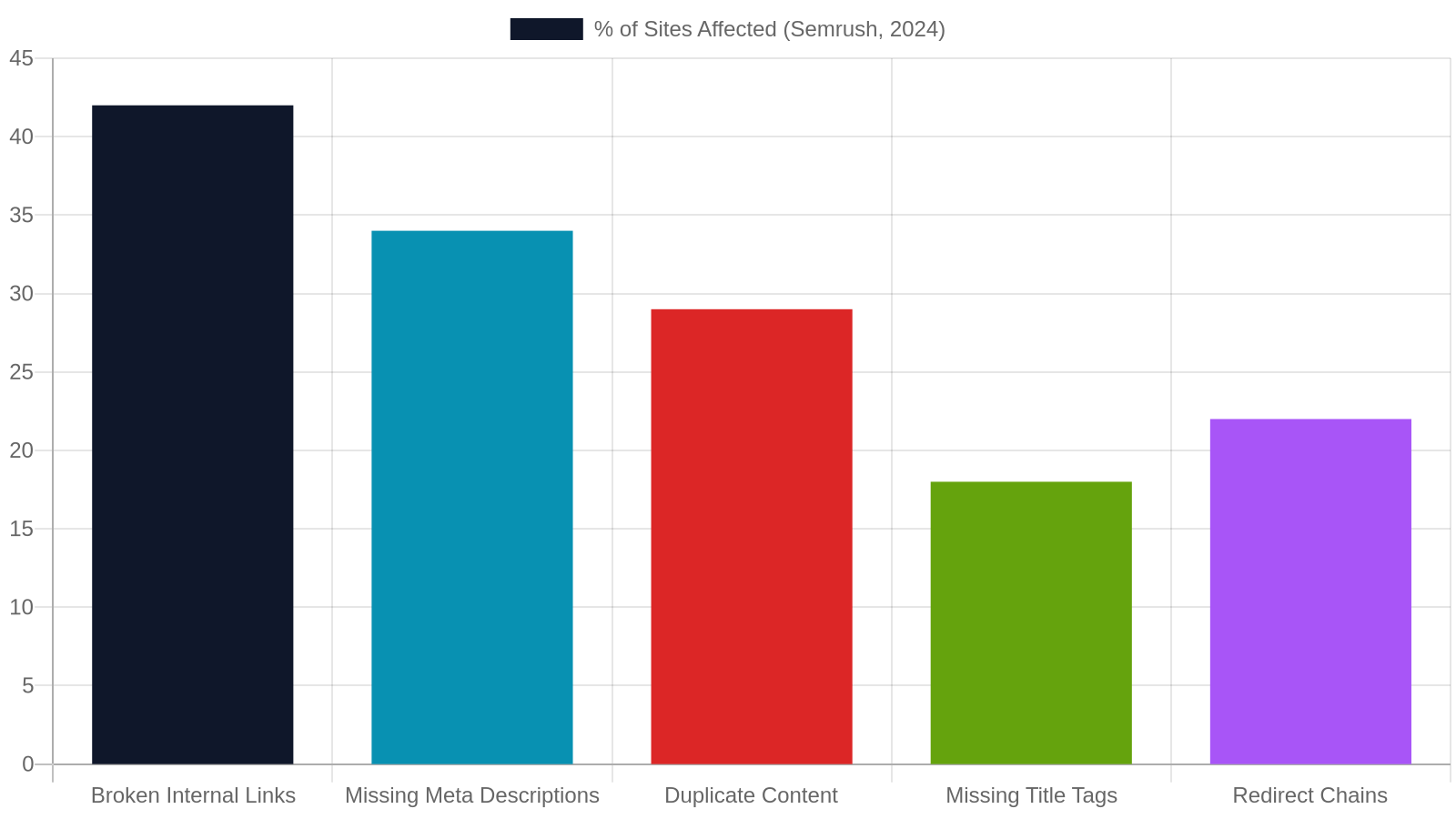
Even a beautifully designed website with great content can fail to rank if it has underlying technical problems. According to a 2024 Semrush study of 100,000 websites, 42% had broken internal links, 34% had missing meta descriptions, and 29% had duplicate content issues — all of which suppress rankings. Technical SEO is the plumbing of your website: invisible when it works, catastrophic when it does not.
The Most Common Technical SEO Errors on Small Business Sites
Technical SEO errors are silent traffic killers — they do not announce themselves, and most business owners never know they exist. The most common issues found in site audits of small business websites include:
- Broken internal links (404 errors): Pages that have been deleted or renamed but are still linked from other pages. Google wastes crawl budget on dead ends.
- Duplicate content: The same page accessible at both http:// and https://, or www and non-www, without a canonical tag or redirect.
- Missing or duplicate title tags and meta descriptions: Every page needs a unique title tag (50–60 characters) and meta description (140–160 characters).
- Redirect chains: Page A redirects to Page B, which redirects to Page C. Each hop loses link equity and slows load time.
Free Tools to Run a Technical Site Audit
You do not need to hire a developer to find most technical errors. These free tools cover the basics:
- Screaming Frog SEO Spider (free up to 500 URLs): Crawls your site and flags broken links, missing tags, duplicate content, and redirect chains.
- Google Search Console > Coverage report: Shows every URL Google tried to index and why it was excluded.
- Ahrefs Webmaster Tools (free): Provides a site health score and prioritized list of issues to fix.
A typical small business site with 20–50 pages will surface 5–15 fixable issues in a first audit. Fixing the top 5 critical issues alone often produces a measurable traffic improvement within 30–60 days.
10. You Have No Ongoing Content or SEO Strategy
The businesses that consistently rank at the top of Google search results in Nashville and across Tennessee are not there by accident — they have an ongoing strategy. SEO is not a one-time project; it is a compounding investment. Every piece of optimized content, every new backlink, and every resolved technical error builds on the last. Without a strategy, your site stays static while competitors move ahead.
Why a Website Is Not a 'Set It and Forget It' Asset
A website published in 2020 and never updated is competing against sites that publish new content weekly, earn new backlinks monthly, and update their service pages quarterly. Google’s freshness signal rewards sites that demonstrate ongoing activity and expertise. A 2023 HubSpot study found that companies that publish 11 or more blog posts per month receive 3.75x more organic traffic than companies that publish 0–1 posts per month. For a small business, that does not mean 11 posts — it means a consistent schedule of even 1–2 high-quality, locally relevant posts per month can compound into significant traffic over 12 months.
Building a Realistic Content Calendar for a Small Business
A sustainable content strategy for a Nashville or West Tennessee small business does not require a full marketing team. Start with this framework:
- Month 1–2: Audit and optimize all existing service pages (add depth, fix keywords, add local city references).
- Month 3–4: Publish 2 blog posts per month targeting informational keywords your customers search (e.g., “how much does X cost in Nashville”).
- Month 5–6: Build 5–10 quality backlinks through directory listings and local partnerships.
- Ongoing: Update your GBP weekly, respond to reviews within 24 hours, and refresh your top-performing pages every 6 months.
This 6-month foundation typically produces a 40–80% increase in organic impressions for sites that were previously neglected, based on industry benchmarks from BrightLocal and Semrush.
Ready to Find Out Exactly Why Your Site Isn't Getting Traffic?
Now that you know the 10 most common reasons a website fails to attract traffic, the next step is finding out which specific issues are affecting your site. Guessing wastes months. A structured audit gives you a clear, prioritized roadmap so you can invest your time and budget where it will produce the biggest return. Studio Blue Creative offers a comprehensive website health check designed specifically for Nashville and West Tennessee small businesses — and it starts with a free consultation.
What a Professional Website Audit Covers
A professional SEO and traffic audit goes deeper than any free tool can on its own. At Studio Blue Creative, our audits cover all 10 of the issues in this guide: indexing status, keyword targeting gaps, Core Web Vitals scores, content depth analysis, backlink profile review, Google Business Profile completeness, mobile usability, local SEO signals, technical error inventory, and a content strategy roadmap. You receive a prioritized action plan — not just a list of problems — so you know exactly what to fix first for the fastest traffic impact.
Serving Nashville, Franklin, Brentwood, Jackson, and All of Tennessee
Studio Blue Creative works with small and mid-sized businesses across the Nashville Metro — including Franklin, Brentwood, Murfreesboro, Hendersonville, and Mount Juliet — as well as Jackson and surrounding West Tennessee communities. Whether you need a full SEO overhaul, a one-time technical audit, or an ongoing content and Answer Engine Optimization strategy, our team delivers clear results and transparent reporting. We offer free estimates on all services. Call us at 731-402-0402 or request your free website health check to get a clear picture of why your site isn’t ranking — and exactly what it will take to fix it.
Frequently Asked Questions
How long does it take to get traffic to a new website?
Most new websites take 3 to 6 months to begin receiving meaningful organic traffic from Google, assuming proper SEO setup from day one. Sites with no SEO work done can take 12 months or longer. Local SEO via Google Business Profile can produce results in 2 to 4 weeks.
Why does my website not show up on Google at all?
The most common reasons are that your site is blocked from crawling (check robots.txt and your CMS settings), has not been submitted to Google Search Console with a sitemap, or is too new for Google to have discovered it yet. Type site:yourdomain.com into Google to check if any pages are indexed.
Can I fix my website traffic problems without hiring an agency?
Yes, many technical and on-page issues can be fixed using free tools like Google Search Console, PageSpeed Insights, and Screaming Frog. However, content strategy, backlink building, and local SEO campaigns typically produce faster results with professional help, especially if you are competing in a market like Nashville where competition is high.
What is the fastest way to increase website traffic for a local business?
Optimizing your Google Business Profile is typically the fastest lever — a complete, active profile can start driving calls and website clicks within 1 to 4 weeks. Fixing indexing errors and Core Web Vitals issues on your existing pages is the second fastest, often showing ranking improvements within 30 days.
How do I know if my website has been penalized by Google?
Check Google Search Console for a Manual Action notification under Security & Manual Actions. Also look at your organic traffic trend in Google Analytics — a sudden, sharp drop on a specific date (matching a known Google algorithm update) suggests an algorithmic penalty rather than a manual one. Most small business traffic drops are not penalties but rather caused by technical issues or competitors improving their own sites.
Does social media posting help my website rank on Google?
Social media posts are not a direct Google ranking factor, but they indirectly help by driving referral traffic to your site, increasing brand searches, and getting your content in front of people who may link to it. Consistent social activity also signals to Google that your business is active, which supports your overall online authority.
Find out if ChatGPT recommends your business.
Right now, your customers are asking AI for recommendations. The AI is naming somebody. Is that name yours? Run our free AEO Scorecard — we test 3 of your real queries against ChatGPT and Claude and email you a personalized report.
Ready for a real website?
Get a tailored 3-tier proposal in under a minute — including our Launch Deal ($699), a custom build, or our SEO Growth Package. No call required.