
Quick answer: A free SEO and website audit tool scans your site in minutes and reveals the hidden technical, content, and local-search problems that keep Tennessee small businesses invisible on Google. For Nashville metro and West Tennessee businesses, the most common issues are slow page speed, missing local schema markup, broken links, thin content, and unoptimized Google Business Profiles. Fixing even three or four of these issues typically produces a measurable lift in rankings within 60–90 days. This guide walks through exactly what a free audit checks, what the numbers mean, and what to do next.
1. What a Free SEO and Website Audit Actually Does

Before diving into what an audit reveals, it helps to understand what the tool is actually doing under the hood. A free SEO and website audit is not a simple spell-check — it is a systematic, multi-layer inspection of your site’s technical health, content quality, and local search visibility. For small businesses in Nashville, Franklin, Jackson, and across Tennessee, this inspection often surfaces problems the business owner never knew existed.
Crawlers vs. Humans: Two Different Lenses
An SEO audit tool sends an automated crawler — similar to Googlebot — through every page of your website. It records what it finds: broken links, missing meta tags, duplicate content, slow-loading assets, and dozens of other signals. At the same time, many modern audit tools layer in a user-experience (UX) pass that flags issues a real visitor would notice, like confusing navigation or unreadable font sizes on mobile.
The result is a dual-lens report: one view for search engines, one for humans. Both matter. Google’s ranking algorithm increasingly rewards sites that serve people well, so the two lenses are more aligned than ever.
What Gets Scored in a Typical Audit
Most free audit tools score your site across four broad pillars:
- Technical SEO — crawlability, HTTPS, XML sitemap, robots.txt, canonical tags
- On-page SEO — title tags, meta descriptions, heading structure, keyword usage
- Performance — Core Web Vitals (LCP, CLS, FID/INP), server response time, image compression
- Local SEO — NAP (Name, Address, Phone) consistency, Google Business Profile signals, LocalBusiness schema
Each pillar produces a score, usually 0–100. A score below 50 in any pillar is a red flag that deserves immediate attention.
Free Tools vs. Paid Platforms
Popular free options include Google Search Console, Google PageSpeed Insights, Ahrefs Webmaster Tools (free tier), Semrush Site Audit (free crawl up to 100 pages), and Screaming Frog (free up to 500 URLs). Each has blind spots. Google Search Console shows what Google already knows about your site but won’t flag issues on pages it hasn’t crawled. Screaming Frog is thorough on technical issues but doesn’t score local SEO. For a complete picture — especially for local Tennessee businesses — combining two or three tools, or using a professional audit service, closes the gaps.
2. Page Speed: the Issue Most Tennessee Sites Fail First

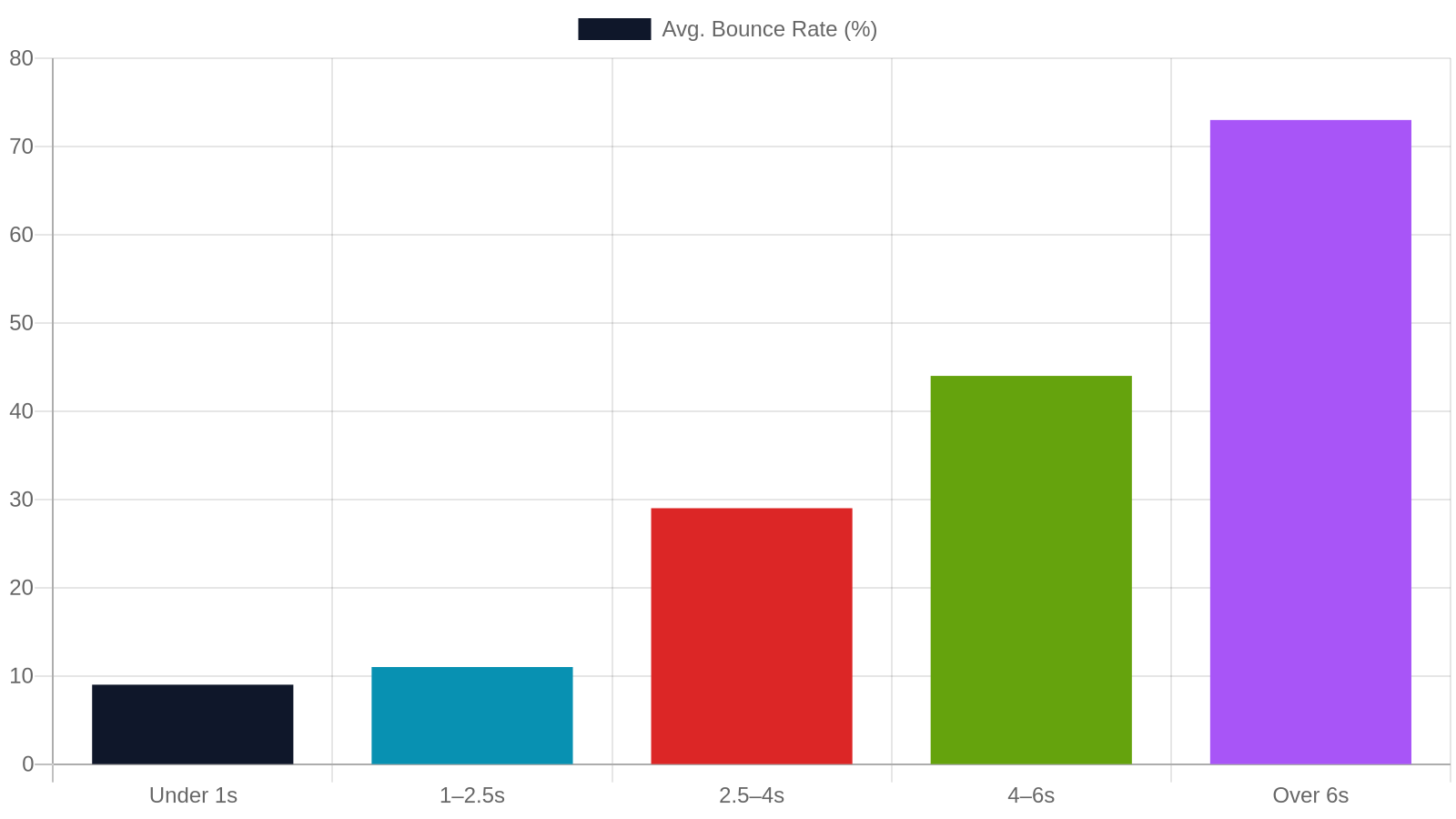
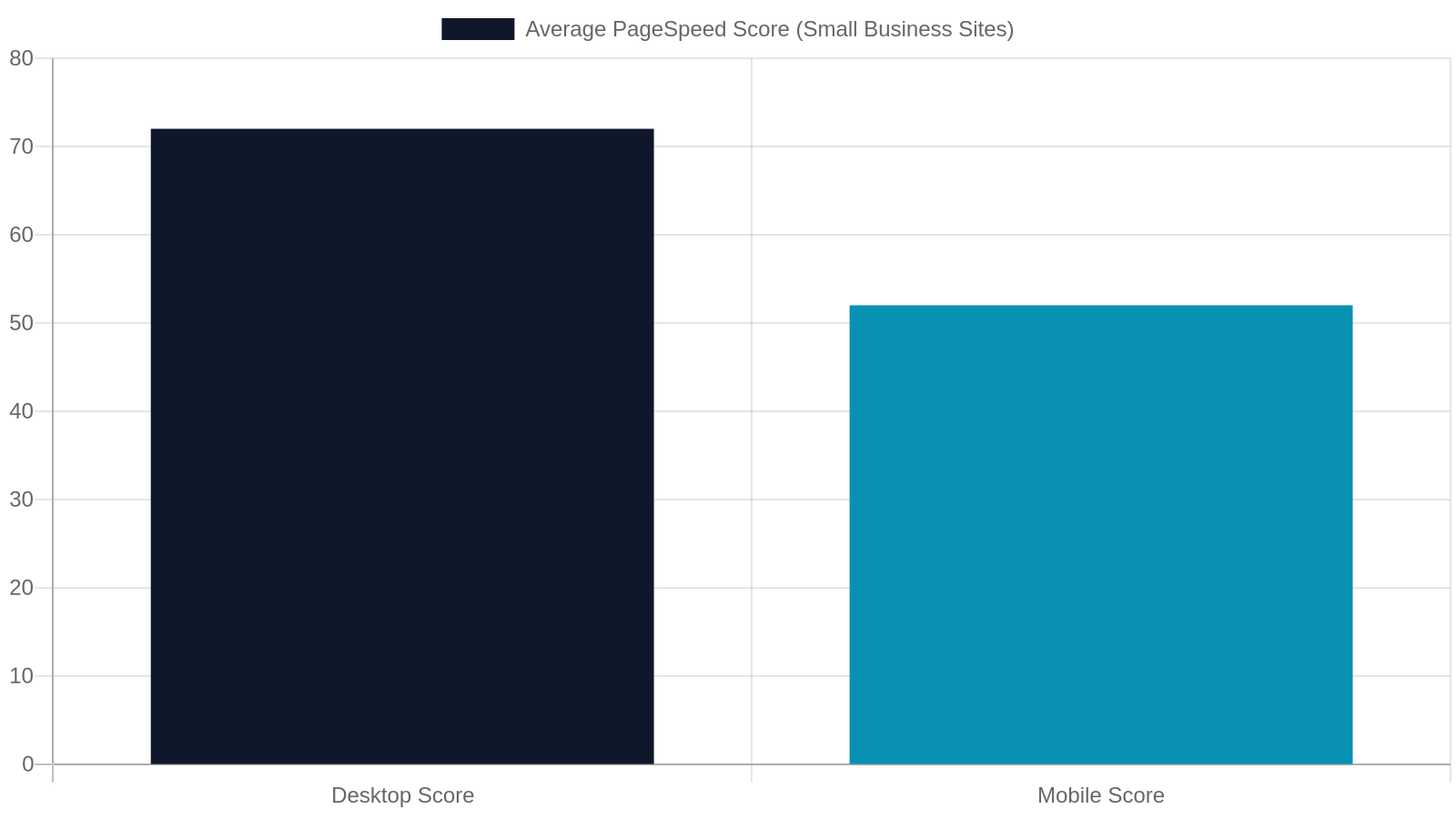
If there is one finding that appears in nearly every free audit of a small business website in Tennessee, it is poor page speed. Google’s PageSpeed Insights scores the average small business site at 52 out of 100 on mobile — well below the 90+ threshold Google considers ‘good.’ Slow sites rank lower, bounce faster, and convert fewer visitors into customers.
What Core Web Vitals Actually Measure
Google’s Core Web Vitals are three metrics baked into its ranking algorithm since May 2021:
- Largest Contentful Paint (LCP) — how long until the biggest visible element loads. Target: under 2.5 seconds.
- Cumulative Layout Shift (CLS) — how much the page jumps around as it loads. Target: under 0.1.
- Interaction to Next Paint (INP) — how quickly the page responds to a click or tap. Target: under 200 ms.
Sites that fail all three are penalized in rankings. Sites that pass all three earn a small but real ranking boost — and more importantly, they convert better because visitors don’t leave out of frustration.
Why Tennessee Small Business Sites Tend to Be Slow
The most common culprits in audits of Tennessee small business websites are:
- Uncompressed images — a single hero image uploaded at 4 MB instead of 150 KB can add 3–4 seconds to load time
- Shared hosting on cheap plans — server response times above 600 ms are common on entry-level shared hosts
- Unused JavaScript and CSS — page builders like Divi and Elementor often load 400–600 KB of unused code
- No caching plugin — WordPress sites without caching regenerate every page from scratch on every visit
An audit flags all of these with specific file names and sizes, so you know exactly what to fix rather than guessing.
The Business Impact of a 1-Second Delay
According to Google’s own research, a 1-second delay in mobile load time reduces conversions by up to 20%. For a Nashville restaurant generating $15,000/month in online orders, that single second could cost $3,000 per month. For a Murfreesboro contractor whose site converts 2% of visitors into quote requests, shaving two seconds off load time could double that conversion rate. Speed is not a vanity metric — it is a revenue metric, and a free audit quantifies exactly where you stand.
3. Technical SEO Errors Hidden in Plain Sight
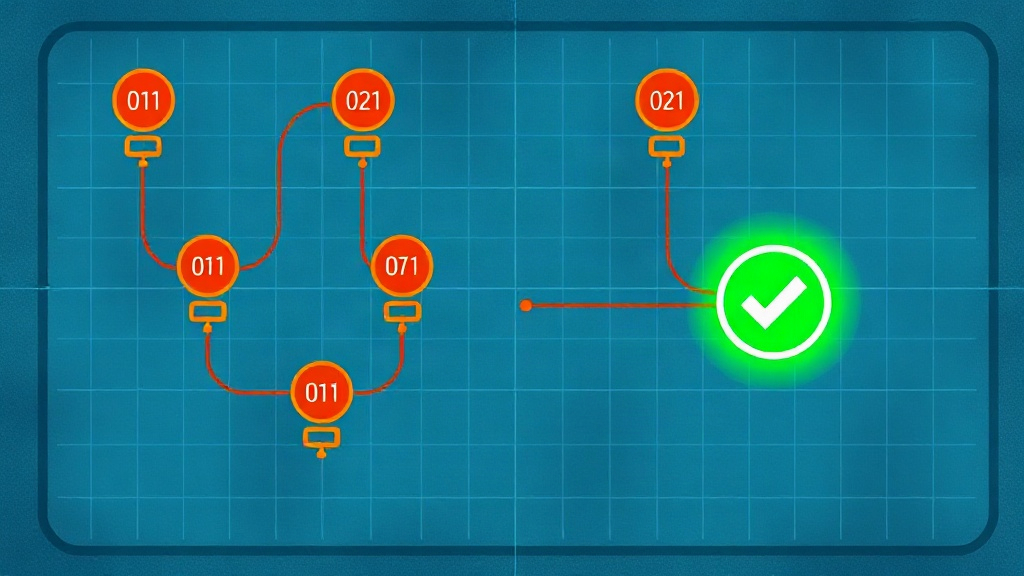
Technical SEO errors are the silent killers of small business websites. They don’t announce themselves with error messages on your screen — they quietly prevent Google from crawling, indexing, and ranking your pages. A free audit surfaces these hidden issues in minutes, often revealing problems that have been accumulating for years without the business owner’s knowledge.
Broken Links and 404 Errors
Every broken link on your site is a dead end for both visitors and search engine crawlers. When Googlebot hits a 404 page, it stops crawling that branch of your site. If the broken page had backlinks pointing to it, that link equity evaporates. Free audit tools crawl every internal link and flag 404s with the exact URL and the page where the broken link lives — giving you a precise fix list rather than a vague warning.
A typical small business site of 30–80 pages has 4–12 broken internal links after two or three years of content updates and URL changes. Each one is a small drag on rankings that compounds over time.
Duplicate Content and Canonical Tag Issues
Duplicate content confuses Google: when two URLs serve nearly identical content, Google must guess which one to rank. Common causes include:
- HTTP and HTTPS versions of the same page both accessible
- Trailing-slash vs. non-trailing-slash URLs (example.com/page vs. example.com/page/)
- Paginated archives without proper canonical tags
- Product or service pages with only minor wording differences
An audit identifies every duplicate pair and checks whether canonical tags are correctly implemented. Fixing canonicalization issues often produces a ranking improvement within 4–6 weeks as Google consolidates the ranking signals onto one authoritative URL.
Missing or Misconfigured XML Sitemaps
Your XML sitemap is the roadmap you hand to Google. If it is missing, outdated, or includes 404 pages and noindex URLs, you are handing Google a bad map. Audit tools verify that your sitemap exists at /sitemap.xml, that it is submitted in Google Search Console, and that every URL it lists returns a 200 status code. For Nashville and West Tennessee businesses adding new service pages, blog posts, or location pages regularly, keeping the sitemap clean is an ongoing maintenance task — not a one-time setup.
4. On-Page SEO: Title Tags, Meta Descriptions, and Heading Structure
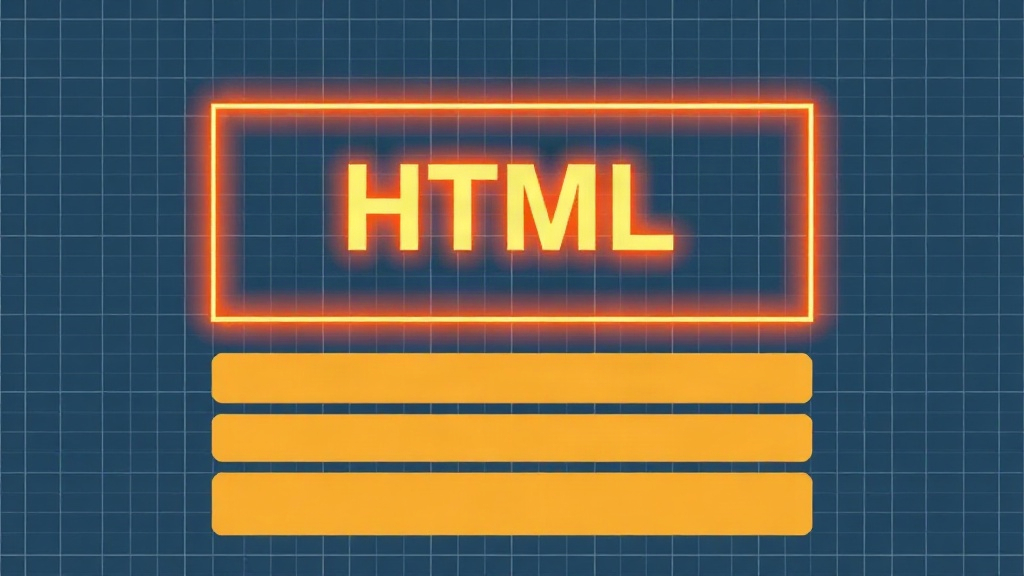
On-page SEO is the layer of optimization that most business owners have the most direct control over — and the layer where free audits consistently find the most fixable issues. Title tags, meta descriptions, and heading structure are the three pillars of on-page optimization, and getting them right requires no budget, only attention to detail.
Why Title Tags Are Still the Most Powerful On-Page Signal
The HTML <title> tag is the single most influential on-page SEO element. It tells Google what a page is about and appears as the blue clickable headline in search results. Despite this, audit after audit of Tennessee small business sites reveals:
- Missing title tags on inner pages (Google writes its own, usually worse)
- Duplicate title tags — the same title used on multiple pages
- Titles over 60 characters that get truncated in search results
- No location keyword — a Nashville plumber whose title says ‘Plumbing Services’ instead of ‘Plumbing Services in Nashville, TN’
Each of these is a missed opportunity to tell Google — and searchers — exactly what you offer and where you offer it.
Meta Descriptions: Click-Through Rate Optimization
Meta descriptions don’t directly affect rankings, but they dramatically affect click-through rate (CTR) — and CTR is a ranking signal. A compelling 150-character meta description that includes a benefit and a call to action can lift CTR by 5–15% compared to a generic or missing description. Audit tools flag every page with a missing, duplicate, or over-length meta description. For a site with 40 pages, fixing meta descriptions across the board can generate a meaningful increase in organic traffic within 30 days — no backlink building required.
Heading Hierarchy and Keyword Placement
Search engines use your H1, H2, and H3 tags to understand the structure and topics of a page. Common heading errors flagged by audits include:
- Multiple H1 tags on a single page (only one H1 is correct)
- Skipped heading levels (jumping from H1 to H3)
- Headings that contain no relevant keywords
- Pages with no headings at all — just a wall of paragraph text
Fixing heading structure is a quick win: it typically takes 15–30 minutes per page and can improve both rankings and readability simultaneously. For service-area pages targeting cities like Franklin, Brentwood, Hendersonville, or Jackson, TN, including the city name in at least one H2 is a recognized best practice for local SEO.
5. Local SEO Signals That Make or Break Nashville and West TN Visibility
For small businesses in Nashville, Franklin, Murfreesboro, Jackson, and the surrounding Tennessee communities, local SEO signals are the difference between appearing in the coveted Google local pack (the map results at the top of a search) and being buried on page two. A free audit that includes local SEO analysis can reveal gaps you didn’t know were costing you customers every single day.
NAP Consistency Across the Web
NAP stands for Name, Address, Phone — the three pieces of business information that Google cross-references across your website, Google Business Profile, Yelp, Facebook, industry directories, and dozens of other sources. When your NAP is inconsistent — for example, ‘731-402-0402’ on your website but ‘(731) 402-0402’ on Yelp, or ‘Suite 200’ on Google but no suite number on your site — Google loses confidence in your business data and may rank you lower in local pack results.
A local SEO audit checks NAP consistency across the top 50+ citation sources and flags every discrepancy. For businesses serving both Nashville metro and West Tennessee, maintaining consistent NAP across two geographic service areas adds an extra layer of complexity.
Google Business Profile Optimization Gaps
Your Google Business Profile (GBP) is often the first thing a local searcher sees — before they ever visit your website. Audit tools that include GBP analysis flag common gaps:
- Primary category not set to the most specific option available
- Missing secondary categories
- No business description (500-word limit — use it)
- Fewer than 10 photos uploaded
- No products or services listed with descriptions and prices
- Q&A section unanswered
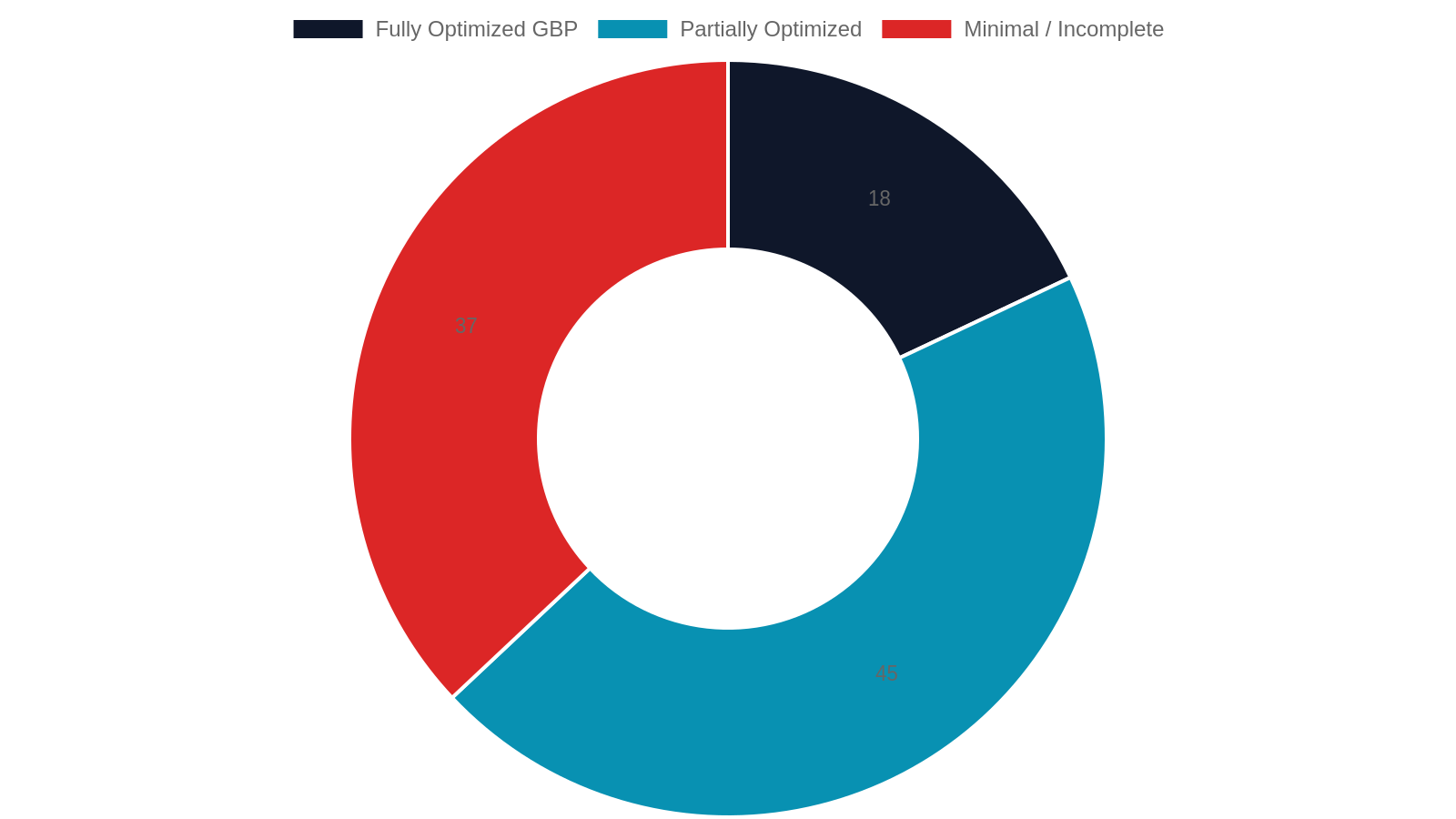
Businesses with fully optimized GBP profiles receive 7× more clicks than those with incomplete profiles, according to Google’s own data. That multiplier is available to any Tennessee business willing to spend two hours on their profile.
LocalBusiness Schema Markup
Schema markup is structured data embedded in your site’s HTML that explicitly tells Google — and AI answer engines — what your business is, where it operates, what it offers, and how to contact you. Despite its power, fewer than 30% of small business websites in Tennessee have correct LocalBusiness schema implemented. An audit checks for schema presence, validates the JSON-LD syntax, and flags missing fields like areaServed, openingHours, and priceRange. Implementing schema is one of the highest-ROI technical fixes available — it costs nothing but an hour of development time and can improve both traditional rankings and AI-generated answer visibility. Learn more about our LocalBusiness schema implementation service to see how we handle this for Tennessee clients.
6. Content Quality and Thin-Page Penalties

Technical fixes get your site crawlable and fast. But content quality determines whether Google — and the humans using it — actually want to rank and read your pages. A free SEO audit’s content analysis component identifies the pages that are dragging your entire domain’s authority down, and the ones that, with modest investment, could become traffic-generating assets.
What 'Thin Content' Means and Why It Hurts
Google defines thin content as pages that provide little or no value to the user. In practice, this usually means pages with fewer than 300 words, pages that are near-duplicates of other pages on the same site, or pages that exist only to target a keyword without providing real information. Since Google’s Panda algorithm update (first rolled out in 2011 and now baked into the core algorithm), thin content has been a ranking suppressor — not just for the thin page itself, but potentially for the entire domain.
Audit tools flag pages below a word-count threshold and identify pages with high similarity scores to other pages on your site. For Tennessee service businesses with multiple city landing pages, thin ‘We serve [City], TN’ pages are a particularly common problem.
E-E-A-T Signals and Why They Matter for AI Search
Google’s quality evaluator guidelines emphasize E-E-A-T: Experience, Expertise, Authoritativeness, and Trustworthiness. For small businesses, this translates to concrete on-page signals:
- Author bios with credentials on blog posts
- About pages that describe the business’s history and qualifications
- Customer reviews cited or linked on service pages
- Case studies or portfolio examples with real outcomes
- Contact information on every page, not just the contact page
These signals matter doubly in the era of AI-generated answers. When ChatGPT, Google’s AI Overview, or Perplexity cites a local business, it draws on E-E-A-T signals to decide whether the source is trustworthy enough to reference. A content audit identifies which pages are E-E-A-T deficient.
The Keyword Cannibalization Problem
Keyword cannibalization happens when two or more pages on your site target the same keyword. Google gets confused about which page to rank, often ranking neither well. For example, a Nashville HVAC company might have a ‘Nashville AC Repair’ service page AND a blog post titled ‘AC Repair in Nashville: What to Expect’ — both targeting the same search intent. An audit identifies these conflicts and recommends either merging the pages, differentiating them with distinct keyword targets, or redirecting one to the other. Resolving cannibalization issues is one of the fastest ways to see ranking improvements on competitive keywords.
7. Mobile Usability: the Audit Check Most Businesses Ignore
More than 63% of Google searches in the United States now originate from mobile devices. For local searches — ‘best restaurant in Nashville,’ ‘Jackson TN web designer,’ ‘Franklin plumber open now’ — that figure is closer to 76%. Despite this, mobile usability remains one of the most under-audited areas for Tennessee small businesses. A free audit’s mobile check can reveal issues that are silently costing you both rankings and conversions.
Mobile-First Indexing Is Not Optional
Since July 2019, Google has used mobile-first indexing for all new websites, and since March 2021, it applies to all websites. This means Google’s crawler visits your site as a mobile device, not a desktop. If your mobile experience is broken — text too small to read, buttons too close together, content wider than the screen — those are the signals Google uses to evaluate your site’s quality. Desktop-only testing is no longer sufficient for SEO.
Audit tools check your site against Google’s mobile usability criteria and flag specific issues: viewport not configured, text too small, clickable elements too close together, and content wider than screen. Each flagged issue has a direct fix, usually in your theme or CSS settings.
Tap Target Sizes and Accessibility Overlap
Google recommends tap targets (buttons, links, form fields) be at least 48×48 pixels with 8px of space between them. Small business websites built on older themes or page builders frequently fail this check — especially navigation menus, phone number links, and form submit buttons. Fixing tap target sizes improves both SEO scores and accessibility compliance, which matters for ADA-related risk management. For Tennessee service businesses where a significant share of leads come from mobile searches (‘plumber near me,’ ‘Nashville web design’), a broken mobile experience is a direct revenue leak.
Mobile Page Speed vs. Desktop Page Speed
Mobile and desktop PageSpeed scores are calculated separately, and mobile scores are almost always lower — sometimes dramatically so. The average small business site scores 72/100 on desktop but only 52/100 on mobile. The gap exists because mobile devices have less processing power, mobile networks have higher latency, and mobile browsers handle JavaScript differently. An audit reports both scores and identifies the specific resources that disproportionately hurt mobile performance. Lazy-loading images, deferring non-critical JavaScript, and serving next-gen image formats (WebP, AVIF) are the three fixes that move the needle most for mobile scores.
8. Backlink Profile: Authority You May Not Know You Have (or Lack)
Backlinks — links from other websites pointing to yours — remain one of Google’s top three ranking factors. A free backlink audit shows you how much authority your site has accumulated, where that authority comes from, and whether any harmful links are dragging your rankings down. For Tennessee small businesses competing in crowded local markets, understanding your backlink profile is essential for building a realistic SEO roadmap.
Domain Authority and What It Predicts
Domain Authority (DA), developed by Moz, and Domain Rating (DR), developed by Ahrefs, are third-party scores (0–100) that predict how likely a site is to rank well based on the quantity and quality of backlinks pointing to it. Neither score is used directly by Google, but both correlate strongly with rankings because they reflect the same underlying signals Google measures. A new small business site typically starts with a DA of 1–5. After two years of consistent content and citation building, a well-managed local business site might reach DA 20–35 — enough to rank competitively for most local keywords in Tennessee markets.
Toxic Backlinks and Disavow Strategy
Not all backlinks help. Links from spammy directories, link farms, or irrelevant foreign-language sites can trigger Google’s spam filters and suppress rankings. Free audit tools like Ahrefs Webmaster Tools and Google Search Console flag potentially toxic links and allow you to export a disavow file — a list of domains you ask Google to ignore when evaluating your site. For most small businesses, toxic link cleanup is a one-time exercise followed by annual maintenance. The bigger ongoing task is building good links: local chamber of commerce listings, Tennessee business directories, local news mentions, and partnerships with complementary businesses.
Local Citation Building as a Link Strategy
For Nashville metro and West Tennessee businesses, local citations — mentions of your business name, address, and phone number on authoritative local directories — serve double duty as both NAP consistency signals and low-level backlinks. Key Tennessee-specific citation sources include the Nashville Chamber of Commerce, Tennessee Department of Commerce business listings, Nashville Business Journal, Jackson Sun business directory, and local Better Business Bureau listings. An audit identifies which of these sources you are already listed on and which are missing — giving you a prioritized citation-building checklist.
Free SEO Audit Tools: 6-Point Comparison for Tennessee Small Businesses
Each free audit tool has different strengths. Use this table to choose the right starting point for your site size and technical comfort level.
9. AEO and GEO: the Audit Checks That Prepare You for AI Search

Traditional SEO audits were designed for a world where Google’s ten blue links were the only game in town. That world is changing fast. In 2024, Google’s AI Overview feature began appearing in more than 25% of all searches, and AI-native search engines like Perplexity and ChatGPT are handling millions of queries daily. A modern audit needs to evaluate not just traditional ranking signals but also AEO and GEO readiness — how well your content positions you to be cited by AI-generated answers.
Answer Engine Optimization (AEO) Readiness
Answer Engine Optimization (AEO) is the practice of structuring your content so that AI-powered answer engines — Google’s AI Overview, ChatGPT, Perplexity, and others — can extract, cite, and surface your business as the answer to a user’s question. An AEO audit checks for:
- FAQ schema markup — structured Q&A pairs that AI engines can parse directly
- Direct-answer formatting — paragraphs that open with a clear, complete answer before elaborating
- Definitive statements — sentences that make a clear claim Google can quote as a featured snippet
- Entity clarity — explicit definitions of your business type, location, and services
Our AEO services for Tennessee businesses go deeper than a standard technical audit, evaluating your content’s citation-worthiness across multiple AI platforms.
Generative Engine Optimization (GEO) Signals
GEO (Generative Engine Optimization) extends AEO to focus specifically on how well your content performs when AI systems generate long-form answers. GEO-ready content is:
- Rich with specific, verifiable facts (numbers, dates, measurements)
- Organized with clear entity definitions (‘Studio Blue Creative is a Tennessee-based digital agency serving Nashville and Jackson’)
- Structured with comparison data that AI can reference when answering ‘which is better’ questions
- Consistent across your website, GBP, and third-party citations
A GEO audit evaluates your content against these criteria and scores each page for AI-citation readiness — a metric that traditional SEO audits don’t measure at all.
Schema Markup Beyond LocalBusiness
While LocalBusiness schema is the most important schema type for local businesses, a comprehensive audit checks for additional schema types that improve AI and search visibility:
- FAQPage schema — enables FAQ rich results in Google and feeds AI answer engines
- Service schema — explicitly defines each service you offer with descriptions and price ranges
- Review schema — surfaces star ratings in search results (requires third-party review aggregation)
- BreadcrumbList schema — improves site structure signals for both Google and AI crawlers
Implementing even two or three of these schema types can produce visible changes in how your site appears in search results within 2–4 weeks of Google re-crawling your pages.
10. How to Read Your Audit Report and Prioritize Fixes

Running a free audit is the easy part. The harder — and more valuable — step is knowing what to do with the results. Audit reports can contain 50–200 individual findings, and trying to fix everything at once leads to paralysis. A systematic prioritization approach ensures that the fixes you make first are the ones that move the needle most for your Tennessee business.
The Priority Matrix: Impact vs. Effort
Not every audit finding deserves equal urgency. A useful framework is to plot each issue on a 2×2 matrix:
- High impact, low effort — fix immediately (missing title tags, broken links, missing meta descriptions, image compression)
- High impact, high effort — schedule for next sprint (schema implementation, content rewrites, page speed optimization)
- Low impact, low effort — batch and fix when convenient (minor heading issues, small CLS improvements)
- Low impact, high effort — deprioritize or skip (chasing a 100/100 PageSpeed score on a page that gets 10 visits/month)
Most small businesses in Tennessee can resolve their highest-impact, lowest-effort issues in a single focused workday — and see ranking improvements within 30–60 days.
Setting a Baseline and Tracking Progress
An audit is only useful if you track whether your fixes are working. Before making any changes, record your baseline metrics:
- Google Search Console: total impressions, clicks, average position for your top 10 keywords
- Google Analytics: organic sessions, bounce rate, average session duration
- Your audit tool’s overall score (e.g., 47/100)
- Local pack ranking for your primary service + city keyword
Re-run the audit 60 days after implementing fixes. Compare the scores side by side. This before-and-after comparison is the clearest way to demonstrate ROI — both to yourself and to any stakeholders or partners involved in the business.
When to Bring in a Professional
Free audit tools are excellent at identifying problems. They are less good at fixing them — especially technical issues like schema implementation, Core Web Vitals optimization, or canonical tag restructuring. If your audit reveals more than 15–20 significant issues, or if the issues involve server configuration, JavaScript rendering, or site architecture, the time cost of DIY fixes quickly exceeds the cost of professional help. For Nashville metro and West Tennessee businesses, working with a local agency that understands Tennessee markets, local citation sources, and regional search behavior adds value that a generic national agency cannot replicate.
11. Free Audit Tools Compared: Which One Is Right for Your Business?

With dozens of audit tools available, choosing the right one for your Tennessee small business depends on your technical comfort level, the size of your site, and which issues you most need to diagnose. Here is a practical comparison of the most useful free options.
Google's Own Free Tools
Google Search Console is the most authoritative free tool because it shows you actual Google data: which queries trigger your pages, which pages are indexed, and which have manual penalties or coverage errors. Google PageSpeed Insights provides Core Web Vitals data from real Chrome users (the CrUX dataset) alongside lab-based diagnostics. These two tools together give you Google’s official view of your site — which is, ultimately, the view that matters most for rankings. The limitation: neither tool proactively crawls your site looking for issues. You have to know what to look for.
Third-Party Audit Platforms
Third-party tools fill the gap by proactively crawling your site and generating prioritized issue lists. Key options:
- Ahrefs Webmaster Tools (free) — strong backlink data, site audit up to 5,000 pages/month
- Semrush Site Audit (free tier) — up to 100 pages per crawl, excellent issue categorization
- Screaming Frog SEO Spider (free) — up to 500 URLs, the most thorough technical crawler available at any price point
- Moz Pro (30-day free trial) — strong on-page and local SEO scoring
- Ubersuggest (free tier) — beginner-friendly interface, good for non-technical business owners
For most Tennessee small businesses, starting with Google Search Console + Ahrefs Webmaster Tools covers 80% of what a paid tool would reveal — for free.
Ready to See What Your Tennessee Website Is Missing?
A free SEO and website audit is the fastest way to move from guessing about your online performance to knowing exactly what is working, what is broken, and what to fix first. For small and mid-sized businesses across Nashville Metro and West Tennessee, the audit findings outlined in this guide represent real, fixable problems — and real, measurable growth opportunities waiting to be unlocked.
What a Professional Audit Adds Beyond Free Tools
Free tools give you data. A professional audit gives you a prioritized action plan tailored to your specific market. For Nashville metro businesses competing in high-density markets like Franklin, Brentwood, and Murfreesboro, or for West Tennessee businesses in Jackson trying to dominate regional searches, the difference between a generic audit report and a locally-informed strategy is the difference between a list of problems and a roadmap to growth.
Studio Blue Creative’s team understands the Tennessee competitive landscape — which local directories carry the most weight, which schema configurations Google’s Nashville data centers respond to fastest, and which content gaps your specific competitors have left open. That local intelligence is not available in any free tool.
Your Free Website Health Check
Not sure where your site stands? Start with our free website health check for Tennessee businesses — a no-obligation scan that surfaces your most critical SEO, speed, and local visibility issues in plain language, without requiring you to interpret raw audit data yourself. We serve businesses across Nashville, Franklin, Brentwood, Murfreesboro, Hendersonville, Mount Juliet, Jackson, and the surrounding Tennessee communities.
After your health check, our team will walk you through the findings and provide a clear, prioritized fix list — along with a free estimate for any work you’d like help implementing. You can also explore our full range of digital marketing and SEO services to see how we help Tennessee businesses grow their online presence from the ground up.
Ready to talk? Call us at 731-402-0402 — we offer free estimates and love working with Tennessee small businesses who are serious about growing their digital presence.
Frequently Asked Questions
Is a free SEO audit tool accurate enough to trust for my small business?
Free tools like Google Search Console, Ahrefs Webmaster Tools, and Screaming Frog are genuinely accurate for the issues they measure — broken links, missing tags, Core Web Vitals, and backlink data. Their limitation is coverage: no single free tool checks everything. Using two or three tools together, or supplementing with a professional audit, gives you a complete and reliable picture.
How long does a free website audit take?
Most free audit tools complete a crawl of a typical small business site (20–80 pages) in 2–10 minutes. Google Search Console data is always available instantly since it collects data passively. Reviewing and understanding the results typically takes 30–60 minutes for a non-technical business owner.
How often should a Tennessee small business run an SEO audit?
Run a full technical audit every 3–6 months and a quick spot-check (PageSpeed + Search Console coverage report) monthly. Any time you make significant changes to your site — new pages, redesign, URL restructuring, plugin updates — run an audit within 2 weeks to catch any issues the changes introduced.
What is the most common SEO problem found in Nashville small business websites?
The most common issues are slow mobile page speed (average score of 52/100), missing or duplicate title tags, and incomplete Google Business Profiles. These three problems appear in the majority of Nashville small business audits and are all fixable without a large budget.
Can a free audit help me rank in the Google local pack for Nashville or Jackson, TN?
Yes — local pack rankings depend heavily on Google Business Profile completeness, NAP consistency, and LocalBusiness schema, all of which a good free audit evaluates. Fixing the local SEO issues an audit identifies is one of the most direct paths to improving local pack visibility in Nashville, Jackson, and surrounding Tennessee markets.
What is the difference between SEO and AEO, and does an audit cover both?
SEO (Search Engine Optimization) focuses on ranking in traditional search results. AEO (Answer Engine Optimization) focuses on being cited by AI-powered answer engines like Google's AI Overview, ChatGPT, and Perplexity. Most free audit tools cover SEO thoroughly but AEO only partially. A professional audit from a specialist agency covers both, including schema markup, content structure, and entity clarity needed for AI citation.
Find out if ChatGPT recommends your business.
Right now, your customers are asking AI for recommendations. The AI is naming somebody. Is that name yours? Run our free AEO Scorecard — we test 3 of your real queries against ChatGPT and Claude and email you a personalized report.
Ready for a real website?
Get a tailored 3-tier proposal in under a minute — including our Launch Deal ($699), a custom build, or our SEO Growth Package. No call required.